Nameless Skies

The voice was familiar.

Warm like winter sun on old skin.

It came from a low-lit room in a small, sleepy town called Rewa, where time didn’t move. It sighed.

Aman lived there. Fifty-four. Unmarried. Untroubled by it in public, disturbed by it in the shadows of his heart.

He had grown to accept solitude like an arranged marriage you don’t fight.

His world was a small, curated playlist—old friends, old records, older memories.

He made music. Not to perform. Not to impress.

Just to whisper into his own silence.

He made his living doing voice-overs for educational videos and radio jingles, his baritone voice more travelled than him.

Flying? No.

The sky was too uncertain. Planes too loud. Airports too foreign.

He would rather walk a hundred miles than sit on a seat that might never land.

But love, love has a sound.

Aman once heard it many years ago in Chhindwara, in the spring of 1996.

She was 16. He was 25. 

She wore her school uniform like a rebellion.

He saw her sketching on a public bus window with her finger on the fog.

They spoke. For three months. Every day. In whispers. In glances.

Until whispers turned to letters. Letters to touches. Touches to kisses.

And then her parents found out. And she was gone.

Left the town without a forwarding address.

He kept writing anyway, as if words could reach her like rain finds lost rivers.

Now it was 2025. 

Facebook suggested a friend.

Naina Choudhary.

Widowed.

Lives alone in Chhindwara now.

Hair streaked with silver. Eyes still sketching foggy windows.

She accepted his request.

And a message came:

“Do you still write songs?”

He did.

And so he sent them. Audio clips recorded on his aging home setup.

Each song had a line just for her. Like it had been waiting 25 years.

In return, she sent him pages from an old poetry diary she’d tucked away.

Written in stolen time between marriage and motherhood and mourning.

Words so raw they bled on screen.

Sometimes they laughed.

Sometimes they cried.

But mostly, they waited for the next message.

She said she still believed in fate.

That if life had kept them apart all these years, maybe it was for a reason.

Maybe destiny is not a mistake, but a mirror.

He didn’t believe in fate.

He believed in decisions.

And he made one.

“I’m coming,” he said.

She replied with a single word:

“Don’t.”

He booked the flight.

Bhopal via Delhi.

Took anti-anxiety pills. Held his guitar like a child holds a teddy bear.

Boarded with trembling hands and a beating heart.

Somewhere above the clouds, the aircraft disappeared from radar.

Somewhere in Chhindwara, Naina waited.

In a yellow kurta, with trembling hands.

She had opened the poetry diary.

She had lit an incense stick.

She had kept a cup of tea for him.

The news came the next morning.

Flight G4 1314 had crashed in Madhya Pradesh.

No survivors.

She didn’t cry.

She didn’t scream.

She simply placed the diary back into the cupboard.

And closed it. Her belief in fate sadly reaffirmed.

Love is not always what you hold.

Sometimes it’s what you lose, again and again.

Sometimes it’s a flight that never lands.

A note never played.

A diary unread.

Naina still walks every evening to the tea stall near her lane.

Sometimes she hums.

The tune is familiar.

Aman had once sung it.

To her.

In another lifetime.

In another sky.

The wind whistles through an empty diary.

Pages flutter, but never turn.

Copyright (c) Pratik Majumdar, 2025. Any article, story, write-up cannot be reproduced in its entirety or in part, without permission. URL links can be used

The Space Between

In a city where the sea whispered secrets to stones and local trains hummed like restless dreams, lived two strangers—bound not by fate, but by a series of delicate, echoing coincidences.

Nikhil woke every morning at exactly 6:47 a.m.—not because his phone buzzed, but because a koel sang outside his window with stubborn punctuality. Across the city, Aditi stirred at the same time. Her alarm had long since stopped working, but a sliver of light always cut through her curtains just right, as though the sun remembered her better than she remembered herself.

They brushed their teeth to the same vintage Bollywood station. Nikhil liked the gravelly melancholy of old songs—how they felt like letters unsent. Aditi didn’t know all the words, but she hummed as if the music had been left in her veins by someone who once loved her in silence.

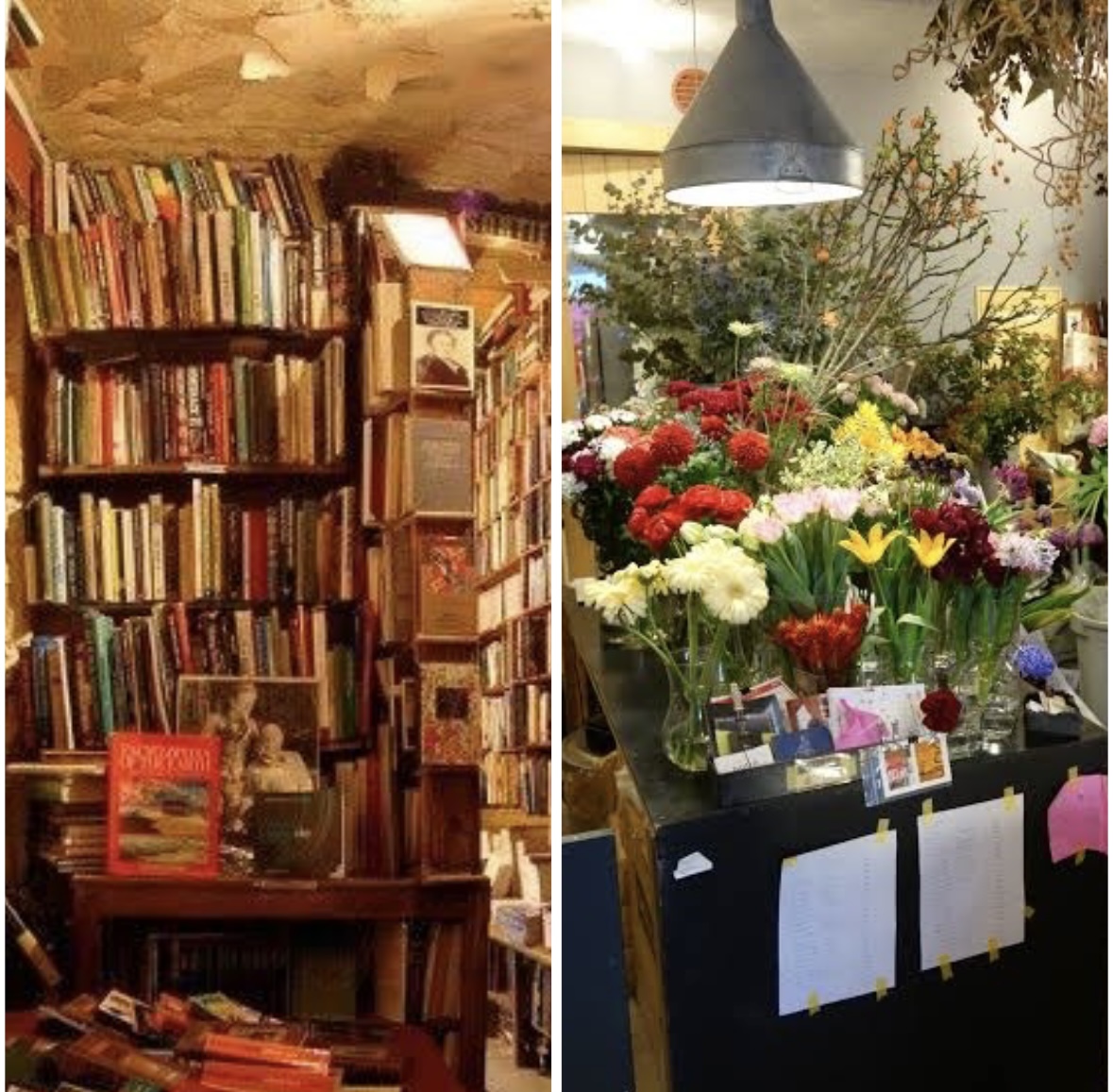
Nikhil worked in a second-hand bookshop near Matunga, a sleepy little place hidden between a tea stall and a forgotten tailoring shop. Aditi walked past it every morning on her way to a flower stall in Dadar, where she crafted arrangements like small, fragrant stories—gajras, mogra, lilies wrapped in whispers. She never looked inside, never knowing that behind the dusty glass, Nikhil was organizing novels by feeling, not alphabet, and glancing at the door whenever the bells twinkled.

They both loved the rain, but for different reasons.

Nikhil loved how it made the city blur at the edges, how even traffic lights seemed softer, more forgiving. Aditi loved how the rain made strangers share rickshaws and lovers pause in doorways. Neither knew that, on those grey Mumbai afternoons, they sometimes stood across from each other at the same zebra crossing, both holding umbrellas—his a plain navy blue, hers with tiny golden birds painted by hand.

They both had a habit of writing to a nothing, a no one. .

Nikhil scribbled thoughts in the margins of unsold books—things like, “Somewhere, someone must be feeling this same quiet ache.” Aditi wrote on scraps of flower wrapping—tucked inside bouquets as if someone, someday, might find them: “Do you ever feel like you’re just one turn away from meeting someone your heart already knows?”

They moved through the city like parallel verses in a poem, near but never touching. When Nikhil sipped cutting chai on the steps of a library in Fort, watching the sky darken, Aditi was sketching a flower in a quiet café in Bandra, pausing as if she’d forgotten what she was waiting for.

On Sundays, they both went to Shivaji Park.

He with a book, she with a sketchpad. Once, a gust of wind carried her page down the path, fluttering to a halt near Nikhil’s foot. But he didn’t see. His gaze was fixed on a line of poetry that curled around his thoughts like smoke.

So many almosts.

Almost passing each other at the Kala Ghoda Art Festival, where Nikhil left minutes before Aditi arrived.

Almost reaching for the same samosa at an Irani café counter.

Almost brushing shoulders at Churchgate station during rush hour, where hearts beat louder than the trains.

They never met.

Not yet.

But in a city stitched together by noise and yearning, they felt each other. Like twin sitar strings vibrating in symphony, like reflections glimpsed in a window just as the train pulls away.

At night, they dreamed of the same bench near the sea, under the old banyan tree with its fairy lights tangled in the roots. And in those dreams, someone sat beside them. Someone whose silence felt like known.

They both woke with a name they’d never heard still lingering on their lips. A name that felt like a memory from a life unlived.

In a city of sixteen million, their stories were already whispering to each other in the spaces between raindrops and song lyrics. Woven in the same thread, just waiting for the right breeze.

And maybe—just maybe—tomorrow, it will carry them to the same place.

At the same time.

And this time, they’ll look up.

Copyright (c) Pratik Majumdar, 2025. Any article, story, write-up cannot be reproduced in its entirety or in part, without permission. URL links can be used

The Second Crime

Marine Drive never sleeps, but that night, it fell silent.

A black BMW X7 stood by the promenade, door ajar, rain pouring like judgment from the heavens. The corpse of Vinod Pawar, Aditya Khanna’s driver, slumped in the front seat with a bullet lodged in his temple. Rain blurred the blood but couldn’t wash away the intent.

Detective Arjun Mehra arrived minutes later. Lean and angular, a man hardened by silence he stood still as his eyes flicked across the crime scene. No scuffle. No panic. One shot. Cold execution.

Aditya Khanna—the billionaire, real estate tycoon, party fixture, and unproven white-collar criminal—was gone.

No body. No call. No ransom.

Aditya Khanna’s wife, Anita, wore mourning like a cocktail dress—impeccable but performative. She cried, but her eyes were dry. Her statements were neat. No confusion. No chaos.

Mehra noticed her wedding ring—twisted nervously. It wasn’t grief. It was control cracking at the edges.

Rajat Khanna, Aditya’s younger brother, wore his guilt like an aftershave—too strong, too obvious. There were photos. Hotel receipts. Phone pings. The affair between Anita and Rajat wasn’t just real; it was recent and reckless.

The motive glittered in front of Mehra like broken glass: the wife, the lover, the money.

But it didn’t explain the timing. Or the absence of a ransom.

Then on Day 3, it arrived.

A hand-delivered envelope to their Worli residence. Inside: a voice recording distorted with static and fear.

“Aditya is alive. ₹15 crore. No cops. Instructions will follow.”

The message ended with a codeword known only to Aditya and his chief of security—a detail meant to prove authenticity.

Mehra listened to the tape three times. Something about it felt off. Not the voice—it was clearly masked—but the pacing. The phrasing. The delay. Three days? That wasn’t desperation. It was calculation.

Still, they had to follow protocol. Ransom squad activated. Money marked. Phones tapped.

But Mehra’s gut itched. Something fundamental was wrong.

Surveillance teams caught Anita and Rajat meeting discreetly. A confrontation followed.

Rajat broke first. “We talked about leaving him. Yes. But we didn’t do this. I swear.”

Anita said nothing. Just lit a cigarette and watched Mehra like she was studying a predator.

She never asked once—Is Aditya okay?

Mehra kept circling the crime scene, questioning the domestic staff, probing timelines. Every detail led back to the BMW. To Vinod. But no one cared about him. Just a dead driver in the wrong place.

Yet Vinod kept nagging at Mehra.

Sarla Pawar, Vinod’s wife, lived in a small chawl in Chembur. She was quiet, deferential, and soft-spoken. Mehra visited her twice. The second time, she slipped.

“I just hope they give back that poor man’s boss, after asking so much money.”

Mehra blinked. He hadn’t told her about the ransom. Neither had the press. It hadn’t been leaked.

Only a handful of people knew.

He left, didn’t react. But the noose had begun to tighten.

Sarla had been speaking regularly with a low-level constable named Kiran Shinde. Transfers between accounts. Private meetings. A phone found in Kiran’s home had the original ransom recording, unmasked.

Under interrogation, Kiran tried to bluff, then broke.

Then Sarla cracked.

Aditya Khanna wasn’t the target. He was the distraction.

Vinod had found out about his wife’s affair with Kiran. He threatened to report them both—destroy their lives. So Sarla and Kiran did the only thing they thought would free them:

They killed him.

A clean shot. Fast. But they knew one thing—a dead driver was just another crime. It would lead straight to them.

But if a billionaire was abducted? If the city was ablaze with headlines about Aditya Khanna missing?

No one would care about Vinod Pawar.

So they abducted Aditya. Used Vinod’s insider knowledge to plan the route. Knocked Khanna unconscious and kept him hidden in a safehouse in Navi Mumbai. Kiran knew just enough about police procedure to stay ahead of the early response teams.

And then they waited.

Waited until the media was hooked. Until the city’s pulse was pounding in the wrong direction. Then, dropped the ransom demand—just for the hell of it. Greed, maybe. Or just to tighten the performance.

They almost got away with it.

But Sarla’s one slip—the mention of a ransom no one should’ve known about—ripped it all apart.

Aditya was found weak but alive. Drugged. Traumatized. He remembered nothing beyond the injection.

Anita and Rajat were cleared, their affair reduced to tabloid fodder. Disgraced, but not guilty.

Kiran and Sarla were charged with murder, kidnapping, obstruction of justice, and extortion.

Vinod Pawar, whose name no one remembered when the case began, became the reason it was solved.

Detective Mehra sat alone in his office. The rain outside had turned into a fine mist. The city would never stop moving. Another case would come. Another body would bleed on the pavement.

But for now, he lit a cigarette, opened a new file, and whispered to himself:

“The truth always hides behind the obvious. The real story’s where no one’s looking.”

Copyright (c) Pratik Majumdar, 2025. Any article, story, write-up cannot be reproduced in its entirety or in part, without permission. URL links can be used

Window Seat (…because sometimes the journey is the destination)

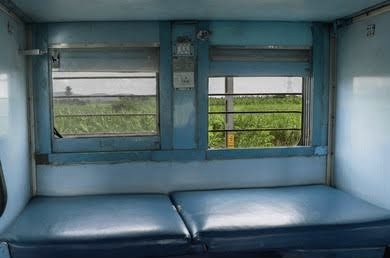
The train platform in Delhi was its usual orchestra of chaos—hawkers shouting, tannoys stuttering names of distant cities, the metallic clang of wheels, the stink of hot food and warm metal. Nikhil walked through it like a man out of time, unbothered. A duffel bag hung from one shoulder, its strap slipping slightly with every step. A guitar case peeked out from it, a notebook tucked beside. Headphones circled his neck, silent now, but still somehow part of him. He watched people, not to judge or interact—just to notice.

In the AC coach, cool air met warmth and movement. Niharika stepped in, sleek and composed in a navy-blue pantsuit, wheeling her compact luggage behind her like a well-behaved child. Her eyes scanned the numbered seats with practiced precision. Seat 22W. Window.

But someone was already there.

A man. Scruffy, too relaxed, legs stretched, watching the blur of the world through glass. He had the stillness of someone who’d made peace with delay.

“Excuse me. That’s my seat.”

He glanced at her, pulled off one headphone. Smiled—not the annoying kind, but annoyingly calm.

“Oh. I’m 24W. Yours is 22W, right? Both window seats. Same view. Does it matter?”

“It’s not about the view. It’s about what’s assigned. You’re in the wrong seat.”

“Technically, yes. Philosophically?” He shrugged. “Just two people watching the same world go by.”

She didn’t smile. “I’d like to sit in my seat. Please.”

He stood with mock formality, bowing slightly. “As you command, madam rulebook.”

She sat, jaw tight. He slid over, unbothered.

They rode in silence, side by side. She typed on her laptop, fingers flying. He scribbled in his notebook, humming softly, rhythmically.

She glanced sideways. “Are you going to keep humming?”

“It’s not humming. It’s composing.”

“Of course. Because everyone composes on trains.”

“Best place for it. People, movement, noise… emotion.”

She sighed. “Some of us are trying to work.”

He looked at her, curious. “Some of us are trying to feel.”

She let out an involuntary chuckle, short and dry. He took that as permission.

At lunch, they both received identical trays. Pale paneer, two rotis, lukewarm dal.

“I always wonder who decides these railway menus,” Nikhil said. “Like… did someone taste this paneer and go, ‘Yes. This will unite the nation.’”

She tried not to laugh. Failed a little. “It’s edible. That’s more than I can say for airplane food.”

“You travel a lot?”

“Back and forth. My fiancé lives in Mumbai. We’re setting up a home.”

“Ah. The domestic dream.”

“And you?”

“Break-up. She cheated. Going to end it… properly.”

She paused, looked at him differently. “You don’t sound angry.”

“What’s the point?” he said. “Some endings are releases. You just don’t know it at the time.”

She nodded, quietly. Something flickered across her face—recognition, maybe.

Later, as evening light flooded the compartment, he strummed his travel guitar gently. The notes were familiar.

“Kishore Kumar?” she asked.

He smiled. “You know it?”

“My dad used to sing it in the shower. I used to hate it.”

“And now?”

She listened for a moment, softened. “Now… I miss it.”

“Funny how songs become people, isn’t it?”

The train hummed into night. Most passengers slept. The world outside was black and unknowable. Inside, the gentle rhythm of steel on steel.

“You seem too easygoing for someone who just had their heart broken,” she said.

“I think music absorbs the pain before I have to.”

“So what, you’re not sad?”

“I am. But sometimes sadness needs music, not logic.”

She stared ahead, quiet. “I keep thinking… what if I’m mistaking comfort for love?”

He didn’t look at her when he replied. “Or safety for connection?”

She watched him now, really watched. Through the dark, his calm was no longer frustrating. It was magnetic.

She shut her eyes, but her ears strained for his humming.

By morning, they sat in a silence that had transformed—no longer awkward, but ripe with something unnamed.

“So, what happens now?” she asked.

“You meet him. I say goodbye to her.”

“And this—whatever this was—becomes a story we don’t tell anyone?”

“Unless,” he said, “we choose a different ending.”

She blinked. “What would that look like?”

“We get off this train. Not for the past. Not for the future. Just… because it feels like the truest thing right now.”

She laughed once, nervously. “That’s crazy.”

“And yet…”

The train slowed at a nameless, early-morning station. He stood, swung the bag over his shoulder, guitar in hand.

“There’s always another train to Mumbai,” he said. “There might not be another moment like this.”

Her phone buzzed. A message from her fiancé: “Can’t wait to see you. Big day tomorrow.”

She looked up.

He was waiting by the door, hand outstretched.

“One wrong train. One right window.”

For a second, the world held its breath.

She stood.

They stepped off together onto the quiet platform. The train rolled away behind them, a steel goodbye.

“What now?” she asked, wind in her hair.

“Now?” He smiled. “We walk. See where the road takes us.”

They did. Towards dawn, and away from everything else.

Copyright (c) Pratik Majumdar, 2025. Any article, story, write-up cannot be reproduced in its entirety or in part, without permission. URL links can be used

Monsoon Highway

When Nikhil Arora lost his job at the advertising agency in Lower Parel, the monsoon had just started to scream across Bombay like a woman scorned. He didn’t even take the elevator down from the 15th floor. Just left his resignation letter and a half-drunk cutting chai on his desk and walked into the rain with his tie hanging like a noose. By the time he got home to their flat in Bandra, he already knew about Kavya. Her WhatsApps with “a friend,” the late-night calls to “Meera di,” the gym trainer named Rohit who said things like “align your breath with your truth.” His neighbour, the nosy Mrs. Pereira, had whispered it with the gentle violence of a priest offering last rites.

Nikhil packed two shirts, three CDs, a Gulzar paperback, and an old photo of him and Kavya at Hampi, laughing like Gods in the sun. He slid into his father’s old Maruti Esteem, engine hiccupping like an old drunk waking up, and drove out of the city before the traffic or grief could trap him.

The rain chased him down the Western Ghats, across villages where chai stalls steamed like holy fires and old men in lungis sat staring at the road like it owed them an answer. He slept in cheap lodges with plastic flowers and TV remotes that didn’t work, sharing cigarettes with strangers and stories with no endings.

In Ratnagiri, he met Shibu, a fisherman with eyes like salt and a laugh like thunder. They drank cheap whiskey on the dock while waves slapped the jetty like unpaid debts.

“Zindagi toh samundar hai, bhai,” Shibu said. “Kabhi lehron pe, kabhi andar doobte hue.”

Nikhil didn’t reply. He just watched the sea and thought of Kavya’s voice saying “I never meant to hurt you.”

Down in Hampi, the same rocks where he’d once held her hand now languished in silence. But in a tiny temple courtyard, he met Tara—tattooed, dreadlocked, laughing like she was in on the secret joke of the universe. She read tarot cards for tourists and danced barefoot in the rain. They spent two nights and one long magical dawn together, talking about the weight of expectations and the things we inherit from our parents without realising.

“Forgiveness isn’t for them,” Tara said, “it’s for your own goddamn peace.”

By the time he hit Hyderabad, his hair was longer, his stubble a bit more pronounced, his heart a little looser, the city lights reflecting off puddles like broken dreams. And then, in a bookstore in Banjara Hills, he saw her—Naina.

The Naina. The one before Kavya. 

The girl with ink-stained fingers and a voice like a monsoon song. She was thinner now, calmer, dressed in a cotton sari with a toddler clinging to her leg and a husband at the cash register, humming a Kishore Kumar tune. She smiled when she saw him—surprised but not startled, as if the universe had planned this rendezvous just for kicks.

They sat in the café behind the store. Talking over filter coffee and memories.

“You look tired,” she said.

“I’ve been driving,” he replied.

“Still running?”

“Maybe just moving.”

She smiled, but it wasn’t joy—it was memory. It was love, once wild, now caged in family albums and school runs.

“Are you happy?” he asked.

Naina looked away, toward her husband who was now carrying their daughter like a fragile truth.

“Some days more than others,” she said. And that was enough. Maybe too much.

When they parted, she squeezed his hand—not in longing, but in forgiveness. The kind that makes you lighter.

As he drove back toward Bombay, the rain greeted him back at the border. The streets were the same but something inside him wasn’t. Maybe Kavya missed him. Maybe regret lived in her too. Maybe love wasn’t a vow but a choice—made daily, in sunlight and storm.

Near the flyover at Sion, stuck in the warm glow of brake lights and biryani stalls, Nikhil pulled out his phone. The screen lit up her name. Kavya. He stared at it for a long, full breath, then tapped “call.”

The phone rang.

And rang.

And somewhere deep in the heart of the city, a story was still waiting to end—or begin again.

Copyright (c) Pratik Majumdar, 2025. Any article, story, write-up cannot be reproduced in its entirety or in part, without permission. URL links can be used

The Waiting Room


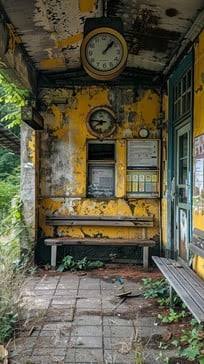
The railway station was almost forgotten—by the trains, by time, by the world. The tiles were cracked like old skin, the signs faded to near whispers of color, and the air tasted of rust and dampness. Weeds rose defiantly through the tracks, stubborn and alive in a place long left behind.

Morning light spilled across the station with gentle grace. A distant train horn called out somewhere far beyond the horizon and dissolved into silence.

Rajan sat alone on a rusting bench. He was in his late fifties, his salt-and-pepper hair swept back, his eyes lined by time and memory. A denim shirt hung loose on his frame. Beside him, a cloth bag—soft from use, fraying at the edges. His gaze stretched far beyond the tracks, past the emptiness, into something unseen. He didn’t look at his watch. He already knew no train was coming.

The hours passed like clouds. By afternoon, a quiet shuffling echoed through the station’s long corridor. Meera entered with the kind of grace life gives only after it’s knocked you down and helped you stand again. She was in her early sixties, dressed simply, elegantly. Her silver-streaked hair was tied back, and she carried a small flask tucked into the crook of her arm.

She found her seat beneath the old station speaker. As she sat, the speaker crackled to life.

“Train number one-zero-two-four, arriving on platform number two…”

She mouthed the announcement silently, her lips forming each familiar word. Then, her eyes closed, a faint smile touching her mouth. As if for a few seconds, the station became a temple, and the voice—prayer.

Days passed.

Rajan unfolded the same letter each day, its paper worn soft like cloth. He read it slowly, reverently.

Meera would sit in her usual spot, eyes closed, head tilted slightly toward the speaker. When the announcement came, she’d smile faintly, whisper it along.

A heavy rain came one day. The monsoon let loose a curtain of silver. Rajan stayed exactly where he always did, letting the rain stitch cold into his shoulders.

Another day, Meera poured tea from her flask into two small cups. One, she sipped from. The other sat beside her, untouched, steam curling into the air like memory.

Sometimes, they made brief eye contact across the platform. A soft nod. No words. Just two people caught in the same kind of quiet.

One rainy afternoon, the rhythm of the rain slowed, as if hesitant to interrupt.

Rajan turned toward her, finally speaking.

“Do you ever wait for someone… who’s already gone?”

She looked at him. Not startled. Just… seen. As if she’d asked herself the same question before.

“Every single day,” Meera said.

He breathed in, the air damp and heavy.

“My wife,” he began, his voice steady, “left after a fight. Walked out with just a small bag. Two weeks later, I got a letter. She said she just needed time. Said she’d be back.”

He paused. Looked out across the tracks.

“It’s been nine years.”

Meera’s eyes found the speaker above them. Her voice was soft.

“My husband worked for the railways. He was the voice of this station. Every announcement… that’s him. Still. All these years later.”

She smiled gently. “It’s the only place I can still hear him.”

They didn’t speak after that. But the silence wasn’t empty anymore.

More days. More gentle rituals.

Rajan shared a piece of paratha from his tiffin. Meera accepted it without ceremony.

Meera laid a shawl on the bench beside Rajan on a cool day, smoothing the fabric like memory.

When the speaker called out, she closed her eyes. Rajan always looked away, as if respecting something sacred.

One afternoon, Rajan opened a worn photo. A woman laughing, wind tugging at her hair. She looked too alive to ever leave.

“She loved trains,” he said. “Said they sounded like freedom.”

Meera smiled. “And you?”

“I only loved them… because she did.”

One quiet evening, Meera brought a small recorder—old, chipped. She set it beside her, clicked a button.

“Train number one-zero-two-four, arriving on platform number two…”

The same voice. The same cadence.

A tear slipped down her cheek. She didn’t wipe it away.

Rajan reached out slowly, placing his hand near hers—not touching, just close enough to share warmth. She didn’t move it.

Sunset turned the station golden. The sky dimmed. The speaker crackled again, softer now.

They sat side by side, the space between them gently filled with understanding.

A distant train called out again—a sound like memory, or maybe promise.

Rajan turned to her.

“Do you think… it’s okay to love someone again?” he asked, his voice uncertain, vulnerable. “Even when your heart is still… somewhere else?”

Meera looked at him, her eyes calm, kind, filled with the clarity only time can offer.

“I think it’s the only way we ever really love,” she said. “Never replacing. Just… holding space for more.”

The train passed through in the distance, its light carving through the dusk. But they didn’t move. They stayed seated. Together.

Above them, the announcement echoed again.

“Train number one-zero-two-four, arriving on platform number two…”

Meera looked up. Rajan watched her.

Somewhere between grief and healing, between memory and hope, they remained—two souls in a quiet station, no longer waiting alone.

Some hearts never stop waiting.

Some souls never stop arriving.

Copyright (c) Pratik Majumdar, 2025. Any article, story, write-up cannot be reproduced in its entirety or in part, without permission. URL links can be used

The Runaway Hearts

It was a sweltering June afternoon in Jaipur, and Nikhil sat across from Aditi at their usual tea stall, watching her talk animatedly about some random movie scene while he smiled and nodded, but didn’t really hear a word.

Because Nikhil was in love.

With Aditi.

He had been for years, ever since they met as wide-eyed engineering students. But he never told her. What if she didn’t feel the same? What if it ruined the effortless, perfect friendship they had? She was his best friend, his constant, his storm and his calm — and he’d rather suffer silently than lose her completely.

Six years went by since their first day of meeting in college.

So when she called him one evening and said, “My parents have arranged my wedding, Nikhil,” something inside him shattered.

“What?” he managed, trying to keep his voice steady.

“I can’t do it. I can’t marry someone I don’t love.”

His heart thudded a bit more at her words. She loves someone? That was the knife that turned.

“I need to run away,” she whispered. “Will you help me?”

His mind screamed NO, but his mouth said, “Always.”

The night before the wedding, Nikhil waited outside Aditi’s house, bike engine rumbling low. She appeared in a soft blue kurta, a dupatta fluttering behind her like a flag of rebellion. Her eyes sparkled with a mix of mischief and fear.

They drove under a moonlit sky, wind howling past them, silence stretching. He didn’t ask who the guy was. Didn’t want to know. He was just the guy helping the girl he loved run away… to be with someone else.

“Where are we going?” he finally asked.

“Panna Ghats,” she replied. “He’s waiting there.”

His stomach twisted. But he nodded.

When they arrived, the ghats were glowing under dim temple lights. And there, standing like ghosts in the mist, were her parents.

Aditi froze. Nikhil panicked. “We’ll turn around,” he whispered, grabbing her hand. “We’ll find another way—”

“No,” she said, pulling him forward. “They’re not here to stop me.”

He looked around wildly. “Where is he?”

Aditi turned, stepped close — too close. Her eyes locked on his.

“You still haven’t figured it out, have you?”

“What?”

Her smile was maddening. “You’re him, Nikhil.”

The world stopped.

He blinked. “What are you talking about?”

“I’ve been in love with you since forever,” she laughed, tears in her eyes now. “I knew you’d never say it, never take the risk. So I made you take a leap without realising.”

“You tricked me?”

She nodded. “Guilty.”

He stared at her. “Your parents—?”

“They’ve known for weeks. They’re here to bless us, idiot.”

Something inside him burst — relief, disbelief, joy. And then he laughed. A wild, broken, beautiful laugh.

“You’re insane,” he said, cupping her face.

“You love me?” she asked, softly now.

He leaned in, forehead resting against hers. “Madly.”

And then, beneath a flickering temple lamp, he kissed her — like he should have years ago, like the boy who’d finally found the courage to catch up with his heart.

The ghats echoed with the quiet applause of stars, and Aditi whispered against his lips, “Took you long enough, hero.”

Copyright (c) Pratik Majumdar, 2025. Any article, story, write-up cannot be reproduced in its entirety or in part, without permission. URL links can be used

Liverpool: The Heartbeat of a City

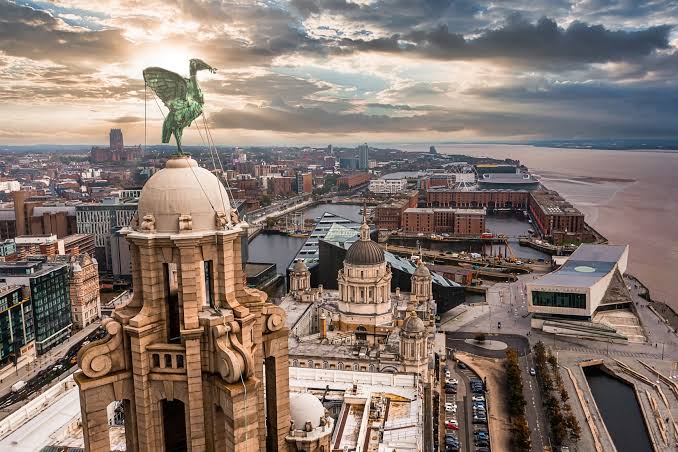
There are moments in life that defy description, moments so deeply rooted in emotion that words can only attempt to capture their magic. Liverpool winning their 20th league title is one of those moments. For a city forged in the fires of hardship and resilience, for a people whose laughter rings louder than their struggles, this victory is not just another trophy. It is a hymn to hope, a love letter to loyalty, a battle cry answered at last.

Liverpool has always been more than a football club. Supporting Liverpool is living an emotion that runs deeper than bloodlines. It’s a communion between people scattered across continents, knitted together by invisible threads of passion, loyalty, and undying belief. This title is not just for the players or the city. It is for every soul who ever sang in the rain, who ever hummed “You’ll Never Walk Alone” through tears, who carried the badge not on their chest, but in their heart.

We cannot speak of this glory without bowing our heads in gratitude to Jurgen Klopp. Jurgen, you changed our destiny. You turned doubters into believers, you gave us a reason to dream when dreams seemed foolish. Even though your time ended sooner than we wished, you left behind a foundation stronger than stone — a family, a fortress of belief. Your spirit dances in every pass, every tackle, every roar from the Kop. We will never, ever forget you.

And then there’s Stevie G — Steven Gerrard — who taught us that loyalty is not just a word, but a way of life. Through heartbreaks, through near-misses, Stevie stayed. His blood, his sweat, his tears built the soul of this club. It is through his undying devotion that we learned the meaning of never giving up, no matter how heavy the burden.

How can we not speak of the ex-players who gave us moments that will forever glitter in our memories? Mane with his blinding pace and fearless joy. Bobby Firmino, the magician with a smile that warmed even the coldest night. Luis Suárez, the warrior who wore chaos as armour. Philippe Coutinho, whose artful feet painted masterpieces at Anfield. Wijnaldum, the midfield maestro. Fabinho, our lighthouse in the storm. Hendo, our captain, who lifted trophies and hearts alike. James Milner, the embodiment of grit and endurance. Each of them gave us reasons to believe, reasons to love, reasons to dream.

When Klopp left, a darkness loomed. It felt as if the ground beneath us trembled. But then came Arne Slot — a man who reminded us that hope never truly dies in Liverpool. When the clouds gathered, Arne made us believe in blue skies again. His calm strength, his faith, his daring — they lifted us back onto our feet and pushed us forward.

This title belongs to the people of Liverpool — the ones who never stopped singing even when the songs were drenched in sorrow. It belongs to the Kop, that living, breathing cathedral of devotion, that makes strangers into brothers and sisters with a single chant. It belongs to all of us, thousands of miles apart, yet closer than heartbeat to heartbeat. We are a family. We are Liverpool.

Today, the storm has ended. After years of fighting, of falling, of standing back up again, we have reached the summit. Our 20th league title is more than a trophy — it is a testament to resilience, loyalty, and the infinite power of hope.

And we are not done. The sky above Anfield is no longer grey — it shimmers with the promise of gold. The day will come when we lift the 21st title, and the city will shine with a brilliance only Liverpool can summon. Until then, we march together, hand in hand, soul to soul.

We will never walk alone. Not now. Not ever again.

Copyright (c) Pratik Majumdar, 2025. Any article, story, write-up cannot be reproduced in its entirety or in part, without permission. URL links can be used

Table For Two

Every morning, without fail, he came in at exactly 8:13 a.m.

Aarya had been running her tiny café in Bandra for just over six months when she first noticed him. In a crowd of chatty students, remote workers, and backpack-wearing tourists, he stood out. Always dressed in a crisp white linen shirt and a charcoal grey Nehru jacket, salt-and-pepper hair parted neatly, a face that looked like it had seen too much and spoken too little.

He never missed a day.

“One espresso. One green tea,” he said each morning with the same quiet voice, eyes flicking toward the same table by the window.

She started bringing it to him without needing to ask. He would always thank her politely. Drink the espresso slowly, in deliberate sips. And leave the green tea untouched.

At first, she thought maybe it was for someone who hadn’t shown up. But after weeks turned into months, the mystery burrowed its way into her routine. Customers came and went. Staff changed. Even the monsoon gave way to December’s reluctant chill. But he remained. Same table. Same order. Same silence.

Aarya asked her staff. No one knew his name. He paid in cash. Never spoke unless spoken to.

It was a Friday when she finally walked up and sat across from him, her curiosity overceding her caution.

“Uncle?” she said gently, “Can I ask you something?”

He looked up from his espresso. His eyes were a curious shade of pale brown, calm and unreadable.

“You order green tea every single day. But you never drink it. Why?”

His gaze moved to the untouched cup across the table. He didn’t answer right away. A rickshaw honked outside. Somewhere, someone was shouting about a sale.

Then, he said softly, “It’s not for me.”

Aarya offered a small smile. “For someone who used to come with you? A wife? Girlfriend?”

He studied her, the corner of his mouth lifting—but it wasn’t a smile.

“No. She’s still here.”

The air in the café seemed to turn still. Aarya glanced around. A few regulars were chatting over French fries and cappuccinos. No one was paying attention.

“She sits across from me. Every day. Right where you’re sitting.”

Her fingers tightened around the tray she was holding.

“She doesn’t like espresso,” he continued. “She always preferred green tea. No sugar.”

Aarya slowly stood up. Her breath felt uneasy. 

“She doesn’t like when someone sits in her chair,” he added, still calm. “She gets… upset.”

Aarya took a small step back. “Uncle… are you saying—”

“I killed her.”

He said it like it was nothing. His deadpan expression not changing one bit. 

“She wanted to go to Delhi. Take a job. Said we were growing apart. But I didn’t want that. So I made sure she stayed.”

He looked at the cup again, as if remembering her voice.

“I come every day so she knows I haven’t forgotten. I leave her with her tea. And I sit with her. And I remember.”

Aarya’s hands felt cold despite the heat outside.

He reached into his jacket. For a split second, she froze—but he only pulled out a yellowed old envelope. He placed it on the table.

“For you,” he said. “In case she ever speaks to you instead.”

Then he stood up, as neatly as he’d come in, and walked out. No backward glance. No hesitation.

He never returned.

Aarya opened the envelope the next day. Inside was a creased photograph of a young woman with jasmine flowers in her hair, laughing over a cup of green tea. And a short note on the back:

“I should have let her go.”

From that morning on, 8:13 a.m. became sacred.

The green tea was made fresh and placed at the same table.

And though no one ever sat there again, Aarya sometimes thought she saw steam curling up from the cup—rising like a whisper, like a memory that hadn’t quite left.

Copyright (c) Pratik Majumdar, 2025. Any article, story, write-up cannot be reproduced in its entirety or in part, without permission. URL links can be used

The Hitman

It was late afternoon in Mumbai. The sky over Marine Drive simmered with gold and grime—bright enough for comfort, hazy enough for clarity.

A man sat on an old concrete bench near the rocks, the sea whispering secrets behind him. His jacket was too thick for April, but it hid the silenced automatic  tucked neatly under his arm.

He went by no name, not really. Names complicated things. He was only a job, a payment, and a clean exit.

A black SUV had dropped him off an hour ago. He lit a cigarette, kept his eyes on the gateway to the promenade. Any minute now, Mr. Rajiv Mehra—real estate mogul, charity darling, and according to the file, a monster in a well-tailored kurta—would walk down for his ritual evening stroll with his guards.

Simple assignment.

Clean exit.

“Anyone else sitting here?”

The voice was soft, controlled. Feminine.

He turned, startled. A woman stood behind the bench, sunglasses too large for her face, but somehow they worked. Her lipstick was a shade between vermilion and blood.

“Suit yourself,” he muttered, gesturing to the other end of the bench. “Smells like fish guts, though.”

“I like it,” she said, settling in. “Smells alive.”

She didn’t belong here. Not in her chikankari kurta, not in those silver sandals. Her brown wavy hair neatly tied up. Her presence scratched at his instincts.

“Strange place to strike up a conversation,” he said, trying to sound indifferent.

She smiled without turning. “Strange people are worth talking to.”

He turned away, scanned the far end of the road. Too many people.

“You’re waiting for someone,” she said, casually.

“Just passing time.”

“Liar,” she said without malice. “You’ve looked at that gate ten times in the last minute.”

He said nothing.

She turned to him fully now. “You married?”

He arched an eyebrow. “That your idea of small talk?”

“I like to know who I’m interrupting,” she said. “What if you’re meeting your wife here? Or your girlfriend?”

“Neither,” he said.

She smiled. “Then I’m not spoiling anything.”

He gave a short laugh. “Not yet.”

“What’s your name?” she asked.

“Vikram,” he lied.

“Hmm. Suits you. Sounds like a man who doesn’t ask for forgiveness.”

“And yours?”

She tilted her head. “Let’s not ruin it with names. It’s more fun this way.”

He studied her. “You always flirt with strange men in public places?”

“Only the ones with eyes like yours,” she said. “Men who’ve done terrible things and sleep just fine at night.”

That made him go still.

She leaned in slightly. “Don’t worry. I’m not here to stop you.”

Something in his gut turned.

“What did you say?”

She didn’t answer. Her gaze shifted back to the gate. “There he is.”

And there he was—Rajiv Mehra, walking like he owned the city, flanked by two security men. White linen kurta, Ray-Bans, the whole “respectable man” costume.

Vikram stood, slow and silent, drawing the pistol up behind the hedge.

“You should leave,” he said.

She didn’t move.

“I said go.”

She looked up at him, cool and unbothered. “I just need a moment.”

He lifted the pistol, took a breath

Three shots fired !!! 

Rajiv stumbled forward, blood spreading across his chest, collapsed onto the path with a thud that echoed too loud in the fading light.

Vikram froze.

He looked down.

She stood beside him now, arm still out, a tiny pistol half-hidden beneath her dupatta. Her hands didn’t shake.

She turned to him, eyes gleaming.

“I wanted to do it myself,” she said calmly. “But I hired you… just in case I lost my nerve.”

He stared at her, stunned.

She reached up, hugged him lightly, like they were old friends parting at a train station.

“You gave me courage,” she whispered.

She pressed a thick envelope into his jacket and stepped back.

Then she smiled—soft and sad—and walked away, heels clicking against the tiles, disappearing into the noise and chaos of the crowd that was now rushing toward the body.

Vikram stood rooted to the spot, pistol still warm in his hand, her perfume still on his jacket.

He didn’t know her name.

But he would never forget her.

Copyright (c) Pratik Majumdar, 2025. Any article, story, write-up cannot be reproduced in its entirety or in part, without permission. URL links can be used