The Disappearance
Rishi Mukherjee was a man most people overlooked. A middle-aged, soft-spoken man with graying hair and a slight stoop, he moved through life like a shadow. To his wife Anuradha, he was dependable but dull. To his teenage son Rahul, he was strict, a relic of a generation that didn’t understand modern life. To his colleagues at work, he was diligent, the kind of man who blended into the background.
On an unremarkable Tuesday morning, Rishi disappeared. He left no note, no explanation. His shoes were by the door, his phone on the dining table. Anuradha assumed he’d gone out for his morning walk. But as the hours passed, unease set in.
By evening, she called the police. They took down his details—age, height, distinguishing marks—but their lack of urgency was obvious to everyone around. Men like Rishi didn’t just vanish; they were predictable, ordinary. He’d turn up, they said.
But Rishi didn’t.
The First Message
Three days later, the first message came. Anuradha opened her email to find a single line:
“I’ve been drowning in silence, but no one noticed. R.”
Her stomach tightened. She dismissed it as a cruel prank. But that evening, Rahul came home from school pale-faced. He’d found a note in his locker:
“A father shouldn’t have to beg for his son’s attention. R.”
Anuradha’s unease turned to fear. She called the police again, but they were skeptical. “Do you recognise the handwriting?” they asked. She didn’t.
The messages kept coming. To Rishi’s colleagues, his boss, even his old friends. Each one was personal, cutting, revealing fractures in their relationships with him.
To his boss:
“You took my years and gave me scraps in return. R.”
To his childhood friend Sudip:
“I carried our friendship alone while you let it wither. R.”
Each message made its recipients squirm with guilt. Rishi’s absence was no longer a mystery—it was an indictment.
A Trail of Pain
As the messages mounted, Anuradha began to reflect on her life with Rishi. They had been married for 21 years, but she couldn’t remember the last time they’d truly spoken. He had tried, she realised now. The nights he stayed up waiting for her to come home from her work events. The way his face would light up when he shared a new idea for their son’s future, only for her to dismiss it.
Rahul, too, was haunted by guilt. His father had tried to connect with him—teaching him chess, asking about his school projects—but Rahul had been too busy, too resentful.
Even Rishi’s boss, Mr. Chatterjee, who had prided himself on running an efficient office, began to feel uneasy. He remembered Rishi’s quiet complaints about the workload, the bullying from a senior colleague. He had ignored them all.
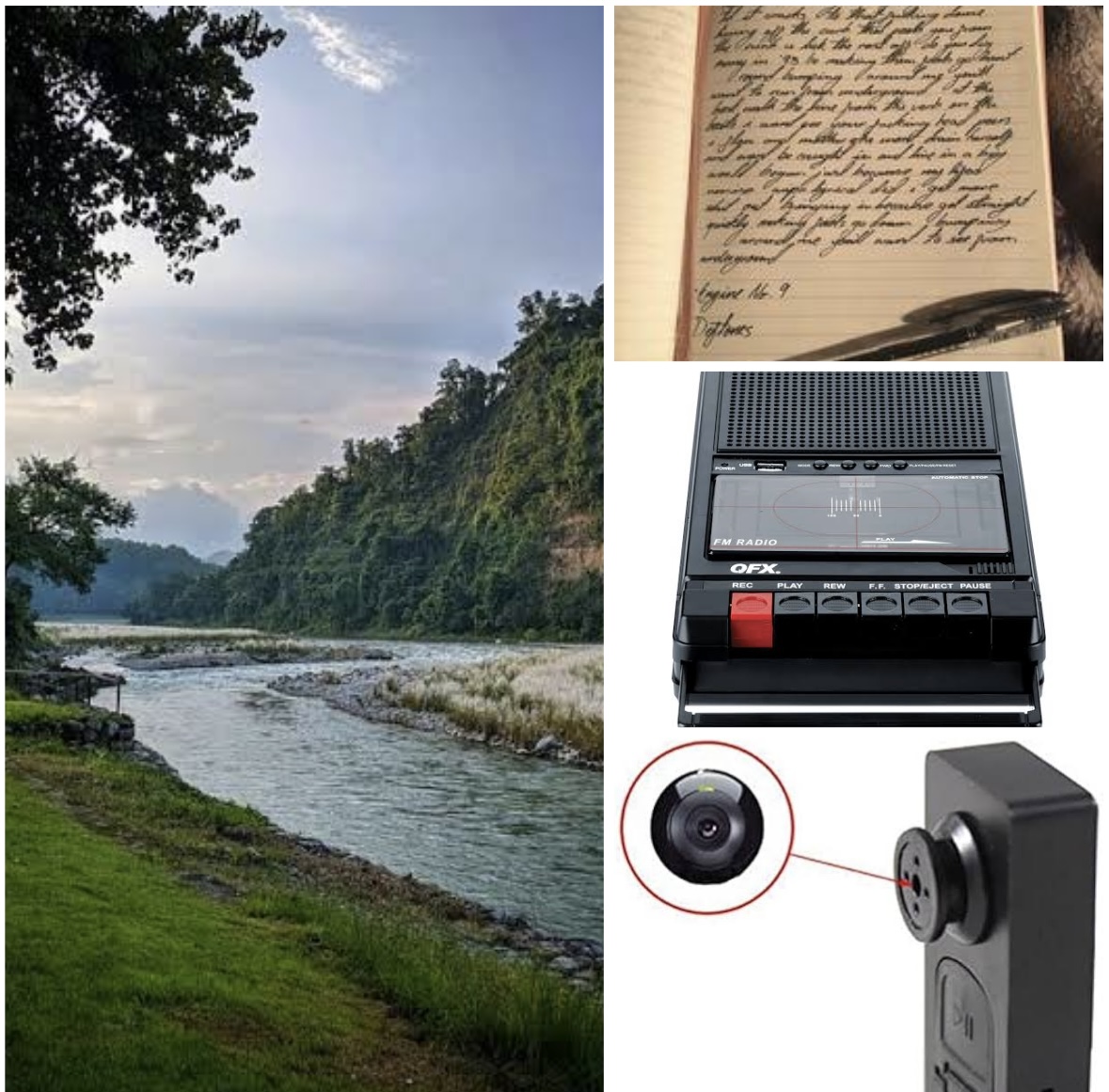
Anuradha searched their home for clues and found a hidden notebook in the study. Its pages were filled with unsent letters:
“Dear Anuradha,
I don’t know how to reach you anymore. The walls in this house feel taller every day…”
“Dear Rahul,
I’m trying to be the father you need, but I feel like I’m failing…”
Each letter was a plea for connection, a cry they had all ignored.
The Riverbank
A week after the messages began, Anuradha received another email:
“The river remembers everything. Look deeper. -R.”
She knew the spot. Rishi often sat by the riverbank, a quiet place where he claimed to find peace. She and Rahul rushed there, hoping to find him. Instead, they found a satchel buried under the damp soil.
Inside were a series of audio recordings labeled with dates. Anuradha played the first one and heard Rishi’s voice: raw, trembling.
“Today, I told Anuradha I wasn’t happy. She laughed it off. Said everyone feels that way. I think she’s right—maybe it’s just me…”
The recordings chronicled years of despair, his growing sense of invisibility. Along with the tapes was a map, marked with places Rishi frequented—his office, their home, the riverbank.
Anuradha took the map to the police, who declared the case a likely suicide. But she wasn’t convinced.
Support Group
Following the map’s trail, Anuradha discovered Rishi had been attending a support group for individuals struggling with depression. At first, she felt relief—he hadn’t been entirely alone. But her relief turned to dread as she learned more about the group.
Several members had disappeared over the years, leaving behind cryptic notes like Rishi’s. The group’s leader, known only as “The Guide,” preached radical detachment: leaving behind everything that caused pain.
“Some people,” The Guide once said, “can only start over by becoming nothing.”
Had Rishi been manipulated into leaving? Or had the group given him the courage to disappear?
The Final Message
Months passed. The messages stopped. The police closed the case, labelling it an unresolved missing person’s file. Life crept back to a fragile normalcy for Anuradha and Rahul.
Then, one winter morning, a package arrived. Inside was a photograph of Rishi, sitting on the porch of a small cottage in a remote village. He looked older but healthier, more alive than she’d ever seen him.
The note with the photograph read:
“I had to leave to find myself. Don’t look for me. It’s better this way. -R.”
Anuradha clutched the photo, conflicted between relief and sorrow. She wanted to find him, to bring him home, but she also understood. Perhaps he truly needed this.
That night, as she stared at the photo, Rahul called her from his room. He’d found a small camera hidden in their living room clock. Someone had been watching them.
Anuradha’s heart raced. She turned back to the photo. Was it truly Rishi who sent it? Or had someone else orchestrated everything?
In the reflection of the window, she thought she saw a figure standing behind her. She turned sharply, but the room was empty.
The echo of his absence lingered, heavier than ever.
(Absent Echoes is a story of guilt, connection, and the haunting truths we often overlook in the people closest to us.)
Copyright (c) Pratik Majumdar, 2024. Any article, story, write-up cannot be reproduced in its entirety or in part, without permission. URL links can be used instead
 Words are flowing out...