The Disappearance of Arvind Mathur

It began on an unremarkable Monday morning. Aditi called, but Arvind didn’t pick up. She assumed he was busy, perhaps immersed in his music or lost in a strange book. By evening, when Nikhil texted and received no reply, mild concern set in. Anjali, ever perceptive, called Aditi.

“Have you heard from Arvind today?”

“No. Why? You think something’s wrong?”

“I don’t know… I just have a feeling.”

By midnight, their unease turned into dread.

The next morning, Nikhil and Anjali drove to Arvind’s house. The caretaker, an old man named Raghu, answered the door with worry lining his face.

“Saab nahi dikh rahe kal raat se,” he mumbled.

Inside, the house was eerily silent. His beloved music room was untouched. A glass of wine sat half-empty on the table. His phone lay on the couch. His wallet was there. His car was still parked in the driveway.

Arvind Mathur had vanished.

Aditi insisted they call the police, but Nikhil held back. He knew Arvind had a habit of retreating into solitude. But this felt different. The three of them combed through his house. Then, in his bedroom, Anjali noticed something odd—the closet door was slightly ajar. And behind the neatly arranged clothes, a faint seam in the wall.

A hidden door.

With trembling hands, she pushed it open.

The room inside was nothing like the rest of Arvind’s elegant home. It was a prison of his own making—walls covered in disturbing sketches, chaotic scribbles in red ink. Pages upon pages of poetry, but the words were filled with pain, loss, and an unbearable darkness. Burn marks on the floor. A single wooden chair in the middle of the room, facing a cracked mirror.

And then there was the box.

Nikhil opened it hesitantly. Inside were old photographs, letters, and a bundle of newspaper clippings. Each headline made their blood run cold.

“Businessman Rajeev Mathur and Wife Found Dead in Apparent Suicide.”

“Young Heir to Mathur Publishing Orphaned at 16.”

“Tragedy Strikes Again: Close Family Friend Found Dead in Similar Circumstances.”

Anjali clutched her chest. “Oh my God… he never told us.”

Arvind’s parents had died in what the world thought was a joint suicide. But the clippings hinted at something sinister—whispers of a third presence in the house that night. Someone unseen. Someone who had left behind nothing but shadows. And then, a few years later, another death—a man connected to the Mathur family.

The papers spoke of a curse.

Vanishing into the Dark

The police found no evidence of forced entry. No ransom note. No signs of struggle. It was as if Arvind had simply ceased to exist.

But Nikhil and Anjali knew better. They had seen the hidden room. They had read the writings of a mind unraveling. They knew Arvind had been haunted—not by ghosts, but by something far worse.

His own mind.

Had he run away? Had he ended his own life? Or had the curse finally claimed him too?

The weeks passed. The police investigation stalled. The case of Arvind Mathur’s disappearance turned cold.

But then, one night, Aditi received an email.

It contained only four words:

“I was never alone.”

And attached to the email was a photo.

It was a grainy, black-and-white image of Arvind’s living room. The same one they had searched countless times. Everything looked normal. Except for one thing.

In the mirror, behind the couch where Arvind used to sit, there was a shadow.

A dark, twisted figure standing right behind him.

Watching.

Waiting.

Arvind Mathur was gone. But maybe… just maybe… he had never been alone in the first place.

Copyright (c) Pratik Majumdar, 2025. Any article, story, write-up cannot be reproduced in its entirety or in part, without permission. URL links can be used


His Story

He had always loved too much.

As a child, he was the one who clung to his mother’s side, eager for a kind word, a lingering touch on his hair. She was busy, though, always too tired, too distracted. His father barely spoke, except to issue commands. It was the first lesson he learned: love, in its purest form, was rarely returned in equal measure.

But he was hopeful.

He met Aisha in college. She had bright eyes, an easy laugh, and she told him she’d never met anyone as kind as him. He devoted himself to her, always anticipating her needs, writing her long letters when she was sad, holding her when she felt lost. He thought she saw him, truly saw him. But one day, she simply left.

“I don’t feel the same way you do,” she had said, her tone almost apologetic. “I need someone… different.”

Different.

He convinced himself it was just bad luck.

Then came Meera. He married her with a heart still aching but full of renewed hope. They spoke of dreams, of building a life together. He worked long hours, came home with small surprises, kissed her forehead every morning. But as the years passed, her warmth faded. She sighed when he entered the room. Conversations became dull, then sparse. One night, she whispered, “I love you, but I don’t think I ever loved you enough.”

Enough.

They had children. Two bright, beautiful souls who once ran to him with open arms. He adored them. But as they grew, they pulled away. Their love became conditional—accepting only when he gave, dismissive when he sought a little affection in return.

He gave, and he gave, and he gave. And yet, there was always a distance. A silent, aching void between him and the world.

His friends were no different. They laughed at his jokes, borrowed his time, his money, his kindness. But when he faltered—when he needed them—they reminded him of his flaws. “You overthink things,” they said. “You take things too personally.”

One evening, sitting alone in the house he had built, surrounded by people who barely seemed to notice him anymore, he realized the truth.

It wasn’t that people didn’t care. It was that their care was fleeting. Temporary. Their love came with conditions, with limits.

And he—he had none.

He left.

He drove for days, past cities and towns that blurred together, until he reached a place of silence—rolling hills, deep forests, and rivers that spoke in whispers. He bought a small cabin, far from the world he had known.

At first, loneliness gnawed at him. The silence felt sharp, not soothing. There was no phone buzzing, no voices filling up the emptiness. He still longed for people, for a sign that someone missed him, that someone wondered where he had gone. But no one called. No one came.

The first few months were difficult. He had spent his entire life giving, seeking, yearning for love, for warmth. Now, there was nothing to seek. The trees did not praise him for his kindness. The river did not return his affection. The hills did not tell him he was special.

But they also did not betray him.

The sun rose every morning, the wind whispered through the trees, the stars blinked down at him with quiet indifference. For the first time, Rohan was not performing. He was simply existing.

He started small—reading books by the fireplace, learning to fish, growing a small vegetable garden. He walked through the forests and let the stillness sink into his bones.

And slowly, something changed.

One evening, as he sat by the river, watching the golden light of sunset shimmer over the water, he felt something shift within him. It wasn’t joy, exactly. It wasn’t the rush of love he had always chased. It was something quieter. Steadier.

Peace.

He thought about all the years he had spent searching for something—validation, love, understanding. He had believed that happiness lay in being seen by others, in being cherished. But now, watching the river flow without purpose, without expectation, he realized how wrong he had been.

He had never needed others to complete him.

He had never needed someone to mirror his love back at him to prove he was worthy.

The world would always be conditional. People would love when it suited them, when they needed something in return. That was human nature.

But he did not have to need them in the same way anymore.

That night, for the first time in his life, he slept soundly, without dreams of unfulfilled love, without aching for a touch, a word, a promise.

Days turned into months, and months into years.

He no longer waited for calls that never came. He no longer felt hurt when people forgot him. He had found something stronger than love—acceptance.

One day, as he sat on his porch, sipping tea and watching the mist roll over the hills, he realized he did not regret leaving. He did not regret giving up on others.

Because he had finally found the one thing he had been searching for all along.

Himself.

Copyright (c) Pratik Majumdar, 2025. Any article, story, write-up cannot be reproduced in its entirety or in part, without permission. URL links can be used

Sunday Mornings & Green Tea


“How the hell can you spoil the taste of those heavenly biscuits with that warm lemon water?”
 she’d demand, hands on her hips, eyes gleaming with mock indignation.

Sunday mornings used to be their ritual. The scent of freshly brewed green tea mingled with the warmth of oat cookies, and Dean Martin crooning softly on the vinyl, his voice blending seamlessly with her relentless complaints.

He never argued. He never defended his tea. He simply took a slow, deliberate sip, letting her words wash over him like the softest drizzle on a spring morning. He would bite into an oat cookie—her favourite—and pretend to ignore her. And that, he had discovered, only made her go on and on.

It was a dance they had perfected over the years, her rants and his silence composing a melody of familiarity, of love wrapped in the guise of playful exasperation. She was fire—fierce, passionate, relentless. He was water—calm, steady, patient. And together, they had created a storm he had come to cherish.

Sometimes, in the height of her fury, she’d threaten to throw his cup away. “One day, I swear, I’ll do it.” And she would try—hand reaching out, fingers grazing the warm ceramic. But he was always quicker, pulling it away just in time, laughing softly at the frustration dancing across her face. She never meant it, of course. Just as he never truly ignored her.

It was their kind of love. Loud in her words, quiet in his silences.

But this morning, the house was silent.

The record player had been still for four years. Jim Reeves did not sing here anymore.

The absence pressed against him like a weight he could never put down. He still made the tea, still placed the oat cookies on the plate, still sat in the same chair by the window. Old habits are hard to break, especially the ones wrapped in love.

As he lifted the cup, a familiar warmth curled around his fingers. A sip, a memory. A quiet laugh, an echo of the past. And then, as if the universe had conspired against his fragile moment of peace, his hand wavered. The cup tilted, the amber liquid spilling onto his track pants.

The sudden heat jolted him back—back to this room, this morning, this present where her voice no longer filled the spaces between sips of tea.

He turned around.

No one was there.

Of course, no one was there.

He let out a breath he didn’t know he’d been holding, set the cup down carefully, and stared out of the window, seeing nothing, seeing everything.

The cold December morning stretched endlessly before him.

Copyright (c) Pratik Majumdar, 2025. Any article, story, write-up cannot be reproduced in its entirety or in part, without permission. URL links can be used

A Flight of Memories

The flight was calm, the steady hum of the engines filling the cabin with a low, rhythmic lull. She adjusted the blanket over her sleeping son, her fingers brushing against the tiny hands curled into a fist. Her husband sat beside her, flipping through a magazine, oblivious to the storm that was about to crash into her heart.

It started with a voice. A voice she hadn’t heard in years.

“One beer, please. Extra cold. And if you have one of those tiny lemon wedges, throw it in. And lots of ice cubes. Just for drama.”

She froze. The request was too specific, too unique too familiar. Slowly, she turned her head toward the voice. And there he was.

Nikhil. 

The man she had once loved with everything she had. The man who had made her laugh, who had kissed her under streetlights, who had once whispered dreams into her ears like poetry. He looked different now—leaner, older, his dark hair flecked with streaks of silver. But those eyes… still the same. Still mischievous, still carrying secrets of a thousand untold stories.

A sea of memories flooded her mind. Sneaking out for midnight drives, sharing a plate of pani puri, getting drenched in the rain because he insisted that “love stories need at least one Bollywood moment.” And, of course, the night he had kissed her on the rooftop, under the glow of a city that never slept, promising her forever.

Forever. Such a naive word.

He hadn’t seen her yet. She watched as he took his beer, his fingers tracing the rim of the glass absentmindedly. Her heart pounded, but she forced herself to look away. This was not the time. Not the place. She had a life now, a husband, a son. Nikhil was a chapter she had closed long ago.

Or so she thought.

A while later, as he walked past her toward the restroom, something in her shifted. She didn’t think. She simply stood up, made her way down the narrow aisle, and waited outside the restroom door.

When he stepped out, their eyes met. And in that moment, time folded in on itself.

“Wow,” he finally breathed, shaking his head as if to clear the daze. “Of all the flights in the world…” he echoed line which was eerily similar to one from their favourite movie once upon a time. 

She laughed, and it came out a little too soft, a little too fragile. “And of all the beers in the world, you still order it like that.”

He grinned. “Some things never change.”

Silence stretched between them, thick with everything unsaid.

“Walk with me?” she asked.

He nodded. They moved toward the galley, standing near the small windows, away from the sleeping passengers.

“You look… happy,” he said, his voice quieter now.

“I am,” she admitted. “I have a wonderful husband. And my son, Kabir… he’s my whole world.”

Nikhil smiled. “Kabir, huh? Nice name.”

She hesitated before asking, “And you? Tell me about your life.”

He shrugged, looking away. “Oh, you know. Work, travel… the usual.”

She narrowed her eyes. “Still avoiding direct questions, I see.”

“Still asking the tough ones,” he shot back with a smirk.

They both chuckled, and for a moment, it was as if nothing had changed. As if they were still those two reckless kids who believed love could conquer anything.

Her mind drifted again—to their last night together. The fight, the tears, the realization that love wasn’t always enough. She had wanted stability; he had wanted adventure. And so, they had walked away.

“You ever think about us?” she asked softly.

He exhaled. “More than I should.”

She looked at him then, really looked at him. There was something different in his face. A tiredness. A shadow. Before she could press further, an announcement interrupted them—the captain’s voice, announcing their descent.

As they walked back to their seats, she felt an ache she couldn’t quite name. Was it regret? Nostalgia? Or simply the cruel passage of time?

The plane touched down smoothly. As she reached for her bags, a commotion near the front caught her attention. A group of medical personnel was boarding, moving with quiet urgency. And then she saw him.

Nikhil, standing near the exit, waiting for them.

Her eyes got a little wider than usual as realisation hit her like a punch to the gut. He wasn’t just traveling. He was sick. Very sick.

As if sensing her eyes on him, he turned around. Their gazes locked.

He smiled. A small, tired, but utterly genuine smile. Then his eyes flickered to her husband, to her son, and back to her.

There was no bitterness in his expression, no sadness. Just… peace.

And then, just like that, he was gone.

She stood there, frozen, as her husband gently touched her shoulder. “Everything okay?”

She swallowed the lump in her throat and nodded. “Yeah. Just an old friend.”

As they walked toward the exit, she couldn’t shake the weight in her chest. Some people come into your life like a storm, changing everything. And some leave like a whisper, a lingering echo of what once was.

And sometimes, if you’re lucky, you get to say goodbye.

Copyright (c) Pratik Majumdar, 2025. Any article, story, write-up cannot be reproduced in its entirety or in part, without permission. URL links can be used
The Right Man

She sat alone at the bar, her fingers absently tracing the rim of her untouched glass. The ice had long since melted, the condensation pooling beneath it like the remnants of her unresolved past. The low hum of conversation around her faded into the background as she drifted into a world of what-ifs and should-haves.

Her life was a paradox—her career soaring while her marriage crumbled. Each corporate victory felt hollow when weighed against the growing emptiness in her home. She had once thought success could fill the void, that a thriving business could compensate for a faltering relationship. But no deal, no accolade, no achievement ever did.

And then, there was him. The one she let go.

The one who never promised forever, but made every moment feel infinite.

She hadn’t planned to reconnect with her ex, but fate had intervened. A chance meeting, a few conversations, and suddenly, the floodgates had opened. Every suppressed memory, every buried emotion had clawed its way back to the surface. She had convinced herself that she had moved on, but the way her heart quickened when she saw his name on her phone told a different story.

She had told herself that tonight was harmless—just a drink, just a conversation. But deep down, she knew better.

The minutes stretched into an hour, then two. He wasn’t coming.

The sting of disappointment settled deep inside her, bitter and sharp. She signalled for another drink, then another. Each sip dulled the ache, blurred the lines between past and present. The bar lights shimmered, the music pulsed through her veins, but all she felt was numb.

When she finally tried to stand, the world tilted dangerously. She reached for the counter, but before she could fall, strong hands caught her.

For a fleeting second, she thought it was him. But as she looked up, blinking away the haze, she found herself staring into the eyes of the man she had spent years drifting away from.

Her husband.

“I knew you were stressed today, so I came with you,” he said, his voice steady, unreadable. “Whoever you were waiting for didn’t show up, and I thought… maybe you’d need me instead.”

His hands didn’t let go, anchoring her when everything else felt unsteady. For the first time in years, she really looked at him—not as the husband who had become a stranger, not as the man she had once thought was the perfect choice, but simply as him.

And in that moment, something inside her shifted.

Tears welled up, unbidden, trailing down her cheeks. It wasn’t sadness, not entirely. It was clarity. The kind that hit like morning light through a window after a sleepless night.

She had spent so long believing she had made the wrong choice, that she had settled for something less than what she once had. But love—real, lasting love—wasn’t about grand passion or stolen moments. It was about showing up. About catching someone before they fell.

Her husband hadn’t always understood her. They had drifted, fought, lost their way. But he had come for her tonight, even when she hadn’t asked him to. Even when she had been waiting for someone else.

And maybe, just maybe, that was love, too.

She let him hold her as they walked toward the car, the past finally loosening its grip on her heart.

Copyright (c) Pratik Majumdar, 2025. Any article, story, write-up cannot be reproduced in its entirety or in part, without permission. URL links can be used

A Fragrance of September

The café still smelt the same as always. Coffee beans, warm bread, and a faint trace of vanilla from the pastries in the display case. He sat by the window, just as he used to, stirring his espresso absentmindedly, his eyes drawn to the empty chair across from him. It had been years, yet some evenings—like this one—her memory surfaced unannounced, slipping past the walls he had carefully built around him.

He could never quite remember how it ended. It baffled him. A love that had begun like a spark catching dry wood, burning fast and bright, should have left a clearer imprint. But the end? It was like trying to recall a dream upon waking—fragments, whispers, but never the full picture.

He remembered the way she laughed, tilting her head back just slightly, eyes crinkling at the corners. He remembered how she would let him win their endless debates over coffee—how she pretended to hate espresso but stole sips from his cup anyway. And he remembered the cheese straws, how she would protest, “I can’t eat anymore,” but still let him feed her another bite. “I have to go home and pretend I’m hungry,” she would giggle.

That last evening had been like any other—or so he thought. They had walked together, side by side, their steps unconsciously synchronized, the way two people in rhythm often are. But something had shifted when they neared her building. She had looked ahead, suddenly stiff, and then the words came, quiet but firm. “I think you should leave from here.”

No explanation. No goodbye. Just that. He remembered being left dumbstruck at the suddenness of it all. 

Had they spoken at work the next day? Surely, they must have. But their rules had been clear—inside the office, they were colleagues, nothing more. And so, whatever had unraveled between them had done so in silence.

He sighed, rubbing his temples, trying to shake off the heaviness of memories. Outside, the sky was sliding from gold to deep indigo. The café speakers hummed softly with an old song—Why Worry by Dire Straits. He froze. The next song, he knew, would be Fields of Gold. Their song. The song that once felt like a promise, like something meant to last forever.

His heart ached with something he couldn’t define. Nostalgia, maybe. Or regret. Or simply the realisation that some stories don’t get happy endings. Or in this case, even clear endings. 

As he stepped out of the café, a sudden breeze carried the scent of jasmine through the air. He closed his eyes, inhaling deeply. It was her scent. It was the scent of that September evening all those years ago.

Perhaps some things weren’t meant to be remembered in full. Perhaps some moments, some people, were meant to live on as echoes—fragments of love, scattered through time, waiting to find you again in the most unexpected ways.

Copyright (c) Pratik Majumdar, 2025. Any article, story, write-up cannot be reproduced in its entirety or in part, without permission. URL links can be used
Whispered Promise

He had loved her for as long as he could remember. Since the days of scraped knees and stolen ice creams, through endless late-night calls where she poured her heart out about boys who didn’t deserve her, he had loved her. Quietly, steadfastly, without expectations.

Meera was his best friend—laughing, free-spirited, unpredictable. She danced in the rain and made wishes on fallen eyelashes. And Ayan? He was the one who stood beside her, steady as the earth beneath her feet.

Every heartbreak, every joy, she ran to him first.

“Ayan, do you think he likes me?” she’d ask, eyes bright with hope.

He’d swallow the lump in his throat and smile. “If he has any sense, he will.”

And when they didn’t, when they left her shattered, he held her together—until she was ready to love again.

But no one ever saw her the way he did. No one else memorised the way her eyes changed colour under different lights, or how she hummed when she was lost in thought. No one else wrote her into the margins of their life like she was the story itself.

So he wrote it down. Every moment, every feeling, tucked away in a folder on his laptop—a love he never had the courage to say aloud.

And then one evening, fate intervened.

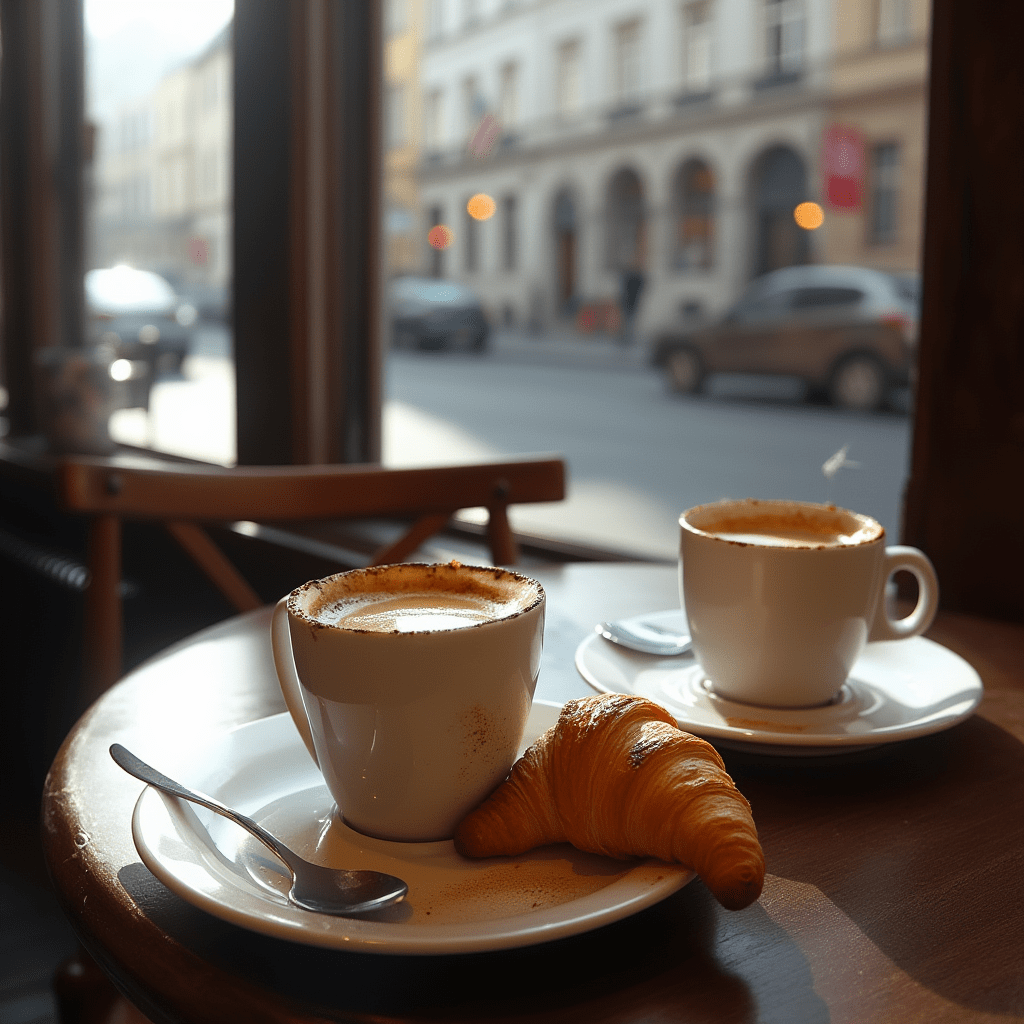
He was late in bringing the espresso and cappuccino to their usual seat in the café. Meera, waiting at their seat , absentmindedly flipped open his laptop. A folder named For Meera. She was surprised to see a folder with her name on it. She debated whether she should open it or not. Eventually her curiosity won over her decency. 

And in the next instant, her world changed.

The words on the screen weren’t just words. They were confessions, quiet and unwavering, woven into poetry and prose. Love so deep it made her breath catch.

By the time Ayan returned, she was sitting by the window, staring at the laptop, her fingers trembling as they traced his words.

He froze in the space next to their corner table. He didn’t need to ask. He knew.

“You wrote these?” Her voice was barely a whisper.

A long silence.

“I did.”

She exhaled, closing her eyes for a moment before looking at him. “Ayan…” She didn’t know what to say. She loved him—just not in the way he had loved her. And yet, the feel  of his love, so constant, so unwavering, made her uncertain and lost. 

He gave her a small, knowing smile, the kind that broke her heart a little.

“You don’t have to say it,” he murmured. “I already know.”

She blinked back tears. “But what do I do now? What do we do now?”

Ayan walked toward her, kneeling beside her chair, gently taking her hand in his. His touch was warm, familiar—home.

“You do what you’ve always done,” he said softly. “You live, love, dream.” His thumb brushed over her knuckles, as if memorising the feel of her one last time. “And I… I will love you the way I always have. Without asking for anything in return.”

A tear slipped down her cheek. She had always known Ayan was extraordinary, but at this moment, he was something even greater—he was love in its purest form.

She reached out, cupping his face, her voice breaking. “You deserve the kind of love you give, Ayan.”

He smiled, leaning into her touch for the briefest second before pulling away.

“Maybe one day,” he whispered. “But for now, this is enough.”

And though her heart ached, she knew that his love—silent, unshaken, infinite—would remain, like a whispered promise always jn her heart. 

Copyright (c) Pratik Majumdar, 2025. Any article, story, write-up cannot be reproduced in its entirety or in part, without permission. URL links can be used
Sisters

The first time Nikhil met the Sharma sisters, he was instantly drawn to Meera. Meera, with her radiant smile and firecracker spirit, was impossible to resist. She was all warmth and mischief, a burst of colour and chaos in his otherwise structured world. In contrast, her sister, Aisha, was quiet, watchful—an old soul almost…with eyes that seemed to understand everything without a single word spoken.

It was Meera who loved him, Meera who chased him, Meera who stole his breath away with her laughter. 

And yet, it was Aisha who knew him.

Nikhil never quite understood how it happened. How a simple, unspoken bond with Aisha had formed, how it deepened into something beyond friendship, beyond family—something that went beyond definition. There were no stolen kisses, no flirtatious glances. Just an inexplicable understanding, an unshakable trust. She was the one he turned to when he was lost, when the weight of the world felt too heavy on his shoulders. She never asked for anything, never demanded. She just was.

And Meera? She saw it.

She saw the way Nikhil’s shoulders relaxed in Aisha’s presence, how their silences were comfortable in a way Meera’s chatter could never be. She saw the ease, the wordless conversations, the knowing smiles.

She tried not to be jealous.

But the ache inside of her grew with every passing day.

One evening, Meera sat with Nikhil on the terrace, their fingers intertwined. The city lights stretched out before them, but her mind was elsewhere.

“She leaves first, you know,” she said softly, watching his face. “When we’re together, Aisha always walks away first.”

Nikhil frowned. “What do you mean?”

Meera turned to him, searching his face. “I mean she’s always the one to step back. Always the one to disappear when we’re around each other. She does it so we don’t feel it, but I do. And it kills me.”

Nikhil sighed, rubbing his temple. “Meera, you’re imagining things.”

“Am I?” Her voice was bitter. “Then tell me, Nikhil… if you had met her first, would you still have been with me?”

He had no answer.

The breaking point came on a rainy night, thunder rumbling low in the distance.

Aisha stood at the doorway, a small bag at her feet. Meera stood before her, arms crossed tightly, while Nikhil hovered between them, torn and helpless.

“You don’t have to do this,” Nikhil said, his voice firm but almost a whisper.

Aisha smiled, but it was a sad, tired thing. “I do.”

Meera shook her head, her voice shaking. “I don’t understand, Aisha. Why do you always have to be the one who gives up?”

Aisha’s gaze softened. “Because I love you more than I want to stay.”

Meera let out a soft cry, tears spilling down her cheeks. “I don’t want to lose you.”

“You won’t.” Aisha reached out, brushing a tear away. “You and I… we’re written in blood. But some bonds demand distance to survive.”

Nikhil clenched his jaw, stepping forward. “Aisha—”

But she was already gone.

Meera and Nikhil tried.

They tried to piece together what remained after Aisha left. They travelled, they laughed, they made love under the stars. But the ghost of her absence lingered between them, an unspoken emptiness which neither of them could fill.

Some nights, Nikhil would turn in his sleep, instinctively reaching for a presence that was never meant to be his. And Meera, wide awake beside him, would close her eyes and pretend not to notice.

Years later, when they finally parted ways, they did so with quiet acceptance. There were no grand fights, no bitter words—only the soft realisation that sometimes love can never truly be enough.

And somewhere, in a distant city, Aisha sat by a window, watching the rain fall, wondering if some loves were only meant to be felt, never held or realised. 

Copyright (c) Pratik Majumdar, 2025. Any article, story, write-up cannot be reproduced in its entirety or in part, without permission. URL links can be used

The Corner Table

Every evening, at exactly six-thirty, he took his place at the farthest corner of the café—by the window, facing the street. The table was small, slightly wobbly, but it was his. The wood had darkened with time, the edges smoothed by years of elbows resting, fingers tracing absentminded patterns. A single overhead lamp cast a muted yellow glow on its surface, highlighting the tiny cracks in the varnish.

The café hummed around him—a blend of clinking cups, murmured conversations, and the occasional burst of laughter from a table near the counter. The air brimmed with the scent of strong coffee, toasted bread, and something faintly sweet, perhaps vanilla. Outside, the city pulsed with life. Neon signs flickered, their reflections dancing on the wet pavement from an earlier drizzle. Cars honked impatiently. Pedestrians, bundled in scarves and jackets, moved briskly, their footsteps blending into the rhythm of the evening.

He sat with his hands wrapped around the warm ceramic cup, inhaling the familiar scent of adrakwali chai. The steam curled upward, dissolving into the dim light. He took a slow sip, feeling the spice settle on his tongue, the heat spreading through his chest—a comfort he had come to rely on.

His eyes drifted to the glass, not really looking at the street but beyond it, into a time when this city had not felt so distant, when the days had not felt so heavy.

There was a winter evening, long ago, in this very café. The laughter of friends, the scrape of chairs being pulled close, the clatter of spoons against cups as stories were exchanged. He remembered a girl—her voice like soft rain, her fingers tapping against the table as she spoke, eyes sparkling with something he had never been able to name. They had sat here for hours, the world outside forgotten, lost in a conversation that felt endless. She had left a doodle on a tissue—just a rough sketch of a book and a cup of tea. He had tucked it into his wallet, meaning to throw it away later, but never did.

He reached into his pocket now, fingers brushing against its frayed edges. The ink had faded, the lines barely visible, yet he could still see them as clearly as if they had been drawn yesterday. She was gone now—like most people eventually had, from his life. The city had swallowed her up, just as it had, with everyone. 

He sighed, tucking the tissue back where it belonged.

As the evening grew, the streetlights flickered on, casting long, distorted shadows on the pavement. The café would close soon. He would leave, just as he always did, slipping into the night as unnoticed as when he arrived. But tomorrow, he would return. The same corner, the same chai, the same quiet ache of remembering. He smiled as he got up, feeling charged up to face another day. 

Copyright (c) Pratik Majumdar, 2025. Any article, story, write-up cannot be reproduced in its entirety or in part, without permission. URL links can be used

The Willow House

The train rattled along the tracks, carving a path through hills and rivers, through forgotten villages and nameless towns. Inside, the traveler sat by the window, his gaze unfocused, his mind adrift. He had no permanent home, no final destination—only the motion of the train, the quiet solitude of travel, and the occasional stops in unfamiliar places where he could lose himself for a while.

That evening, he stepped off at a town whose name he hadn’t bothered to read. The air smelled of rain-soaked earth and woodsmoke. It was small, quaint, wrapped in an eerie quietness that settled deep into his bones.

He found lodging at The Willow House, a guest house on the outskirts of town, run by a woman named Laila. She was striking—dark-haired, with an old-world beauty that belonged to another time. There was something graceful yet lonely about her, as though she were waiting for something.

“You travel alone?” she asked, her voice soft yet knowing.

He nodded. “Always.”

She smiled. “Then you’ll find peace here.”

And for the first time in years, he did. The town had a slow, unhurried rhythm, and in Laila’s guest house, he felt something unfamiliar—comfort. She would bring him tea in the evenings, sit with him by the fire, listening to his stories with a quiet intensity. He found himself watching her, drawn to the way candlelight danced against her skin, the way her fingers lingered on old books as if they held secrets only she could read.

But the townsfolk were different. Their warmth cooled the moment he mentioned where he was staying. The shopkeeper’s smile faded. The bartender hesitated before pouring his drink. The old woman at the bakery pressed a loaf of bread into his hands and muttered, “Don’t stay too long, son.”

He asked, but no one would say why.

One night, as the wind howled outside, he found Laila standing by the window, staring into the dark.

“What are you looking at?” he asked.

She turned, smiling that same wistful smile. “Just the past.”

Something in her voice sent a shiver down his spine.

Later, in the dead of night, he woke to a noise—a soft creaking, like footsteps on wood. Slipping out of bed, he followed the sound down the dimly lit hall, past rooms that should have been empty but felt filled with unseen presence. The house felt different now—heavier, as if it carried stories too painful to be spoken.

Then he saw it.

A door at the end of the hall, slightly ajar.

Inside, the room was untouched, layered in dust. A single suitcase sat in the corner, worn and forgotten. He stepped closer, and his breath caught in his throat. Inside the suitcase were clothes—shirts, coats, scarves—all belonging to men. Different sizes, different styles, but all worn, all abandoned.

And beside the suitcase, a faded photograph.

It was Laila. And a man. A different man. Holding hands, smiling.

The date on the photograph was last year.

His stomach twisted. He stepped back, his heart hammering against his ribs. How many men had come before him? How many travelers, seeking shelter in a town that tried to warn them?

A floorboard creaked behind him.

He turned.

Laila stood in the doorway, her expression unreadable. In her hands, she held a knife.

“You should have never opened that door,” she whispered.

The wind outside howled, but inside The Willow House, all was silent.

Copyright (c) Pratik Majumdar, 2025. Any article, story, write-up cannot be reproduced in its entirety or in part, without permission. URL links can be used