
Your Life

A slight drizzle fell over Kolkata, casting the city in a humid haze as Sudeep walked past the narrow alleyways of College Street. Bookstores lined the street like forgotten relics of an older time, their wooden shelves brimming with worn-out novels, some stacked on the pavement for display. On days like this, when the burden of his loneliness pressed heavier than usual, Sudeep would wander through these bookstores, hoping to stumble upon something to escape his own thoughts.

He had grown used to the silence in his life — the friends who had drifted, the family that felt more like strangers. His job as a marketing consultant kept him busy, but it was mechanical, draining, leaving him hollow by the time he reached his small, dark apartment every evening.

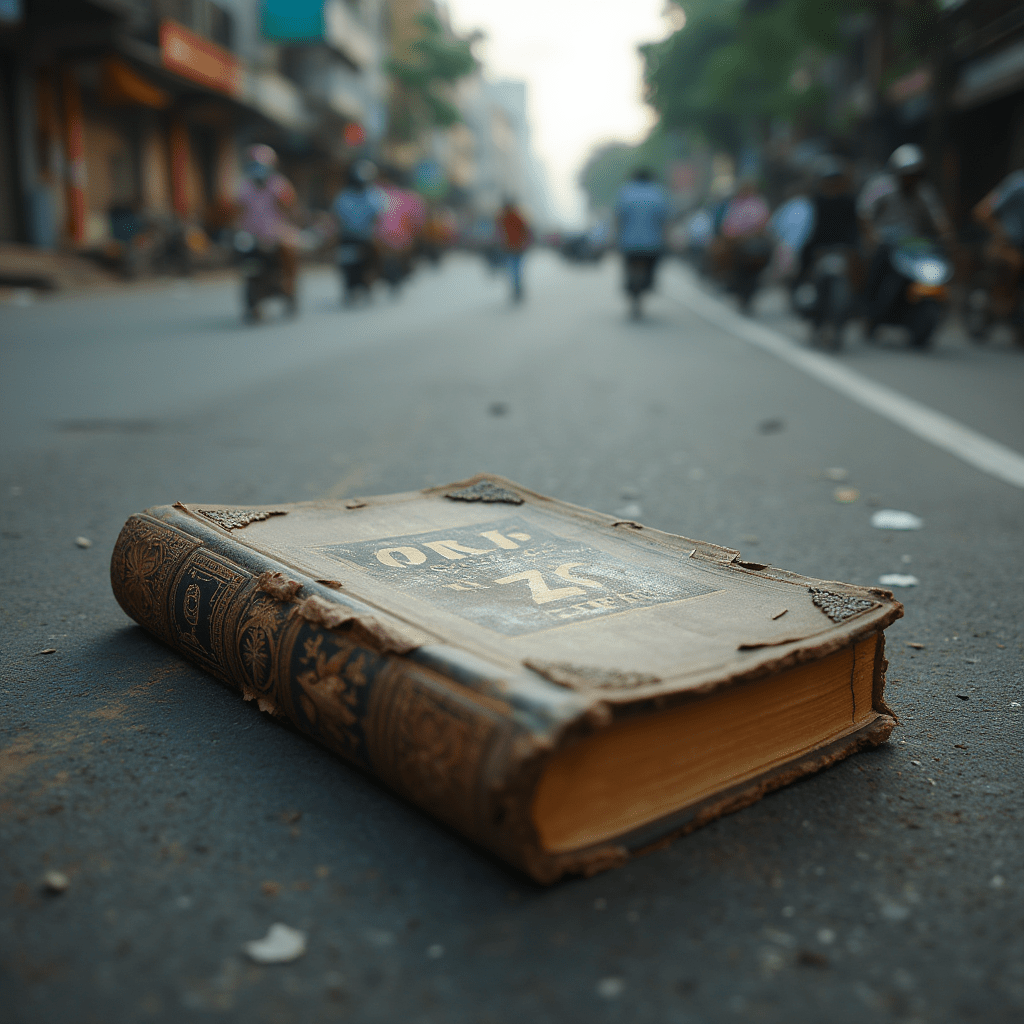
Today, something caught his eye — a thin, weathered book, its cover frayed and stained. The title, in fading golden letters, read Your Life. Sudeep paused. The title tugged at something inside him, a peculiar curiosity he couldn’t explain. He knelt down and picked it up. There was no author’s name, no publishing details. He turned the pages; they were yellowed, brittle, as though they had been waiting for years to be opened.

He flipped to the first page and froze.

The words described him. Not just his name or his job — it went deeper. His childhood, his parents, the quiet way they drifted apart, leaving him in the care of his grandmother. The awkward teenage years, the heartbreaks, the solitary weekends spent reading. Every event, every thought, every moment of his life was laid out in perfect detail.

With a mixture of fascination and dread, he kept reading. The pages seemed to anticipate his thoughts, recounting moments he had buried deep. The time he had cried after failing an exam in the tenth grade. The quiet joy when he bought his first bicycle. Even last night’s dinner — a simple plate of rice and daal, eaten while watching a re-run of an old movie — was written out with eerie precision.

“This can’t be real,” Sudeep whispered to himself, his heart racing. His mind searched for

an explanation. Maybe it was some bizarre coincidence, a trick his tired brain was playing on him. But the words on the page were too specific, too detailed. He closed the book, his hand trembling slightly. The rain outside had stopped, and the sounds of the city returned — the rickshaws, the distant honking of cars, the hum of conversations. Everything felt strangely distant, as if the world outside had shifted just slightly.

Sudeep stood there for a moment, unsure whether to put the book back or to take it home. The logical part of him urged him to walk away, to dismiss it as a strange oddity, but his curiosity gnawed at him. What would the next page reveal? Would it predict his future? With a sense of foreboding excitement, he stuffed the book into his bag and hurried back to his apartment.

As soon as he reached home, he switched on the dim light in his room and sat down, the book in his lap. His fingers trembled as he flipped to where he had left off.

The narrative continued, now detailing the moment he picked up Your Life from the stall, how he had stood there in disbelief, his inner monologue captured perfectly on the page. His pulse quickened. The book knew everything. He swallowed hard and turned the page.

After a sleepless night, Sudeep would wake up tomorrow, anxious and consumed by the mystery of the book. He would avoid his routine morning tea, instead pacing the room, flipping back and forth through its pages, trying to understand. The phone would ring at exactly 9:15 AM, but Sudeep wouldn’t answer it. He’d be too absorbed in reading.

Sudeep glanced at the clock. It was 11:45 PM. Tomorrow was mere hours away. He closed the book with a snap, pushing it to the far corner of his desk. His mind swirled with fear and fascination. Was the book guiding his actions? Could it truly predict his future? Or worse — was it controlling him?

He tried to sleep, but the words danced in his head. At some point in the early morning, his exhaustion overtook him, and he drifted into a restless slumber.

When he woke up, the book was the first thing he saw, sitting exactly where he had left it. He felt a strange pull towards it, an irresistible need to know what would happen next. Slowly, he walked over to the desk and opened it.

The words picked up where they left off: Sudeep would pick up the book, unable to resist its call. The more he read, the more his world would begin to change. Reality would bend around him in ways he couldn’t understand, events reshaping themselves as though guided by unseen hands.

A knot tightened in his stomach. The book was no longer just recounting his life — it was changing it. His phone rang. Sudeep froze.

The phone would ring at 9:15 AM, but Sudeep wouldn’t answer it.

He glanced at the clock. It was exactly 9:15. His heart pounded in his chest. Without thinking, he reached for the phone, desperate to break the pattern.

“Hello?” he said, his voice shaky.

There was silence on the other end. Then, a faint voice crackled through, distant and garbled, as if it were calling from some far-off place. “You… shouldn’t have done that.”

The line went dead.

Sudeep dropped the phone, his breathing rapid. The air in the room seemed heavier, stifling. Panic gripped him. What was happening? Was the book real? Was it manipulating his life, punishing him for deviating from its script?

He opened the book again, this time with trembling hands, skipping ahead to see what lay in store for him.

The changes would begin subtly, but soon, Sudeep would find the world around him unraveling. His reflection in the mirror would flicker, showing glimpses of a stranger’s face. The streets outside would seem unfamiliar, even though he had walked them a thousand times. People he knew would begin to forget his name.

He slammed the book shut, gasping for breath. He ran to the bathroom, desperate to see his reflection, to prove that everything was still normal. But when he looked into the mirror, his face was distorted, blurred, like a half-formed memory.

Fear gripped him. He rushed outside, onto the bustling streets of Kolkata. The city was alive, but to him, it felt alien. The vendors, the familiar buildings — they seemed to shift and blur at the edges of his vision, as though the fabric of reality itself was loosening. He called out to a passing neighbor, someone he had known for years.

The man turned, his face blank, his eyes scanning Sudeep as if he were a stranger. “Do I know you?” the man asked, his voice flat, devoid of recognition.

Sudeep stumbled backward, his world spinning. He ran back to his apartment, his breath coming in ragged gasps. The book. It was the book! It had to be. He grabbed it and threw it across the room. But even as it hit the wall, something inside him compelled him to open it again.

His hands moved on their own, flipping to the final pages.

And as Sudeep reaches the end of his story, he will realize the horrifying truth — that the book was never telling his life. It was writing it. The moment he picked it up, he ceased to exist in the real world. His life became nothing more than ink on paper, his fate bound to the pages, controlled by forces beyond his understanding. And now, as he reads the last sentence, he will disappear entirely, becoming a story trapped in the book for the next curious reader to find.

Sudeep’s eyes widened in terror. The last line seemed to shimmer on the page, glowing with a malevolent energy:

The end.

He screamed as his body began to dissolve, his form breaking apart into wisps of smoke, drawn into the book’s pages. The room spun faster and faster until all that remained was the battered book, lying quietly on the floor.

A gust of wind flipped its cover closed.

On the pavement below, a passerby noticed the book, abandoned in the alley. Piqued by the title Your Life, she knelt down, picked it up, and began to read.

Copyright (c) Pratik Majumdar, 2025. Any article, story, write-up cannot be reproduced in its entirety or in part, without permission. URL links can be used

Haridham’s Harmonica

In the heart of an unknown state, nestled between ancient banyan trees and fields of mustard that turned gold each winter, lay the sleepy town of Haridham—a place where time clung to the walls like the soot from incense, and gossip travelled faster than the morning Azaan. It was the kind of place where everyone knew everyone, and no one forgot anything.

Eshan lived in the narrowest lane of Haridham, in a crumbling haveli that smelled of old paper and sandalwood. He was a quiet boy, soft-spoken to the point of invisibility. The town’s boys called him “pagla shaayar”—mad poet—and the elders shook their heads when he walked by with his tattered diary and rusted harmonica. But what they never saw was the fierce, burning love in his chest for Radhika—the daughter of the local schoolmaster, with kohl-lined eyes and a laugh that cut through his loneliness like the first wind of Baisakhi.

Eshan wrote poems for her. Not the kind that lived on Instagram or love letters scribbled on cheap paper, but the kind that ached and breathed, stitched together in meters older than the Mughal tombs that dotted the outskirts of town. He played his harmonica only for her under the peepal tree near the temple, where she’d sometimes come, her anklets chiming like tiny bells of hope.

It was during the Haridham Mahotsav, a gaudy, chaotic festival of local drama, jalebis, and clashing dhols, that Eshan decided to declare his love—naively, foolishly, in the open. Wearing a threadbare kurta, harmonica in hand, he took the stage near the panchayat office, where strings of marigold wilted under the sun and the loudspeaker spat static.

He began to play.

The notes were raw, yearning, and deeply out of place amidst the fairground clamour. He read a poem next—about unrequited love, about Radhika’s bangles, and the ache of waiting. But before he could finish, someone in the crowd hooted, “Abey bas kar, Mirza Ghalib!” Laughter followed like a slap. Another shouted, “Shaadi kar le harmonium se!” Someone threw a pakora at him.

Eshan’s voice broke mid-line. He ran.

He ran past the school, past the old post office, through the mustard fields now turning copper in the dusk, and arrived breathless outside Radhika’s house. But just as he turned the corner of her courtyard, the earth beneath him cracked open.

There she was. In the arms of Vijay, heir to the sugar mill fortune. Tall, handsome, cruel—everything Eshan was not. Their silhouettes fused under the neem tree, her dupatta fluttering like a white flag of surrender.

“I only talked to him because it was funny,” Radhika said, laughing, her voice soft but clear in the quiet of approaching night. “He actually wrote me poems. Can you believe it?”

Eshan didn’t move. Didn’t breathe. Something in him—some fragile bone of hope—snapped.

And then, just like that, he disappeared.

No one saw him after that night. His haveli was found unlocked, his diary open to an unfinished poem. The town moved on, mostly. Some said he ran off to Delhi. Some claimed he’d drowned himself in the Yamuna. But within a month, Haridham changed.

On the night of the next full moon, an eerie, soul-twisting harmonica tune was heard coming from the goolar forest that bordered the village. It was soft, almost mournful. But beneath it was something else—something cold, inhuman.

The next morning, a candle was found burning outside the house of Meera—the girl who had laughed loudest during Eshan’s performance. She vanished that night.

At first, people thought it was a coincidence. But then came another full moon. Another note in the wind. Another candle. Another girl gone.

The notes were always accompanied by chits tucked into cracks in the temple walls, school benches, or the folds of old peepal trees. The messages were always short: “She mocked pain.” “He played god.”“Justice wears no face.”

Haridham changed. Doors were locked by sundown. Mothers prayed obsessively. The police came, installed cameras, patrolled with rifles. But no footage ever showed who placed the candles or when. Only the harmonica remained—haunting, untouchable.

Over time, even Vijay, whose father once scoffed at ghost stories, left for Lucknow.

And then, on the twelfth moon, Radhika woke in the middle of the night. Her breath caught. There, at the edge of her lawn, stood a single, white candle. Its flame stood perfectly still, despite the wind.

The harmonica’s tune floated toward her from the forest, carrying no anger, only something worse—stillness. Finality.

She knew. The boy who had once worshipped her from afar, the poet with calloused fingers and trembling verses, had returned—not as a man, but as something time had sculpted from love, betrayal, and the silence that follows ridicule.

The flame flickered.

The notes played on.

And Haridham held its breath.

Copyright (c) Pratik Majumdar, 2025. Any article, story, write-up cannot be reproduced in its entirety or in part, without permission. URL links can be used
While We Wait

The café was half-empty, basking in golden afternoon light and soft strains of indie music. It had that cozy kind of modern charm: distressed wood tables, dangling plants, the hiss of espresso machines punctuating lazy JJ conversations. 

Mahi stepped in, the bell above the door announcing her arrival with a delicate tinkle. She paused at the entrance, scanning the room. No one matched the photo her mom had sent—clean-shaven, banker hair, Harvard smile.

She sighed, her phone already lighting up.

MOM: He should be there by now. Be nice. Smile!

She rolled her eyes and lowered the phone, trying not to look as annoyed as she felt. The only table with a free seat had a guy already occupying the window side, his fingers wrapped around a cappuccino cup, lost in the world outside.

She approached anyway.

“Anyone sitting here?” she asked, pointing at the empty chair.

The man looked up. Late twenties, maybe early thirties. Smart-casual, with thoughtful eyes and the kind of smile that looked both used to waiting and unbothered by it.

“Just heartbreak and a cappuccino,” he replied. “You’re welcome to join.”

A laugh slipped out before she could stop it. She slid into the seat opposite him.

“I’m technically waiting for someone.”

“So am I,” he said, setting his cup down.

“Blind date?”

“Girlfriend. Very late. You?”

“Arranged meeting. Parent-approved. Might ghost me. That’d be a blessing.”

He smiled, a little wry. “Wow. Look at us—two casualties of the modern and the ancient systems of love.”

She picked up her spoon and clinked it gently on her mug. “To love, wherever the hell it is.”

He raised his cup. “And to its unreliable messengers.”

They clinked cups like wine glasses. The moment felt strangely comfortable. 

“So,” he asked, leaning forward, “what’s this guy supposed to be like? Tall, dark, rich, emotionally unavailable?”

She smirked. “Banker. Harvard grad. Probably talks in bullet points. You?”

“She’s a dancer. Classically trained. Likes sunsets and pretending I have emotional range.”

“Do you?”

“Only when I’m starving or watching Pixar movies.”

They laughed. The kind of laugh that erased awkwardness and planted something warmer in its place.

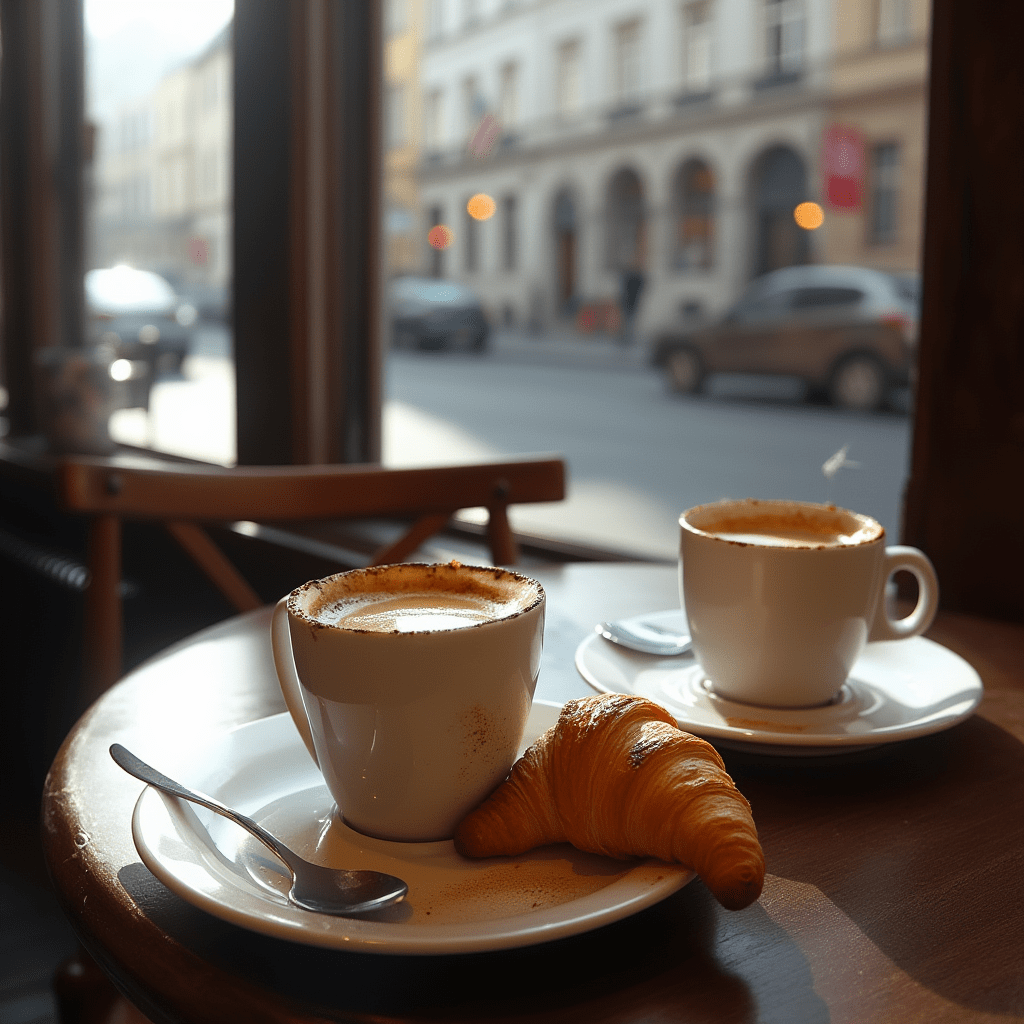
By the time their cups were empty and a half-eaten croissant lay between them, the sun outside had dipped a little lower, turning the café honey-coloured.

Mahi leaned back. “Okay, serious question. What’s one thing you’ve never told anyone?”

Sameer blinked. “Jumping in fast, huh?”

“Time is limited. Let’s skip the weather talk.”

He tilted his head, considering. “Alright. I once applied for a reality show on a dare. India’s Next Mastermind.

“No!” she gasped.

“Got rejected in the first round. I choked on the word photosynthesis.

She burst out laughing. “You poor genius.”

“Your turn.”

“I used to write erotic fan fiction about mythological characters.”

He choked on his coffee. “Excuse me?”

“Karna and Draupadi had so much unresolved tension, okay?”

“You’re… something else.”

Their eyes met, laughter fading into silence. The air between them transformed to something deeper, more electric. 

The world outside the café had turned golden. Through the glass, shadows stretched long down the street.

Sameer checked his phone. Frowned.

Mahi did the same. Her face mirrored his.

“Still no girlfriend?” she asked.

“Nope. You?”

“No sign of Mr. Banker. I think we’ve been stood up.”

“Or saved.”

She smiled. “Exactly what I was thinking.”

They sat in silence. This silence was different—gentler yet heavier. Charged with the awareness of something unexpected and yet waiting to happen. 

“I’m glad I sat here,” he said softly.

“I’m glad you let me,” she replied.

He gestured toward the last few bites of cake between them. “Wanna split another one? I’m convinced chocolate makes heartbreak go down easier.”

“Or up the stakes.”

A waiter dropped the bill. They both reached for it.

“Split?” she offered.

“Absolutely not. I’ve been raised right. First date’s on me.”

She raised an eyebrow. “Is this a first date?”

He shrugged, that slow smile returning. “It could be.”

“What about the girlfriend?”

“What about the guy with the bullet points?”

She paused. Then nodded. “Touché.”

They stood, gathered their things. He held the door open for her.

“Walk with me?” she asked.

“Only if you promise not to bring up photosynthesis again.”

Their laughter followed them out.

Outside, dusk painted the street in soft oranges and deepening shadows. They walked side by side, an easy rhythm forming without thought. Familiarity in the unfamiliar.

Their phones buzzed at the same time.

They stopped, almost in sync. Glanced at each other before reading.

Mahi looked up first. “It’s him. Finally landed. Wants to meet tomorrow.”

Sameer held up his screen. “And mine… says she’s sorry. Got held up. Wants to make it up tonight.”

A long silence fell between them. Not uncomfortable—just… full.  Filled with choices.

“So… what happens now?” he asked.

“We could both leave. Go back to what we came for.”

“Or?”

She looked down the road, then back at him.

“We keep walking. See where the road goes.”

He studied her, then smiled.

“Let’s walk.”

They turned down a quieter street, the city folding around them in soft, glowing layers. As they disappeared into the evening, something unspoken passed between them—simple, uncertain, and full of possibility

Some meetings are written. Some are rewritten.

Copyright (c) Pratik Majumdar, 2025. Any article, story, write-up cannot be reproduced in its entirety or in part, without permission. URL links can be used
The Empty Chair

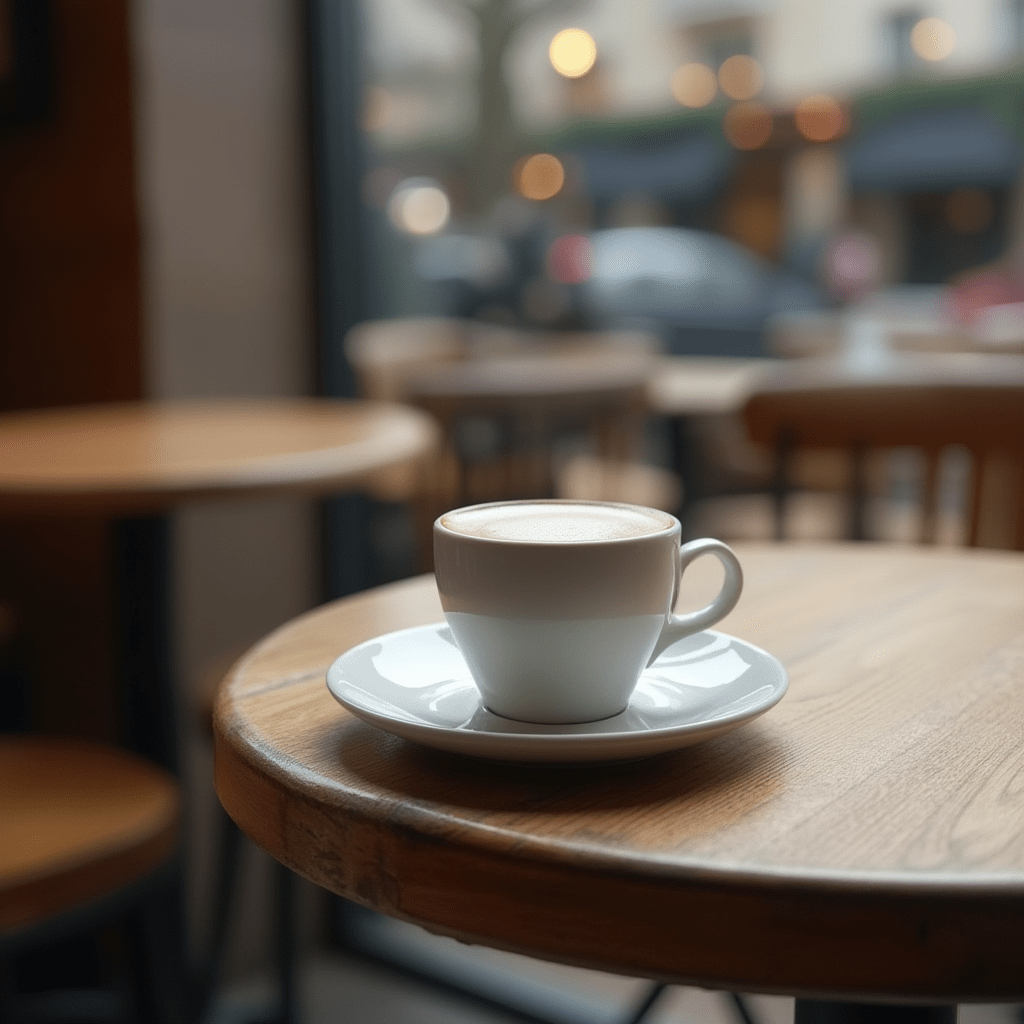
Every morning, just as the sun filtered through the slatted blinds and bathed the little café by the square in a soft gold glow, he would come. Crisp coat, dark eyes, and that quiet kind of grace that made him look like he’d stepped out of a half-remembered dream. He never spoke much, only nodded at the barista, and always took the same seat — the one by the window, second from the end. That chair knew his shape. The table remembered his fingers.

He’d order a single espresso. No sugar. No milk. And he’d sip it slowly, as though tasting a memory.

That was where she found him. She was the kind of girl who wore joy like perfume. She floated in one afternoon, holding her book like it was a shield and a secret at once. She asked for tea — always tea — and wrinkled her nose at his espresso like it was poison.

“Coffee is a bitter habit,” she’d say with a smirk, taking her place at the table beside him, her cup steaming with chamomile or jasmine. “Tea is poetry. Coffee is politics.”

He would raise an eyebrow and reply, “Politics keeps the world running. Poetry just makes it pretty.”

And like that, it began.

They didn’t fall in love — they danced into it. In glances, in laughter, in long afternoons where the rain blurred the world beyond the window and the clink of her spoon stirred more than just tea.

They argued about books, music, what kind of bird would best represent the soul. She said robin; he said raven. They whispered sweet nothings, full of everything. When she laughed, the café felt brighter. When he looked at her, the world paused.

Every evening, she would rise reluctantly, wrap her scarf, and promise, “Tomorrow, same place.” And he would nod, watching her walk away as though the sky itself had shifted hues.

But one day, she didn’t come.

And the day after that, the chair by his side remained empty. He still sat there, silent, sipping his espresso, watching the door.

Time passed differently in the café. The baristas changed. The music softened. The world rushed forward while he remained, always arriving with the morning sun, always taking his seat by the window.

Years later, she returned.

She wore time like a well-tailored coat — still lovely, still wistful, now with a hand resting lightly on a husband’s arm, children trailing her laughter like ribbons.

She ordered tea.

And as her family chatted, her eyes flickered — just for a moment — to that seat by the window. The second from the end. Her gaze lingered. Her smile faded, softening into something fragile.

The chair was empty. But she knew.

She always knew.

He sat there still, unseen by the world, his ghost sipping espresso, waiting for a girl who drank tea and once promised tomorrow.

Copyright (c) Pratik Majumdar, 2025. Any article, story, write-up cannot be reproduced in its entirety or in part, without permission. URL links can be used

Why, Georgia Why

Am I living it right

Am I living it right

Why Georgia Why

Why Georgia Why, John Mayer.

He kept driving by himself on the lonely highway as the evening sun was about to disappear. He wanted to reach to the self-serviced apartment before the sun set so he stepped up the accelerator. His playlist was a mix of Neil Diamond John Mayer Elton John and Deep Purple. The songs seemed to echo his current frame of mind that evening. He was lost in thoughts of the past as he drove along. 

The traffic which was luckily conspicuous by its absence almost the whole journey began to make its presence felt as he approached the big city. The homeward bound office traffic slowed his speed down considerably as he began to look for important landmarks he had noted down in his diary to help him reach his destination. Even in this era of GPS navigation he relied on his old school comforts. The big bank followed the second hand book store and then take a left turn at the roundabout, he muttered to himself as he drove on. He almost seemed to know where he was going, he had read the directions so many times. He finally reached the apartment almost simultaneously as the city lights came on that July evening.

He parked his car in the designated car park for his apartment and carried his duffle bag as he headed towards what would be his home for the next couple of weeks. His salt and pepper hair yet couldnt age his boyish face. He was touching 45 but looked at least 10 years younger. Only a slight paunch was making its presence felt gradually in his otherwise lanky frame. As always he had a light blue denim shirt and dark blue jeans. Denim was like his second love.

As he stood outside the apartment he tried to remember the lock combination number to take the key out to enter the apartment. He didn’t see the number written down on his phone. He wanted to see if he could remember it. He muttered it underneath his breath a couple of times, his eyes shut as he did so. Then he pressed the combination and his face lit up with a smile as the lock opened, enabling him to pull the key out and use it to enter the flat.

The living room looked nice and cosy. There was a brown sofa set which took up almost half the space of the room. There was a passage leading to a door to the only bedroom the apartment had. On the other side of the sofa was a wall unit which had books neatly organised. There was a bay window behind the sofa overlooking city centre. He was lost in his thoughts of the past as he sat down as he sat down on the upholstered sofa. Her words kept playing inside his head as he leaned back and shut his eyes.

“You don’t get to choose who you love. You can choose who you want to build your life with. Or choose to work to keep your love alive. But you simply don’t get to choose who you love. It’s just one of those beautifully random poetic aspects of life which just happens to you. You don’t have any say in it.”

She had said these words to him as she walked out of his life that fateful evening. He was left speechless as he saw her slender frame walk away from him against the backdrop of the setting sun. The finality of her tone made him realise he had lost her forever.

His marriage was well and truly on the rocks when he met her. She was recovering from her break up with her fiance. So it was a perfect meeting for the two of them. It was their common love for literature that drew them towards one another. His Robert Frost would complement her Emily Dickinson perfectly as they synced together in a beautiful harmony of words, music and sounds of the soul. It was magical the way they bonded. They even called each other by those names…Robert and Emily. They sat together on the corner table of the little cafe as they discussed poetry cinema and politics passionately. Conversation flowed as freely as their love for one another. They spent a lot of time together those days.

He felt alive being with her. He wanted to make things alright in his life and set the wheels in motion all over again. And one of the first things he did was to work on hit breaking marriage. He loved his wife and didn’t know how and when the rot had set in between them. They didn’t make love, they didn’t speak, they didn’t even scream and fight. There was a complete lack of of communication between. And now he wanted to change that. He realised that one of them needed to take the first step in rebuilding the relationship and he was willing to be one to make the first move. He loved his wife and wanted to get back to being with her how he used to be, in the early days of their marriage. And in a sad ironic way, he had to thank Emily for that.

The fights and disagreements started increasing between him and Emily by the day. Inexplicably he found himself more and more disconnected from her. The talks on poetry and the arts bored him, some of her life views irked him. He began to find her loud and tiresome. He didn’t look forward to their meetings at the cafe. He started avoiding her calls and made excuses for not meeting up. At times he didn’t even call her back after not picking her phone cup. He remembered the lines from the Bruce Springsteen song “nobody knows honey, where love goes, but when it goes it’s gone gone”. He felt as if those lines were almost written for him. He knew it was time up for the Robert Emily chapter in his life.

Despite all his efforts, his marriage didn’t survive. His wife was too far removed from him and wanted her freedom. I am tired of being your second priority any longer. When you learn to look beyond yourself and your own emotional needs maybe you can look for me, but maybe by then I will be long gone. And she was indeed long gone from his life by the time he did look for her.

The same Springsteen song haunted him that evening as he rested on the brown sofa. “When you’re alone, you’re alone. When you’re alone you’re nothing but alone”, Springsteen sang and everytime he sang, those lines stabbed him on the chest like a steely knife.

Dusk had long set in and the sun had said its final goodbye for the day, as he compared it to the darkness inside him. The neons had lit up on the streets below and he turned himself on the sofa to gaze down on the busy city traffic. His mind was mind and his eyes stared vacantly the noisy, moving stream of cars. Driven by people to go home from their work places. Home to their respective spouses. And their families. He wondered as he stared blankly at the cars.

He didn’t realise when his eyes shut, lying on the sofa. The room was dark as he wasn’t awake to go and switch on the lights. What he also didn’t know was that he would never wake up from the sleep he had gone in to. There was a strange calm on his face as he lay on the brown sofa, still. His phone was clutched to his hand and John Mayer was singing Why, Georgia Why on his selected playlist. The last number dialled on his phone was his wife’s.

Copyright (c) Pratik Majumdar, 2025. Any article, story, write-up cannot be reproduced in its entirety or in part, without permission. URL links can be used

The Disappearance of Arvind Mathur

It began on an unremarkable Monday morning. Aditi called, but Arvind didn’t pick up. She assumed he was busy, perhaps immersed in his music or lost in a strange book. By evening, when Nikhil texted and received no reply, mild concern set in. Anjali, ever perceptive, called Aditi.

“Have you heard from Arvind today?”

“No. Why? You think something’s wrong?”

“I don’t know… I just have a feeling.”

By midnight, their unease turned into dread.

The next morning, Nikhil and Anjali drove to Arvind’s house. The caretaker, an old man named Raghu, answered the door with worry lining his face.

“Saab nahi dikh rahe kal raat se,” he mumbled.

Inside, the house was eerily silent. His beloved music room was untouched. A glass of wine sat half-empty on the table. His phone lay on the couch. His wallet was there. His car was still parked in the driveway.

Arvind Mathur had vanished.

Aditi insisted they call the police, but Nikhil held back. He knew Arvind had a habit of retreating into solitude. But this felt different. The three of them combed through his house. Then, in his bedroom, Anjali noticed something odd—the closet door was slightly ajar. And behind the neatly arranged clothes, a faint seam in the wall.

A hidden door.

With trembling hands, she pushed it open.

The room inside was nothing like the rest of Arvind’s elegant home. It was a prison of his own making—walls covered in disturbing sketches, chaotic scribbles in red ink. Pages upon pages of poetry, but the words were filled with pain, loss, and an unbearable darkness. Burn marks on the floor. A single wooden chair in the middle of the room, facing a cracked mirror.

And then there was the box.

Nikhil opened it hesitantly. Inside were old photographs, letters, and a bundle of newspaper clippings. Each headline made their blood run cold.

“Businessman Rajeev Mathur and Wife Found Dead in Apparent Suicide.”

“Young Heir to Mathur Publishing Orphaned at 16.”

“Tragedy Strikes Again: Close Family Friend Found Dead in Similar Circumstances.”

Anjali clutched her chest. “Oh my God… he never told us.”

Arvind’s parents had died in what the world thought was a joint suicide. But the clippings hinted at something sinister—whispers of a third presence in the house that night. Someone unseen. Someone who had left behind nothing but shadows. And then, a few years later, another death—a man connected to the Mathur family.

The papers spoke of a curse.

Vanishing into the Dark

The police found no evidence of forced entry. No ransom note. No signs of struggle. It was as if Arvind had simply ceased to exist.

But Nikhil and Anjali knew better. They had seen the hidden room. They had read the writings of a mind unraveling. They knew Arvind had been haunted—not by ghosts, but by something far worse.

His own mind.

Had he run away? Had he ended his own life? Or had the curse finally claimed him too?

The weeks passed. The police investigation stalled. The case of Arvind Mathur’s disappearance turned cold.

But then, one night, Aditi received an email.

It contained only four words:

“I was never alone.”

And attached to the email was a photo.

It was a grainy, black-and-white image of Arvind’s living room. The same one they had searched countless times. Everything looked normal. Except for one thing.

In the mirror, behind the couch where Arvind used to sit, there was a shadow.

A dark, twisted figure standing right behind him.

Watching.

Waiting.

Arvind Mathur was gone. But maybe… just maybe… he had never been alone in the first place.

Copyright (c) Pratik Majumdar, 2025. Any article, story, write-up cannot be reproduced in its entirety or in part, without permission. URL links can be used
His Story

He had always loved too much.

As a child, he was the one who clung to his mother’s side, eager for a kind word, a lingering touch on his hair. She was busy, though, always too tired, too distracted. His father barely spoke, except to issue commands. It was the first lesson he learned: love, in its purest form, was rarely returned in equal measure.

But he was hopeful.

He met Aisha in college. She had bright eyes, an easy laugh, and she told him she’d never met anyone as kind as him. He devoted himself to her, always anticipating her needs, writing her long letters when she was sad, holding her when she felt lost. He thought she saw him, truly saw him. But one day, she simply left.

“I don’t feel the same way you do,” she had said, her tone almost apologetic. “I need someone… different.”

Different.

He convinced himself it was just bad luck.

Then came Meera. He married her with a heart still aching but full of renewed hope. They spoke of dreams, of building a life together. He worked long hours, came home with small surprises, kissed her forehead every morning. But as the years passed, her warmth faded. She sighed when he entered the room. Conversations became dull, then sparse. One night, she whispered, “I love you, but I don’t think I ever loved you enough.”

Enough.

They had children. Two bright, beautiful souls who once ran to him with open arms. He adored them. But as they grew, they pulled away. Their love became conditional—accepting only when he gave, dismissive when he sought a little affection in return.

He gave, and he gave, and he gave. And yet, there was always a distance. A silent, aching void between him and the world.

His friends were no different. They laughed at his jokes, borrowed his time, his money, his kindness. But when he faltered—when he needed them—they reminded him of his flaws. “You overthink things,” they said. “You take things too personally.”

One evening, sitting alone in the house he had built, surrounded by people who barely seemed to notice him anymore, he realized the truth.

It wasn’t that people didn’t care. It was that their care was fleeting. Temporary. Their love came with conditions, with limits.

And he—he had none.

He left.

He drove for days, past cities and towns that blurred together, until he reached a place of silence—rolling hills, deep forests, and rivers that spoke in whispers. He bought a small cabin, far from the world he had known.

At first, loneliness gnawed at him. The silence felt sharp, not soothing. There was no phone buzzing, no voices filling up the emptiness. He still longed for people, for a sign that someone missed him, that someone wondered where he had gone. But no one called. No one came.

The first few months were difficult. He had spent his entire life giving, seeking, yearning for love, for warmth. Now, there was nothing to seek. The trees did not praise him for his kindness. The river did not return his affection. The hills did not tell him he was special.

But they also did not betray him.

The sun rose every morning, the wind whispered through the trees, the stars blinked down at him with quiet indifference. For the first time, Rohan was not performing. He was simply existing.

He started small—reading books by the fireplace, learning to fish, growing a small vegetable garden. He walked through the forests and let the stillness sink into his bones.

And slowly, something changed.

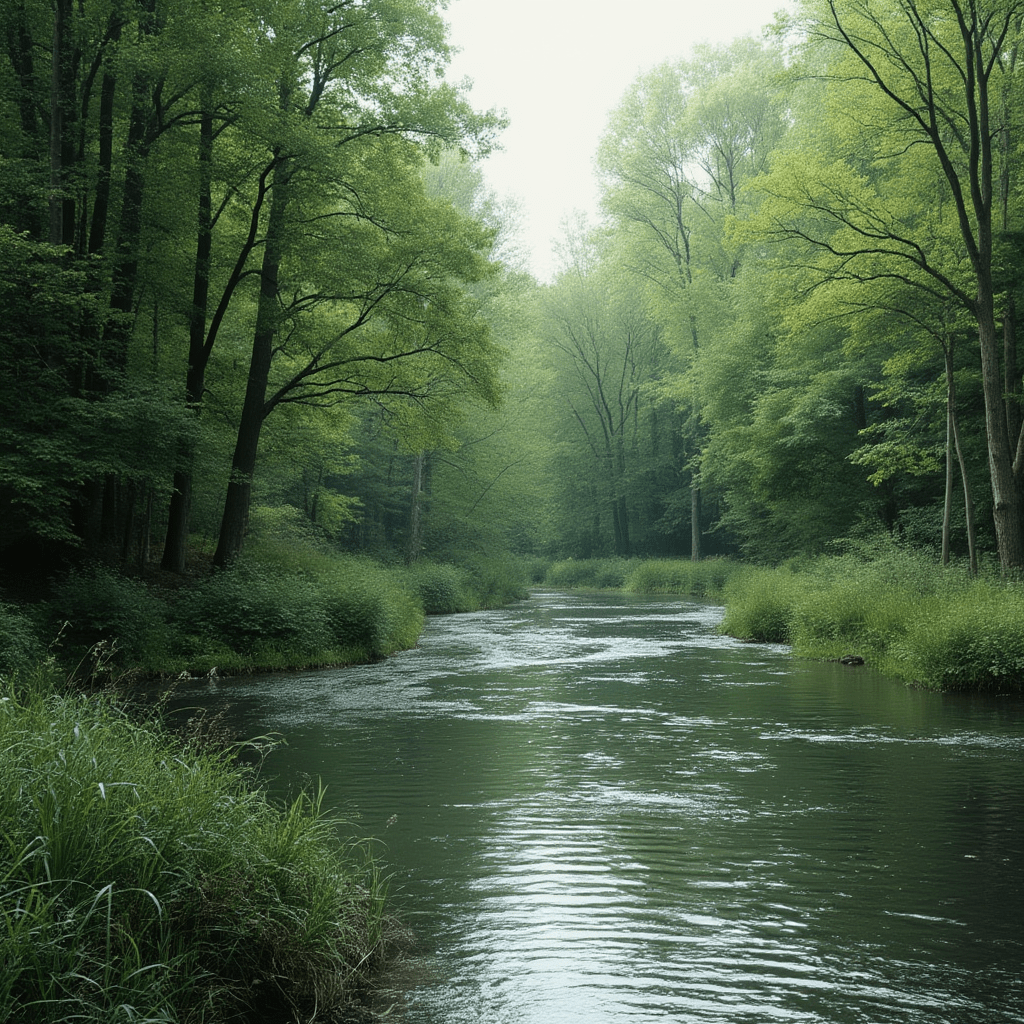
One evening, as he sat by the river, watching the golden light of sunset shimmer over the water, he felt something shift within him. It wasn’t joy, exactly. It wasn’t the rush of love he had always chased. It was something quieter. Steadier.

Peace.

He thought about all the years he had spent searching for something—validation, love, understanding. He had believed that happiness lay in being seen by others, in being cherished. But now, watching the river flow without purpose, without expectation, he realized how wrong he had been.

He had never needed others to complete him.

He had never needed someone to mirror his love back at him to prove he was worthy.

The world would always be conditional. People would love when it suited them, when they needed something in return. That was human nature.

But he did not have to need them in the same way anymore.

That night, for the first time in his life, he slept soundly, without dreams of unfulfilled love, without aching for a touch, a word, a promise.

Days turned into months, and months into years.

He no longer waited for calls that never came. He no longer felt hurt when people forgot him. He had found something stronger than love—acceptance.

One day, as he sat on his porch, sipping tea and watching the mist roll over the hills, he realized he did not regret leaving. He did not regret giving up on others.

Because he had finally found the one thing he had been searching for all along.

Himself.

Copyright (c) Pratik Majumdar, 2025. Any article, story, write-up cannot be reproduced in its entirety or in part, without permission. URL links can be used
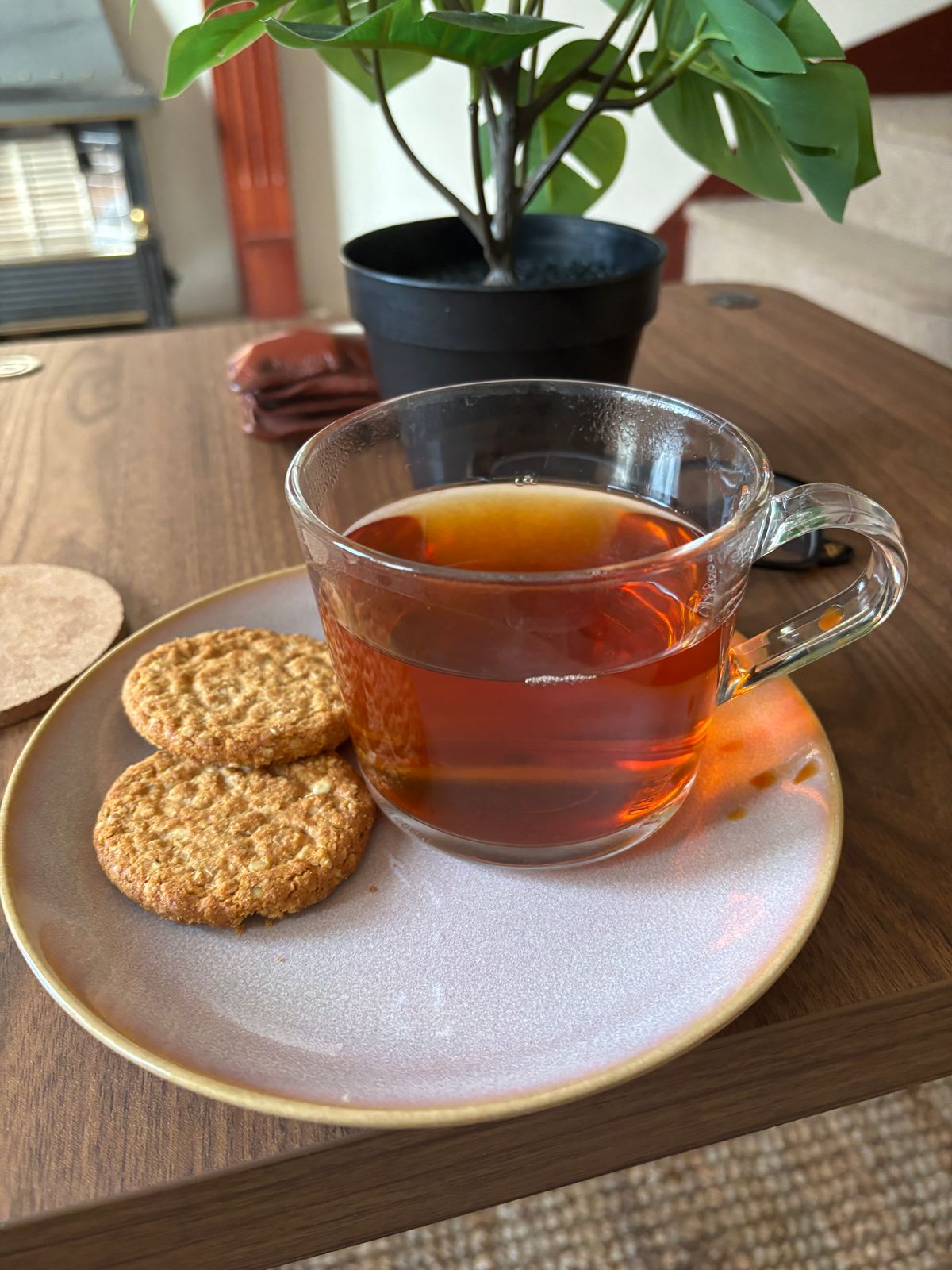
Sunday Mornings & Green Tea


“How the hell can you spoil the taste of those heavenly biscuits with that warm lemon water?”
 she’d demand, hands on her hips, eyes gleaming with mock indignation.

Sunday mornings used to be their ritual. The scent of freshly brewed green tea mingled with the warmth of oat cookies, and Dean Martin crooning softly on the vinyl, his voice blending seamlessly with her relentless complaints.

He never argued. He never defended his tea. He simply took a slow, deliberate sip, letting her words wash over him like the softest drizzle on a spring morning. He would bite into an oat cookie—her favourite—and pretend to ignore her. And that, he had discovered, only made her go on and on.

It was a dance they had perfected over the years, her rants and his silence composing a melody of familiarity, of love wrapped in the guise of playful exasperation. She was fire—fierce, passionate, relentless. He was water—calm, steady, patient. And together, they had created a storm he had come to cherish.

Sometimes, in the height of her fury, she’d threaten to throw his cup away. “One day, I swear, I’ll do it.” And she would try—hand reaching out, fingers grazing the warm ceramic. But he was always quicker, pulling it away just in time, laughing softly at the frustration dancing across her face. She never meant it, of course. Just as he never truly ignored her.

It was their kind of love. Loud in her words, quiet in his silences.

But this morning, the house was silent.

The record player had been still for four years. Jim Reeves did not sing here anymore.

The absence pressed against him like a weight he could never put down. He still made the tea, still placed the oat cookies on the plate, still sat in the same chair by the window. Old habits are hard to break, especially the ones wrapped in love.

As he lifted the cup, a familiar warmth curled around his fingers. A sip, a memory. A quiet laugh, an echo of the past. And then, as if the universe had conspired against his fragile moment of peace, his hand wavered. The cup tilted, the amber liquid spilling onto his track pants.

The sudden heat jolted him back—back to this room, this morning, this present where her voice no longer filled the spaces between sips of tea.

He turned around.

No one was there.

Of course, no one was there.

He let out a breath he didn’t know he’d been holding, set the cup down carefully, and stared out of the window, seeing nothing, seeing everything.

The cold December morning stretched endlessly before him.

Copyright (c) Pratik Majumdar, 2025. Any article, story, write-up cannot be reproduced in its entirety or in part, without permission. URL links can be used

A Flight of Memories

The flight was calm, the steady hum of the engines filling the cabin with a low, rhythmic lull. She adjusted the blanket over her sleeping son, her fingers brushing against the tiny hands curled into a fist. Her husband sat beside her, flipping through a magazine, oblivious to the storm that was about to crash into her heart.

It started with a voice. A voice she hadn’t heard in years.

“One beer, please. Extra cold. And if you have one of those tiny lemon wedges, throw it in. And lots of ice cubes. Just for drama.”

She froze. The request was too specific, too unique too familiar. Slowly, she turned her head toward the voice. And there he was.

Nikhil. 

The man she had once loved with everything she had. The man who had made her laugh, who had kissed her under streetlights, who had once whispered dreams into her ears like poetry. He looked different now—leaner, older, his dark hair flecked with streaks of silver. But those eyes… still the same. Still mischievous, still carrying secrets of a thousand untold stories.

A sea of memories flooded her mind. Sneaking out for midnight drives, sharing a plate of pani puri, getting drenched in the rain because he insisted that “love stories need at least one Bollywood moment.” And, of course, the night he had kissed her on the rooftop, under the glow of a city that never slept, promising her forever.

Forever. Such a naive word.

He hadn’t seen her yet. She watched as he took his beer, his fingers tracing the rim of the glass absentmindedly. Her heart pounded, but she forced herself to look away. This was not the time. Not the place. She had a life now, a husband, a son. Nikhil was a chapter she had closed long ago.

Or so she thought.

A while later, as he walked past her toward the restroom, something in her shifted. She didn’t think. She simply stood up, made her way down the narrow aisle, and waited outside the restroom door.

When he stepped out, their eyes met. And in that moment, time folded in on itself.

“Wow,” he finally breathed, shaking his head as if to clear the daze. “Of all the flights in the world…” he echoed line which was eerily similar to one from their favourite movie once upon a time. 

She laughed, and it came out a little too soft, a little too fragile. “And of all the beers in the world, you still order it like that.”

He grinned. “Some things never change.”

Silence stretched between them, thick with everything unsaid.

“Walk with me?” she asked.

He nodded. They moved toward the galley, standing near the small windows, away from the sleeping passengers.

“You look… happy,” he said, his voice quieter now.

“I am,” she admitted. “I have a wonderful husband. And my son, Kabir… he’s my whole world.”

Nikhil smiled. “Kabir, huh? Nice name.”

She hesitated before asking, “And you? Tell me about your life.”

He shrugged, looking away. “Oh, you know. Work, travel… the usual.”

She narrowed her eyes. “Still avoiding direct questions, I see.”

“Still asking the tough ones,” he shot back with a smirk.

They both chuckled, and for a moment, it was as if nothing had changed. As if they were still those two reckless kids who believed love could conquer anything.

Her mind drifted again—to their last night together. The fight, the tears, the realization that love wasn’t always enough. She had wanted stability; he had wanted adventure. And so, they had walked away.

“You ever think about us?” she asked softly.

He exhaled. “More than I should.”

She looked at him then, really looked at him. There was something different in his face. A tiredness. A shadow. Before she could press further, an announcement interrupted them—the captain’s voice, announcing their descent.

As they walked back to their seats, she felt an ache she couldn’t quite name. Was it regret? Nostalgia? Or simply the cruel passage of time?

The plane touched down smoothly. As she reached for her bags, a commotion near the front caught her attention. A group of medical personnel was boarding, moving with quiet urgency. And then she saw him.

Nikhil, standing near the exit, waiting for them.

Her eyes got a little wider than usual as realisation hit her like a punch to the gut. He wasn’t just traveling. He was sick. Very sick.

As if sensing her eyes on him, he turned around. Their gazes locked.

He smiled. A small, tired, but utterly genuine smile. Then his eyes flickered to her husband, to her son, and back to her.

There was no bitterness in his expression, no sadness. Just… peace.

And then, just like that, he was gone.

She stood there, frozen, as her husband gently touched her shoulder. “Everything okay?”

She swallowed the lump in her throat and nodded. “Yeah. Just an old friend.”

As they walked toward the exit, she couldn’t shake the weight in her chest. Some people come into your life like a storm, changing everything. And some leave like a whisper, a lingering echo of what once was.

And sometimes, if you’re lucky, you get to say goodbye.

Copyright (c) Pratik Majumdar, 2025. Any article, story, write-up cannot be reproduced in its entirety or in part, without permission. URL links can be used

The Right Man

She sat alone at the bar, her fingers absently tracing the rim of her untouched glass. The ice had long since melted, the condensation pooling beneath it like the remnants of her unresolved past. The low hum of conversation around her faded into the background as she drifted into a world of what-ifs and should-haves.

Her life was a paradox—her career soaring while her marriage crumbled. Each corporate victory felt hollow when weighed against the growing emptiness in her home. She had once thought success could fill the void, that a thriving business could compensate for a faltering relationship. But no deal, no accolade, no achievement ever did.

And then, there was him. The one she let go.

The one who never promised forever, but made every moment feel infinite.

She hadn’t planned to reconnect with her ex, but fate had intervened. A chance meeting, a few conversations, and suddenly, the floodgates had opened. Every suppressed memory, every buried emotion had clawed its way back to the surface. She had convinced herself that she had moved on, but the way her heart quickened when she saw his name on her phone told a different story.

She had told herself that tonight was harmless—just a drink, just a conversation. But deep down, she knew better.

The minutes stretched into an hour, then two. He wasn’t coming.

The sting of disappointment settled deep inside her, bitter and sharp. She signalled for another drink, then another. Each sip dulled the ache, blurred the lines between past and present. The bar lights shimmered, the music pulsed through her veins, but all she felt was numb.

When she finally tried to stand, the world tilted dangerously. She reached for the counter, but before she could fall, strong hands caught her.

For a fleeting second, she thought it was him. But as she looked up, blinking away the haze, she found herself staring into the eyes of the man she had spent years drifting away from.

Her husband.

“I knew you were stressed today, so I came with you,” he said, his voice steady, unreadable. “Whoever you were waiting for didn’t show up, and I thought… maybe you’d need me instead.”

His hands didn’t let go, anchoring her when everything else felt unsteady. For the first time in years, she really looked at him—not as the husband who had become a stranger, not as the man she had once thought was the perfect choice, but simply as him.

And in that moment, something inside her shifted.

Tears welled up, unbidden, trailing down her cheeks. It wasn’t sadness, not entirely. It was clarity. The kind that hit like morning light through a window after a sleepless night.

She had spent so long believing she had made the wrong choice, that she had settled for something less than what she once had. But love—real, lasting love—wasn’t about grand passion or stolen moments. It was about showing up. About catching someone before they fell.

Her husband hadn’t always understood her. They had drifted, fought, lost their way. But he had come for her tonight, even when she hadn’t asked him to. Even when she had been waiting for someone else.

And maybe, just maybe, that was love, too.

She let him hold her as they walked toward the car, the past finally loosening its grip on her heart.

Copyright (c) Pratik Majumdar, 2025. Any article, story, write-up cannot be reproduced in its entirety or in part, without permission. URL links can be used