
A Fragrance of September

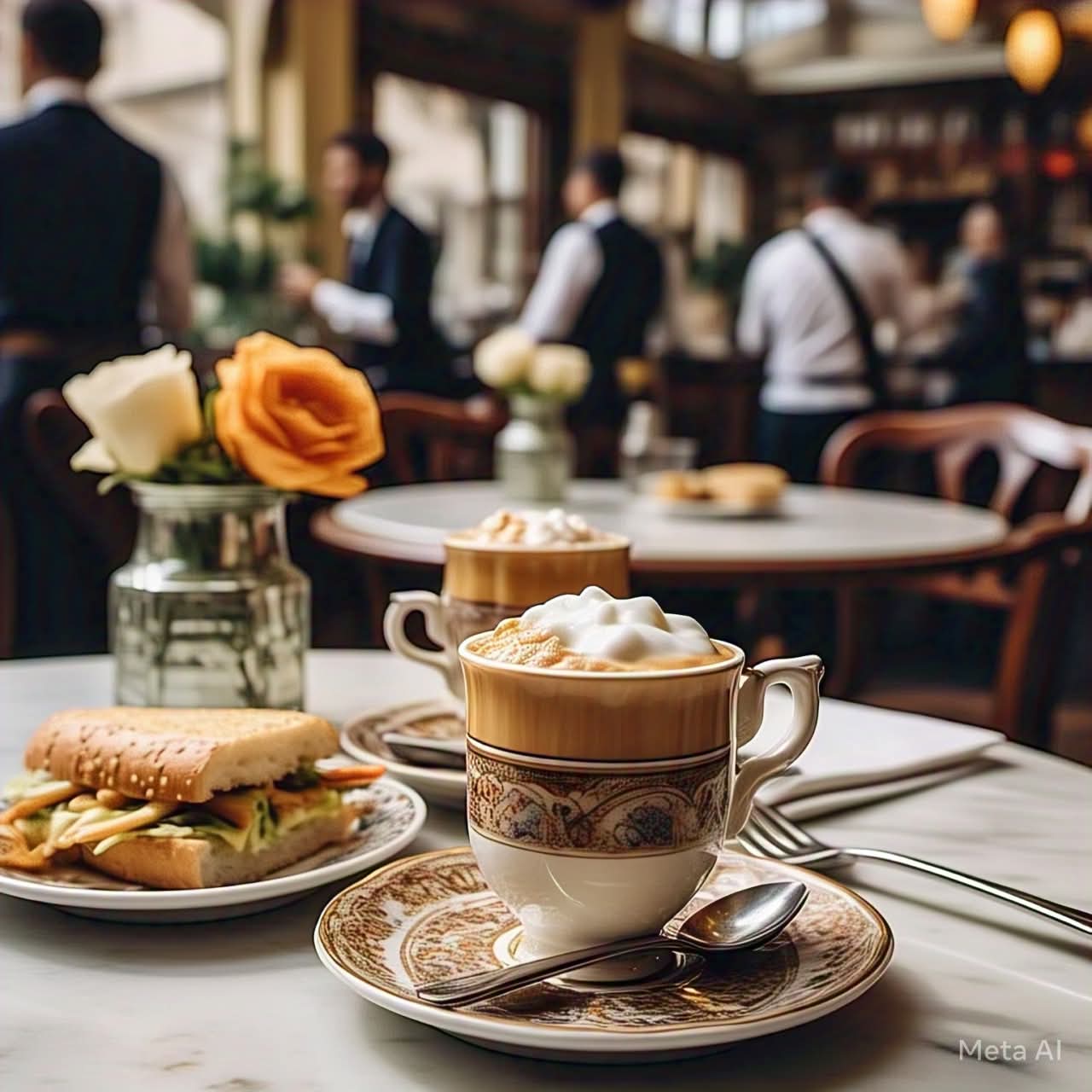
The café still smelt the same as always. Coffee beans, warm bread, and a faint trace of vanilla from the pastries in the display case. He sat by the window, just as he used to, stirring his espresso absentmindedly, his eyes drawn to the empty chair across from him. It had been years, yet some evenings—like this one—her memory surfaced unannounced, slipping past the walls he had carefully built around him.

He could never quite remember how it ended. It baffled him. A love that had begun like a spark catching dry wood, burning fast and bright, should have left a clearer imprint. But the end? It was like trying to recall a dream upon waking—fragments, whispers, but never the full picture.

He remembered the way she laughed, tilting her head back just slightly, eyes crinkling at the corners. He remembered how she would let him win their endless debates over coffee—how she pretended to hate espresso but stole sips from his cup anyway. And he remembered the cheese straws, how she would protest, “I can’t eat anymore,” but still let him feed her another bite. “I have to go home and pretend I’m hungry,” she would giggle.

That last evening had been like any other—or so he thought. They had walked together, side by side, their steps unconsciously synchronized, the way two people in rhythm often are. But something had shifted when they neared her building. She had looked ahead, suddenly stiff, and then the words came, quiet but firm. “I think you should leave from here.”

No explanation. No goodbye. Just that. He remembered being left dumbstruck at the suddenness of it all. 

Had they spoken at work the next day? Surely, they must have. But their rules had been clear—inside the office, they were colleagues, nothing more. And so, whatever had unraveled between them had done so in silence.

He sighed, rubbing his temples, trying to shake off the heaviness of memories. Outside, the sky was sliding from gold to deep indigo. The café speakers hummed softly with an old song—Why Worry by Dire Straits. He froze. The next song, he knew, would be Fields of Gold. Their song. The song that once felt like a promise, like something meant to last forever.

His heart ached with something he couldn’t define. Nostalgia, maybe. Or regret. Or simply the realisation that some stories don’t get happy endings. Or in this case, even clear endings. 

As he stepped out of the café, a sudden breeze carried the scent of jasmine through the air. He closed his eyes, inhaling deeply. It was her scent. It was the scent of that September evening all those years ago.

Perhaps some things weren’t meant to be remembered in full. Perhaps some moments, some people, were meant to live on as echoes—fragments of love, scattered through time, waiting to find you again in the most unexpected ways.

Copyright (c) Pratik Majumdar, 2025. Any article, story, write-up cannot be reproduced in its entirety or in part, without permission. URL links can be used

Whispered Promise

He had loved her for as long as he could remember. Since the days of scraped knees and stolen ice creams, through endless late-night calls where she poured her heart out about boys who didn’t deserve her, he had loved her. Quietly, steadfastly, without expectations.

Meera was his best friend—laughing, free-spirited, unpredictable. She danced in the rain and made wishes on fallen eyelashes. And Ayan? He was the one who stood beside her, steady as the earth beneath her feet.

Every heartbreak, every joy, she ran to him first.

“Ayan, do you think he likes me?” she’d ask, eyes bright with hope.

He’d swallow the lump in his throat and smile. “If he has any sense, he will.”

And when they didn’t, when they left her shattered, he held her together—until she was ready to love again.

But no one ever saw her the way he did. No one else memorised the way her eyes changed colour under different lights, or how she hummed when she was lost in thought. No one else wrote her into the margins of their life like she was the story itself.

So he wrote it down. Every moment, every feeling, tucked away in a folder on his laptop—a love he never had the courage to say aloud.

And then one evening, fate intervened.

He was late in bringing the espresso and cappuccino to their usual seat in the café. Meera, waiting at their seat , absentmindedly flipped open his laptop. A folder named For Meera. She was surprised to see a folder with her name on it. She debated whether she should open it or not. Eventually her curiosity won over her decency. 

And in the next instant, her world changed.

The words on the screen weren’t just words. They were confessions, quiet and unwavering, woven into poetry and prose. Love so deep it made her breath catch.

By the time Ayan returned, she was sitting by the window, staring at the laptop, her fingers trembling as they traced his words.

He froze in the space next to their corner table. He didn’t need to ask. He knew.

“You wrote these?” Her voice was barely a whisper.

A long silence.

“I did.”

She exhaled, closing her eyes for a moment before looking at him. “Ayan…” She didn’t know what to say. She loved him—just not in the way he had loved her. And yet, the feel  of his love, so constant, so unwavering, made her uncertain and lost. 

He gave her a small, knowing smile, the kind that broke her heart a little.

“You don’t have to say it,” he murmured. “I already know.”

She blinked back tears. “But what do I do now? What do we do now?”

Ayan walked toward her, kneeling beside her chair, gently taking her hand in his. His touch was warm, familiar—home.

“You do what you’ve always done,” he said softly. “You live, love, dream.” His thumb brushed over her knuckles, as if memorising the feel of her one last time. “And I… I will love you the way I always have. Without asking for anything in return.”

A tear slipped down her cheek. She had always known Ayan was extraordinary, but at this moment, he was something even greater—he was love in its purest form.

She reached out, cupping his face, her voice breaking. “You deserve the kind of love you give, Ayan.”

He smiled, leaning into her touch for the briefest second before pulling away.

“Maybe one day,” he whispered. “But for now, this is enough.”

And though her heart ached, she knew that his love—silent, unshaken, infinite—would remain, like a whispered promise always jn her heart. 

Copyright (c) Pratik Majumdar, 2025. Any article, story, write-up cannot be reproduced in its entirety or in part, without permission. URL links can be used

Sisters

The first time Nikhil met the Sharma sisters, he was instantly drawn to Meera. Meera, with her radiant smile and firecracker spirit, was impossible to resist. She was all warmth and mischief, a burst of colour and chaos in his otherwise structured world. In contrast, her sister, Aisha, was quiet, watchful—an old soul almost…with eyes that seemed to understand everything without a single word spoken.

It was Meera who loved him, Meera who chased him, Meera who stole his breath away with her laughter. 

And yet, it was Aisha who knew him.

Nikhil never quite understood how it happened. How a simple, unspoken bond with Aisha had formed, how it deepened into something beyond friendship, beyond family—something that went beyond definition. There were no stolen kisses, no flirtatious glances. Just an inexplicable understanding, an unshakable trust. She was the one he turned to when he was lost, when the weight of the world felt too heavy on his shoulders. She never asked for anything, never demanded. She just was.

And Meera? She saw it.

She saw the way Nikhil’s shoulders relaxed in Aisha’s presence, how their silences were comfortable in a way Meera’s chatter could never be. She saw the ease, the wordless conversations, the knowing smiles.

She tried not to be jealous.

But the ache inside of her grew with every passing day.

One evening, Meera sat with Nikhil on the terrace, their fingers intertwined. The city lights stretched out before them, but her mind was elsewhere.

“She leaves first, you know,” she said softly, watching his face. “When we’re together, Aisha always walks away first.”

Nikhil frowned. “What do you mean?”

Meera turned to him, searching his face. “I mean she’s always the one to step back. Always the one to disappear when we’re around each other. She does it so we don’t feel it, but I do. And it kills me.”

Nikhil sighed, rubbing his temple. “Meera, you’re imagining things.”

“Am I?” Her voice was bitter. “Then tell me, Nikhil… if you had met her first, would you still have been with me?”

He had no answer.

The breaking point came on a rainy night, thunder rumbling low in the distance.

Aisha stood at the doorway, a small bag at her feet. Meera stood before her, arms crossed tightly, while Nikhil hovered between them, torn and helpless.

“You don’t have to do this,” Nikhil said, his voice firm but almost a whisper.

Aisha smiled, but it was a sad, tired thing. “I do.”

Meera shook her head, her voice shaking. “I don’t understand, Aisha. Why do you always have to be the one who gives up?”

Aisha’s gaze softened. “Because I love you more than I want to stay.”

Meera let out a soft cry, tears spilling down her cheeks. “I don’t want to lose you.”

“You won’t.” Aisha reached out, brushing a tear away. “You and I… we’re written in blood. But some bonds demand distance to survive.”

Nikhil clenched his jaw, stepping forward. “Aisha—”

But she was already gone.

Meera and Nikhil tried.

They tried to piece together what remained after Aisha left. They travelled, they laughed, they made love under the stars. But the ghost of her absence lingered between them, an unspoken emptiness which neither of them could fill.

Some nights, Nikhil would turn in his sleep, instinctively reaching for a presence that was never meant to be his. And Meera, wide awake beside him, would close her eyes and pretend not to notice.

Years later, when they finally parted ways, they did so with quiet acceptance. There were no grand fights, no bitter words—only the soft realisation that sometimes love can never truly be enough.

And somewhere, in a distant city, Aisha sat by a window, watching the rain fall, wondering if some loves were only meant to be felt, never held or realised. 

Copyright (c) Pratik Majumdar, 2025. Any article, story, write-up cannot be reproduced in its entirety or in part, without permission. URL links can be used

The Corner Table

Every evening, at exactly six-thirty, he took his place at the farthest corner of the café—by the window, facing the street. The table was small, slightly wobbly, but it was his. The wood had darkened with time, the edges smoothed by years of elbows resting, fingers tracing absentminded patterns. A single overhead lamp cast a muted yellow glow on its surface, highlighting the tiny cracks in the varnish.

The café hummed around him—a blend of clinking cups, murmured conversations, and the occasional burst of laughter from a table near the counter. The air brimmed with the scent of strong coffee, toasted bread, and something faintly sweet, perhaps vanilla. Outside, the city pulsed with life. Neon signs flickered, their reflections dancing on the wet pavement from an earlier drizzle. Cars honked impatiently. Pedestrians, bundled in scarves and jackets, moved briskly, their footsteps blending into the rhythm of the evening.

He sat with his hands wrapped around the warm ceramic cup, inhaling the familiar scent of adrakwali chai. The steam curled upward, dissolving into the dim light. He took a slow sip, feeling the spice settle on his tongue, the heat spreading through his chest—a comfort he had come to rely on.

His eyes drifted to the glass, not really looking at the street but beyond it, into a time when this city had not felt so distant, when the days had not felt so heavy.

There was a winter evening, long ago, in this very café. The laughter of friends, the scrape of chairs being pulled close, the clatter of spoons against cups as stories were exchanged. He remembered a girl—her voice like soft rain, her fingers tapping against the table as she spoke, eyes sparkling with something he had never been able to name. They had sat here for hours, the world outside forgotten, lost in a conversation that felt endless. She had left a doodle on a tissue—just a rough sketch of a book and a cup of tea. He had tucked it into his wallet, meaning to throw it away later, but never did.

He reached into his pocket now, fingers brushing against its frayed edges. The ink had faded, the lines barely visible, yet he could still see them as clearly as if they had been drawn yesterday. She was gone now—like most people eventually had, from his life. The city had swallowed her up, just as it had, with everyone. 

He sighed, tucking the tissue back where it belonged.

As the evening grew, the streetlights flickered on, casting long, distorted shadows on the pavement. The café would close soon. He would leave, just as he always did, slipping into the night as unnoticed as when he arrived. But tomorrow, he would return. The same corner, the same chai, the same quiet ache of remembering. He smiled as he got up, feeling charged up to face another day. 

Copyright (c) Pratik Majumdar, 2025. Any article, story, write-up cannot be reproduced in its entirety or in part, without permission. URL links can be used

The Willow House

The train rattled along the tracks, carving a path through hills and rivers, through forgotten villages and nameless towns. Inside, the traveler sat by the window, his gaze unfocused, his mind adrift. He had no permanent home, no final destination—only the motion of the train, the quiet solitude of travel, and the occasional stops in unfamiliar places where he could lose himself for a while.

That evening, he stepped off at a town whose name he hadn’t bothered to read. The air smelled of rain-soaked earth and woodsmoke. It was small, quaint, wrapped in an eerie quietness that settled deep into his bones.

He found lodging at The Willow House, a guest house on the outskirts of town, run by a woman named Laila. She was striking—dark-haired, with an old-world beauty that belonged to another time. There was something graceful yet lonely about her, as though she were waiting for something.

“You travel alone?” she asked, her voice soft yet knowing.

He nodded. “Always.”

She smiled. “Then you’ll find peace here.”

And for the first time in years, he did. The town had a slow, unhurried rhythm, and in Laila’s guest house, he felt something unfamiliar—comfort. She would bring him tea in the evenings, sit with him by the fire, listening to his stories with a quiet intensity. He found himself watching her, drawn to the way candlelight danced against her skin, the way her fingers lingered on old books as if they held secrets only she could read.

But the townsfolk were different. Their warmth cooled the moment he mentioned where he was staying. The shopkeeper’s smile faded. The bartender hesitated before pouring his drink. The old woman at the bakery pressed a loaf of bread into his hands and muttered, “Don’t stay too long, son.”

He asked, but no one would say why.

One night, as the wind howled outside, he found Laila standing by the window, staring into the dark.

“What are you looking at?” he asked.

She turned, smiling that same wistful smile. “Just the past.”

Something in her voice sent a shiver down his spine.

Later, in the dead of night, he woke to a noise—a soft creaking, like footsteps on wood. Slipping out of bed, he followed the sound down the dimly lit hall, past rooms that should have been empty but felt filled with unseen presence. The house felt different now—heavier, as if it carried stories too painful to be spoken.

Then he saw it.

A door at the end of the hall, slightly ajar.

Inside, the room was untouched, layered in dust. A single suitcase sat in the corner, worn and forgotten. He stepped closer, and his breath caught in his throat. Inside the suitcase were clothes—shirts, coats, scarves—all belonging to men. Different sizes, different styles, but all worn, all abandoned.

And beside the suitcase, a faded photograph.

It was Laila. And a man. A different man. Holding hands, smiling.

The date on the photograph was last year.

His stomach twisted. He stepped back, his heart hammering against his ribs. How many men had come before him? How many travelers, seeking shelter in a town that tried to warn them?

A floorboard creaked behind him.

He turned.

Laila stood in the doorway, her expression unreadable. In her hands, she held a knife.

“You should have never opened that door,” she whispered.

The wind outside howled, but inside The Willow House, all was silent.

Copyright (c) Pratik Majumdar, 2025. Any article, story, write-up cannot be reproduced in its entirety or in part, without permission. URL links can be used

Double Cross

He kept calling her number and it kept saying unreachable. He wondered what had happened.

The rain pounded against the windows of the small, dimly lit police station as Rohan Mehra sat across Inspector Priya Sharma. His hands shook as he clutched a photograph of his wife, Ananya. She had been missing for three agonizing days.

“She went out for groceries,” Rohan said, his voice wavering. “She never came back. I’ve called everyone, checked everywhere. She’s just… gone.”

Inspector Sharma studied him intently. Rohan’s anguish seemed genuine, but there was something about his story that felt off. Nevertheless, she assured him they would do everything possible to find Ananya.

“It’s always the husband,” she thought to herself. 

The search commenced. Days melted into nights, and just when hope began to fade, a breakthrough emerged. A woman matching Ananya’s description was found wandering along a deserted highway, disoriented and injured. She was quickly rushed to the hospital, and Rohan was summoned to identify her.

He was overwhelmed to see her! He could hardly believe it!

There she was—Ananya. Her face was bruised, her arm in a sling, but there was no mistaking her. Rohan’s relief washed over him as he brought her home, determined to care for her. But as the days unfolded, an unsettling feeling settled in the pit of his stomach.

Something felt off about Ananya. She looked the same, spoke the same, even had the same mannerisms—but Rohan couldn’t shake the nagging sense that she wasn’t truly his wife. Her laughter seemed strained, her gaze lingered for too long, and she deftly avoided discussions about the night she vanished.

The unease consumed Rohan from within. How could this be? How was it even possible? Thoughts and doubts danced chaotically in his mind. He kept asking himself several questions, questions to which he had no answer. 

One evening, as they sat by the fireplace, Ananya casually mentioned wanting to change her insurance policy. “I think it’s time to update the nominee,” she said, her tone light, but her eyes glinted with something more.

Rohan froze. His heart raced as he stared at her. “You’re not her,” he blurted out, his voice trembling with a mix of fear and rage. “You can’t be her,” he screamed. 

“Of course I am,” she replied, puzzled by his outburst. “What are you talking about?”

“You can’t be her. It’s impossible. Because I killed my wife. I staged it to look like an accident. So who the hell are you?” He collapsed to the floor, his face covered by trembling hands.

Ananya’s expression remained unchanged. She leaned back in her chair, a faint smile touching her lips. “Oh, Rohan,” she said softly. “You always had such confidence, didn’t you?”

Rohan’s mind raced. “What are you saying? Who are you?”

Ananya rose, her movements deliberate. “You thought you got rid of me, didn’t you? But you didn’t. 

You killed someone else.”

Rohan felt his blood run cold. “What are you talking about?”

“That night,” Ananya continued, her voice steady, “I knew what you were planning. I had seen your gaze, heard the whispers about the insurance payout. So, I devised a plan of my own. Your ex-girlfriend, Kavita, came to visit us that day. She still had feelings for you, you know. I persuaded her to dress like me, to take my place in the car. I even gave her my purse and my phone—everything. And in your rush, you didn’t even notice.”

Rohan felt his legs give way, and he sank to the floor. “No… no, that can’t be. Kavita was supposed to arrive the next day…” His voice trailed off.

“Oh, it’s entirely possible,” Ananya said, her voice icy. “You tampered with the brakes just like I knew you would. But it wasn’t me in that car, Rohan. It was Kavita. You killed her. Kavita wanted to surprise you by showing up early. And how perfectly that worked out for me, huh?” Her smirk widened.

Rohan’s thoughts spiralled. He remembered the crash, the flames, the body retrieved from the wreckage. He had been so sure it was Ananya. “But… the body… the police…”

Ananya’s smile turned sour. “The body was too badly burned for identification. The police assumed it was me because of the items Kavita carried. And you… you played the grieving husband perfectly, didn’t you? But then I went to the police with my story. And we orchestrated this entire charade to draw you out and force you to confess.”

Rohan’s world crumbled around him. He now realised why Kavita’s phone kept saying “unreachable”. He had been meticulous, so convinced of his cleverness. Yet he had been outsmarted by the one person he thought he had in his grasp.

Ananya walked to the door and opened it. Inspector Sharma stood there, accompanied by two uniformed officers. “Rohan Mehra,” Sharma stated, “you’re under arrest for the murder of Kavita Desai.”

As the officers fastened the handcuffs around him, Rohan looked at Ananya one final time. “You… you masterminded this all along.”

Ananya’s gaze was frosty. “You taught me well, Rohan. To survive, you always need to stay one step ahead.”

As Rohan was led away, the burden of his own treachery pressed heavily on his shoulders. He had considered himself the puppet master, but in the end, he was merely a pawn in a game he hadn’t even recognized.

And Ananya? She stood in the doorway, watching him leave, a small, satisfied smile gracing her lips. She had triumphed. But only she understood the price she had paid for this “victory.” 

Copyright (c) Pratik Majumdar, 2025. Any article, story, write-up cannot be reproduced in its entirety or in part, without permission. URL links can be used
A Song for Yesterday

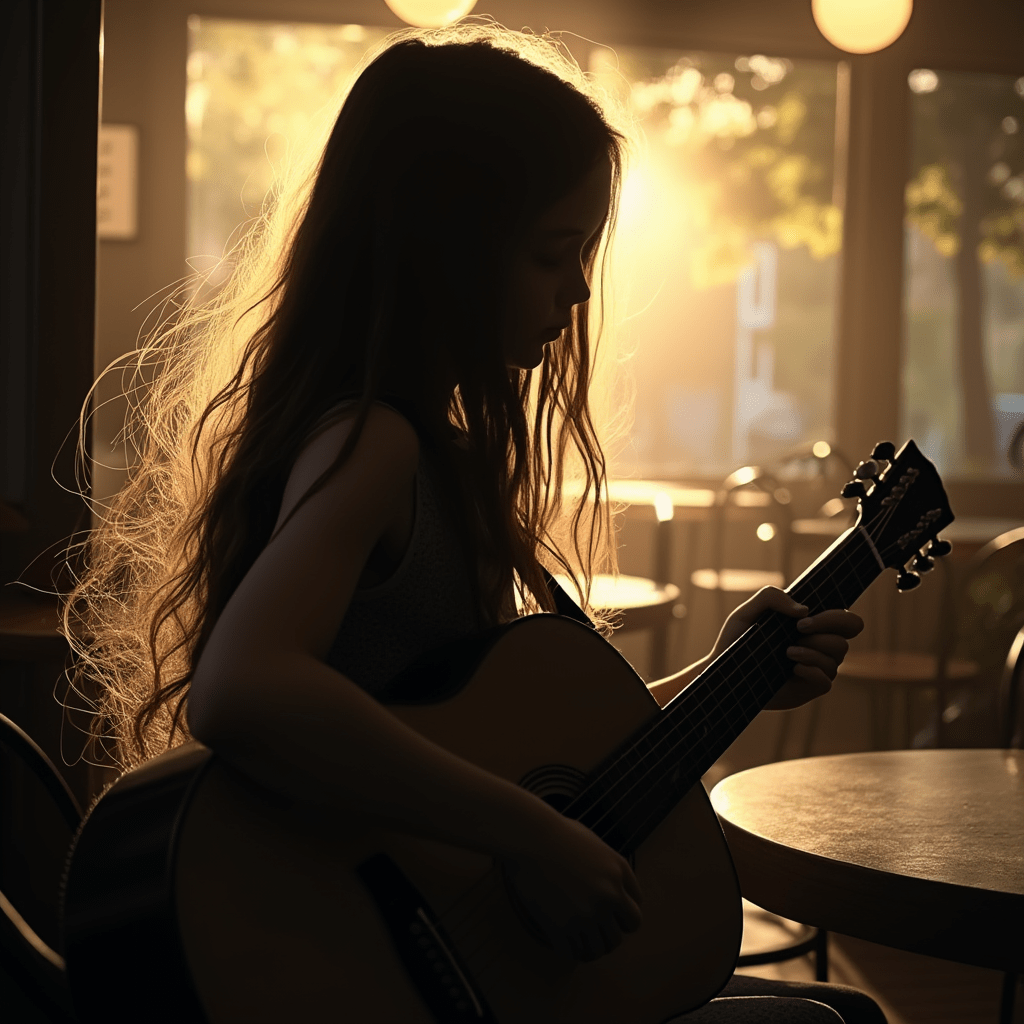
The café had not changed. The wooden beams still held the scent of old coffee, and the walls bore the same soft golden glow that once made everything feel warm, intimate. Daniel stepped inside, shaking off the evening chill, his fingers tightening around the edges of his coat.

It had been years since he had last walked these floors, years since he had sat in that farthest corner, with a love so intense it felt like it could bend time. Isabelle used to sit across from him, her hands curled around a porcelain cup, her eyes dancing as she teased him about something or nothing at all.

He could still hear her laughter. Still feel the way his world had narrowed to just her, the way love had made everything else seem irrelevant. Until, of course, it wasn’t enough. Until they had shattered beneath the weight of things unspoken, wounds inflicted in the heat of anger, pride refusing to bend.

And then she was gone.

Daniel exhaled, rubbing his chest absently as if trying to soothe an old ache. He took his usual seat, the one he had once claimed as theirs.

That was when he heard it.

A single note, rising gently through the quiet murmur of the café. Then another. And then—

“When the rain fell that night, did you stand by the window?

His heart stopped.

It was their song. The song he and Isabelle had written together in the fragile, golden days of their love. A Song for Yesterday. It had never been released, never shared beyond the two of them. No one else in the world should have known it.

But someone did.

His gaze snapped toward the small platform at the front of the café. A girl stood there, her eyes closed, her voice carrying each note like a whisper from the past. She was young, maybe eighteen, maybe a little older. The curve of her jaw, the tilt of her head—there was something hauntingly familiar about her. And she strummed her guitar with that same absent-minded nonchalance. 

As the last note faded into silence, she opened her eyes.

And she saw him.

For a moment, they simply stared at each other. Then, she smiled—not the smile of a stranger, but something softer, knowing. As if she had expected him to be here. As if she had come for this very moment.

Daniel pushed back his chair and walked toward her, his heart pounding. “That song…” His voice was rough, uncertain. “How do you know it?”

The girl held his gaze, and for a fleeting second, he saw something—something deep, something almost wistful—flash across her eyes.

But she didn’t answer. She only smiled again, as if his question had already been answered.

And suddenly, it struck him!

She was Isabelle’s daughter.

Not his, but hers. And this—this was why she was here. To find him. To let him hear that song one last time. To remind him that love never truly disappears; it lingers in melodies, in echoes, in the hearts of those left behind.

His chest felt full, overwhelmed by a tenderness he hadn’t felt in years.

The girl gave him one last lingering look before she turned, stepping away from the stage, disappearing into the night.

The next evening, Daniel returned, searching. But the café owner only shook his head.

“She’s gone.”

Daniel stood there for a long moment, staring at the empty space where she had stood.

She had come only for this. To see him once. To carry her mother’s love to the one man Isabelle had never truly left behind.

A gust of wind rustled the chimes by the café door, and in his mind, the song played once more.

“When the rain fell that night, did you stand by the window?”

Daniel closed his eyes, his lips curving into a wistful smile.

Isabelle had sent him her love, one last time. And that was enough.

Copyright (c) Pratik Majumdar, 2025. Any article, story, write-up cannot be reproduced in its entirety or in part, without permission. URL links can be used

Love, Unrequited

She, with pigtails and red ribbons. 

He, with scraped knees from innumerable bicycle falls. 

They, with shared lunchboxes and personal jokes which only they understood and laughed at. 

They were six. They were inseparable. 

Vikram and Saira. 

As they grew up, so did something unspoken between them. In high school, when a boy left a love letter in Saira’s notebook, she barely read it before tearing it apart. Vikram noticed but said nothing. And when girls gushed about Vikram’s charming smile, Saira only pretended to be uninterested, waiting—always waiting—for him to turn to her.

In college, boys pursued Saira, but she refused them all, always hoping that one day Vikram would gather the courage to ask. He never did. Instead, they remained best friends, standing beside each other through exams, late-night study sessions, and stolen moments beneath moonlit skies.

But after college, life pulled them apart. There were no bitter words, no dramatic farewell—just a long silence that stretched between them until it became an insurmountable distance.

Years passed. Saira got married. Vikram did too. Life moved forward, but the memory of him was like a quiet ache in her heart, a love that had never bloomed but had never quite died either. She kept it placed carefully in a special corner of her heart.  

Then one evening, out of the blue, her phone rang. The name on the screen made her hold her breath. 

Vikram.

She hesitated. And then, with trembling fingers, answered.

“Hello?”

There was a pause, and then—“Saira…” His voice was deeper, yet unmistakable. It sent a shiver through her, pulling her back to a time when they sat side by side, dreaming of tomorrows that never came.

They talked about everything and nothing, falling into old rhythms as if no time had passed. He told her about his life, and she told him about hers. Then, after a quiet lull, he sighed.

“You know, I had feelings for you back then,” he admitted, his voice barely above a whisper.

Saira’s heart stopped. “What?”

“Yes I was in love with you,” he said. “For years. But I never had the courage to say it. I was afraid of losing you.”

The world around her blurred. She let out a breath she hadn’t realised she was holding. “Vikram… I felt the same way.”

Silence. A long, stunned silence where both of them realised the gravity of what they had just confessed.

“All those times,” Saira whispered, her voice laced with longing, “I kept waiting for you. I kept turning people away, hoping that one day you’d ask.”

Vikram let out a soft, almost broken laugh. “And I kept telling myself you deserved better than me.”

They fell silent again, the what-ifs stretching between them like a bittersweet melody.

The night deepened as they reminisced, reliving old memories—the way he’d sneak chocolates into her bag during exams, the way she’d hold his hand just a second longer than necessary when they crossed the street. Every stolen glance, every unsaid word—now laid bare, too late, yet somehow still precious. Maybe more. 

They spoke until dawn, their words soaked in nostalgia and quiet yearning.

But as the sun began to rise, reality seeped back in.

“I think this has to be our last conversation,” Vikram said softly. “We both have our lives now.”

Saira’s throat tightened. She had known this was coming. “I know.” She followed it with silence. 

“Saira?”

“Yes?”

“Promise me you’ll be happy.”

Tears welled in her eyes. “Only if you promise the same.”

He let out a faint chuckle. “Deal.”

And just like that, they said their final goodbye.

The call ended, but the memory of this call would linger forever—a love that never was, yet somehow, in that one conversation, had finally found its voice.

Copyright (c) Pratik Majumdar, 2025. Any article, story, write-up cannot be reproduced in its entirety or in part, without permission. URL links can be used

Happy Anniversary

The hotel room was quiet except for the distant hum of the city beyond the hills. Meera sat at the edge of the bed, staring at the golden flicker of the candle on the nightstand. It was meant to be a romantic gesture, yet it felt like a cruel irony now. Across from her, Kabir leaned against the window, arms crossed, his gaze locked on the dark horizon. Neither of them spoke. They had spoken too much already—too many accusations, too many bitter words that had chipped away at what they once were.

This was their seventh wedding anniversary. And yet, they weren’t even sure if they would still be together to celebrate it.

“I don’t know why we’re even here,” Kabir muttered, his voice laced with exhaustion.

Meera swallowed hard. “Because we used to love this place,” she said, almost pleading. “Because we thought maybe—just maybe—coming back here would remind us of who we were before everything went wrong.”

Kabir exhaled sharply, shaking his head. “Before you betrayed me.”

Her heart clenched. She had no defense—there was no excuse for what she had done. A meaningless one-night stand with her colleague, a mistake born out of loneliness, anger, and something she couldn’t even explain to herself. But did that one terrible night erase the years of love between them?

“You weren’t perfect either,” she whispered, her voice trembling. “A month before our wedding… your ex.”

Kabir turned to her, his jaw tightening. “For the last time, Meera, nothing happened that night. She came to say goodbye. That was it. You’ve held onto this for seven years, and it was never true.”

Meera looked down at her hands. “And yet, when I look at you, I still see her shadow.”

They were trapped in this endless cycle of hurt, of anger and regret. No matter how hard they tried to talk, they only ended up further apart.

Silence stretched between them.

Finally, Kabir sighed. “I need some air.” Without waiting for a response, he walked to the balcony and stepped outside.

Meera hesitated, then followed him.

The air was crisp, carrying the scent of jasmine and earth from the surrounding woods. And there, hanging in the velvet sky, was the full moon—silver and luminous, casting a gentle glow over everything.

For a long moment, neither of them spoke. They just stood there, side by side, staring at the moon as if it held the answers to all their unspoken questions.

Then, softly, Kabir began to hum.

Meera’s breath hitched. It was Mausam Pyar Ka, their song—the song that had played in the background of their long drives, their stolen moments of love, and the quiet nights when words weren’t needed, only music.

“Mausam pyaar ka, rang badalte rahe…”

His voice was rough, filled with emotion, yet gentle—like a caress against her wounded heart.

Meera turned to him, her throat tightening. And then, without thinking, she joined in.

“Yun hi chalta rahe, Tere mere…Pyar ka caarvaan…”

Their voices melted into the night, weaving a bridge between their broken hearts.

As they sang, something shifted. The years of love they had built, the memories they had shared, the laughter, the dreams—they weren’t gone. They had only been buried beneath their pain. And now, standing under the full moon, singing their song, those memories surfaced again, wrapping around them like an unbreakable thread.

Kabir’s eyes softened, and Meera saw something in them she hadn’t seen in a long time: love. Pure, unwavering love.

She reached for his hand, and he didn’t pull away. Instead, he pulled her closer.

Their voices faltered, replaced by the steady rhythm of their hearts.

“I don’t want to lose you,” she whispered, tears shining in her eyes.

“You never lost me,” he murmured. “We just lost our way.”

His fingers traced the curve of her cheek, and she leaned into his touch. Slowly, gently, he kissed her—soft at first, then deeper, as if pouring all the love they had almost forgotten into that one moment.

When they finally pulled away, the clock inside the room struck midnight.

Kabir smiled, his forehead resting against hers. “Happy anniversary, Meera.”

A tear slipped down her cheek, but this time, it wasn’t out of sadness.

“Happy anniversary, Kabir.”

And just like that, they knew—they had found their way back to each other.

Copyright (c) Pratik Majumdar, 2025. Any article, story, write-up cannot be reproduced in its entirety or in part, without permission. URL links can be used

The Second Wife

The first time he spotted her, she stood beneath the archway on the Rue de Rivoli, the Eiffel Tower outlined in the dimming Parisian twilight behind her. At first glance, she didn’t seem remarkable, but there was something about her posture—graceful yet elusive—that caught his attention. When their gazes locked, a spark ignited in his chest, a feeling he hadn’t experienced in ages.

“You look so familiar,” he said, flashing a practiced smile.

She tilted her head, a playful smile emerging. “That’s the oldest line in the book.”

Yet, she didn’t just walk away.

Their romance blossomed like a storm, sweeping them into candlelit dinners, secret kisses by the Seine, and whispered confessions over glasses of Bordeaux. She was unlike anyone he’d known before—warm yet enigmatic, tender yet distant. By the time he proposed just two months later, he was convinced that fate had handed him a second chance. A chance to move beyond the past, to love without the shadows that had once haunted him.

He took her back to England, to his sprawling estate on the outskirts of London. The grand mansion, with its soaring towers and twisting corridors, had previously belonged to his first wife. But she was gone now—dead. A tragic accident, nothing more. That’s how he explained it to everyone. That’s how he comforted himself.

At first, everything felt surreal. She glided through the house with effortless elegance, filling its emptiness with joy, music, and the scent of jasmine. But soon, the dream began to sour.

It started with little things—an offhand remark, a familiar mannerism. The way she clinked her fork against her plate before taking a bite. The precise rhythm of her fingers drumming on the leather armrest. A tune she hummed absentmindedly as she roamed the halls. His late wife used to do all these things.

He told himself it was merely coincidence. Perhaps a quirk of memory. Nothing more.

But the discomfort grew.

He began to notice other unsettling details, impossible ones. She spoke of things she had no right knowing—intimate, private aspects of his past marriage. She knew which drawer housed his cufflinks before she ever saw it. She identified the locked study at the end of the hall as belonging to his late wife, even though he had never mentioned it.

Then, the nights became different.

He would awaken in the dark to find her standing over him, her face barely illuminated by the moonlight. She would watch, silent and still. The first time it happened, he thought it was a figment of his imagination. The second time, he knew it was all too real.

“What are you doing?” he asked, his voice thick with slumber and a creeping sense of dread.

She remained silent. After an eternity, she simply turned and slipped back into bed, curling against him as though nothing had transpired.

By morning, she acted as if the night had been undisturbed. But he had seen her. He could feel her presence lingering, her breath barely disturbing the air.

The mansion, once a sanctuary, began to feel like a cage. The walls seemed to encroach closer, the hallways stretched endlessly, shadows pooling in corners where none should gather.

And then, one evening over dinner, she posed the question he had dreaded the most.

“How did she die? Your first wife?”

Her tone was gentle, curious, but it held an undercurrent—something sharp, akin to the edge of a knife.

His fingers tightened around his wine glass. “Why do you want to know?”

She tilted her head, a slow, knowing smile spreading across her face. “No particular reason.”

The unease clawed at him. The room felt too warm, the candlelight too harsh. “Who are you?” he rasped.

And in that flash, the truth dawned on him.

Her face, her gestures, the way she understood things only his late wife could have known—it all fell into place. He had seen her before, but not in Paris. Not on the night he believed fate had stepped in.

She had been in his late wife’s photo albums.

Not an unfamiliar face..

A friend. Her Best Friend !!! 

His wife’s closest confidante. The one she had shared her fears with, the one she had trusted with her deepest insecurities. The one she had confided in about his betrayals, his gambling, his debts. The life insurance policy that lingered over her thoughts.

It had never been a chance encounter in Paris. It had been a carefully crafted scheme. Executed with precision.

“What do you want?” he breathed, his voice barely a whisper.

She stood, wordless, extending a hand. The candlelight flickered against her dark eyes, and something about them—something bottomless and knowing—made his stomach drop. Still, as if compelled by something unseen, he rose. She led him through the halls, her touch cold against his wrist, guiding him down the twisting corridors he had once known so well.

Down.

The stairs creaked beneath them, the air growing damp and heavy with age. He knew where she was leading him even before they reached the last step.

The basement.

The room where it had happened.

His breath came in shallow gasps now, memories clawing at the edges of his mind. His first wife’s cries. The way she had stumbled, her hand grasping the railing too late. The sickening snap of her body against the stone floor below.

An accident.

That’s what he told himself.

She stopped before the door and turned to face him. Her fingers hovered over the handle, but she did not open it—not yet. She leaned in, close enough that he could feel the whisper of her breath against his ear.

“Justice,” she murmured.

And then, with a final, deliberate movement, she shoved him inside and shut the door.

The lock clicked into place, and darkness swallowed him…

Copyright (c) Pratik Majumdar, 2025. Any article, story, write-up cannot be reproduced in its entirety or in part, without permission. URL links can be used