The Stranger


It started like any ordinary day. He woke up to the gentle light of dawn streaming through the curtains, the warmth of her body curled against his. For a brief moment, he felt a sense of tranquility, as if everything in life was perfectly aligned—just as it ought to be. But when he opened his eyes and glanced at her, something changed within him. 

Something felt off.

She was still there, peacefully sleeping next to him, her hair spread out across the pillow. The sight of her should have been soothing, a source of comfort, but instead, an unsettling feeling crept in. It was the same sensation he had been wrestling with for weeks—vague, shapeless, like a shadow flitting just out of sight. Initially, it had been nothing more than a fleeting concern, easily dismissed. But now, it clung to him, enveloping him like a chilling fog.

He couldn’t quite identify this feeling, but it gnawed at his insides, as if the woman lying next to him, the one he had lived with and cherished for years, wasn’t who she appeared to be. His mind spiralled into confusing, unwanted thoughts, struggling to make sense of this inexplicable feeling.

Maybe it was just stress. Work had been piling up, pressure accumulating from all sides. He had been unfocussed, unable to concentrate, his thoughts constantly drifting. Perhaps he was simply overanalyzing things, allowing fatigue to play tricks on his mind. But no matter how often he reassured himself, he couldn’t shake the sense of dread that constricted around his chest every time he looked at her.

At first, he tried to dismiss it. He tried to bury the feeling deep down, trying to set it aside amidst the routines of daily life. They moved through their usual rituals—sharing coffee in the mornings, trading pleasantries, watching the same TV shows in the evenings. But the growing distance he felt toward her persisted. It wasn’t solely emotional; it was physical too—she felt like a stranger in his home, sharing his bed. A stranger intimately acquainted with every detail of his life.

One night, they sat on the couch, watching a movie together. She laughed at something on the screen, her eyes sparkling in the dim light. He studied her intently, attempting to dissect what was wrong, striving to see her as he always had, as Maya—his wife, his companion. Yet, the longer he gazed, the more uncertain he became. Her laughter, her movements, even the small gestures she made—none of it felt like the familiar comfort it once had. And yet, it was undoubtedly her.

“What’s bothering you?” she asked, noticing his intense gaze.

He shook his head hurriedly. “Nothing, just a bit tired.”

She smiled, and for a brief second, he almost believed it. But later that night, as she lay beside him in slumber, the doubts surged back with renewed intensity. Was it really her? Or was it someone else altogether?

The question burned in his mind, consuming his every thought. He couldn’t shake it. The more he tried to reason with himself, the deeper his uncertainty festered. He began to notice small shifts—details that once seemed insignificant but now felt monumental. The way she folded her clothes was different. The scent of her perfume seemed altered. Even her handwriting appeared slightly off when she left notes around the house.

One day, he found himself combing through old photographs—wedding pics, vacation memories, anything to reassure himself. But every image of her, smiling back from a past that felt distant, only deepened his confusion. It was her, wasn’t it? The same face, the same eyes. But now, those images felt like they belonged to someone else, someone lost to time.

Then the dreams began. They started off innocently enough—happy recollections of their life together. But soon, they morphed into darker visions. He dreamed of Maya’s twin sister, Sonia—the one who had tragically died years ago. In those dreams, Sonia was alive and standing in front of him, beaming that mischievous smile she always wore.

And then, a horrifying thought gripped him. What if the woman lying next to him wasn’t Maya at all? What if it was Sonia? The notion was ludicrous—Sonia was gone, she had passed away. He had mourned her absence. Yet once the thought took hold, it festered, spreading its roots deep within his mind like a sickness.

He became obsessed. The once-clear line between reality and fantasy began to blur. He started scrutinizing her every action, searching for clues—signs that he wasn’t imagining things. Her laughter, her voice, the way she touched him—everything began to feel foreign, as if she were an impostor wearing Maya’s guise.

He tried to confront her once, his voice shaking as he asked, “Do you ever think about Sonia?”

Her demeanor darkened immediately. “Why would you bring her up?”

“I don’t know,” he stammered, retreating. “I just… I’ve been thinking about her a lot lately.”

Her reaction was cool, distant, as though mentioning her sister was a topic best left unspoken. But the look in her eyes after that, a flash of something unreadable, sent chills down his spine.

The days dragged on, each one worse than the last. Sleep eluded him, and he began to avoid her, terrified of what he might say or what truths might slip out. The house that had once felt like their sanctuary now felt like a prison, its walls closing in around him. He struggled to breathe, to think clearly; it was slipping away.

And then it happened—the night everything shattered.

They sat together at the dinner table, the silence between them heavy and oppressive. He fixed his gaze on her from across the table, his heart racing in his chest, the question he needed to ask weighing heavily on his mind. He could no longer bear it—the doubt, the fear—it was driving him to the brink.

“I need to ask you something,” he finally managed, his voice just a whisper.

She glanced up, her eyes locking onto his. “What is it?”

He faltered, his throat parched and his hands unsteady. “Are you… Maya?”

She blinked, her expression unreadable. “What kind of question is that?”

“I—I don’t know what to think anymore,” he stuttered, his mind in freefall. “I’ve been wondering… what if you’re not Maya? What if you’re Sonia?”

The words lingered in the air, weighty and definitive.

For a brief moment, she was silent. Then, slowly, a smile crept onto her face—a chilling, knowing smile that sent a shiver through him.

“I knew you’d catch on eventually,” she replied softly.

His heart fell into his stomach. “What?”

Her eyes sparkled with a shadowy glint, something he couldn’t quite place. “Maya never had a clue, did she? She had no idea about our plans. But you—you always knew.”

He shook his head, struggling to make sense of her words.

“You were the one who approached me,” she went on, her tone laced with malice. “You wanted her out of the picture just as much as I did. And look where we are now.”

Memories pummeled him like a relentless wave. The affair. The scheme. The accident. He’d buried it all so deeply that even he had forgotten. But now, everything surged back—the shame, the deceit, the blood on his hands. He had taken Maya’s life. And now Sonia was here, wearing her face.

His thoughts raced, desperately trying to cling to something—anything—real, but the ground beneath him felt like quicksand. Her words reverberated in his mind, distorting into chaos until he couldn’t discern what was true anymore. The woman sitting across from him—was she his wife or her mirror image? His lover or his betrayal? Maya, or Sonia? Who was she really?

The world around him faded. His heart thundered in his chest, the room tightening around him, breath shallow and uneven. It couldn’t be true—it simply couldn’t be. Yet the truth—or what might have been the truth—had already emerged. And now, it was engulfing him, tearing apart the very fabric of his sanity.

The faces in the old photographs—were they Maya’s or Sonia’s? The body he’d cradled in his arms on those long nights, the voice that called to him—had it been the woman he adored or the one he had plotted with? He couldn’t decipher it any longer. The memories were intertwined, a twisted mess of deception and betrayal that he couldn’t unravel.

His vision swirled, the walls of the room dissolving into oblivion. Was she smiling at him? Or was it all a figment of his imagination? He could no longer trust anything—not even himself. The burden of his guilt pressed down on him, crushing him, suffocating him. The truth was unleashed—whatever it might’ve been—but it only dragged him deeper into despair.

He felt himself losing grip, reality slipping through his fingers as the room whirled around him. He didn’t know what was real anymore. All he understood was that he had torn apart everything—Maya, Sonia, his own self. He was ensnared in a maze of his own invention, with no escape in sight.

And as he crumpled to the ground, shattered and defeated, his mind fell away completely.

Copyright (c) Pratik Majumdar, 2025. Any article, story, write-up cannot be reproduced in its entirety or in part, without permission. URL links can be used

Ghosts at East End Cafe

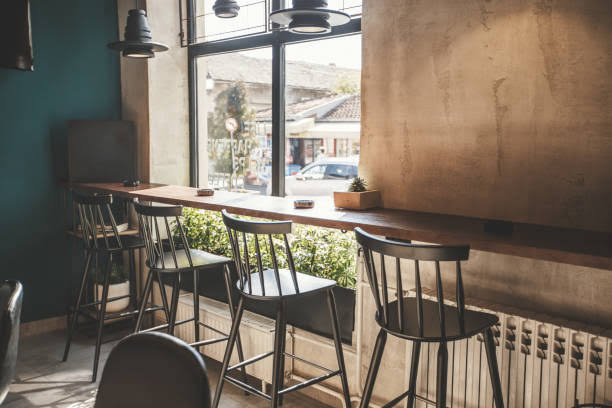
The East End café had stood empty for years, its windows clouded with the memories of stale cigarette smoke and long-lost conversations. A flickering neon sign buzzed faintly overhead—OPEN—yet no living person ever ventured inside. 

But tonight, the spirits convened.

Buddy Holly occupied a corner booth, his glasses slipping down his nose as he fiddled with his espresso that would never be refilled. John Lennon wandered in next, hands stuffed into the pockets of a faded military jacket, whistling a melody that he hadn’t composed as yet. At the counter, Allen Ginsberg tapped his fingers against the chipped formica, muttering fragments of a forgotten poem, while Jack Kerouac reclined in his chair, arms crossed, gazing at the city lights flickering beyond the grimy windows.

“Well, gentlemen,” Lennon remarked, sliding into the booth across from Buddy. “The world’s crazier than when we left, isn’t it?”

“Always has had its madness,” Ginsberg replied, scratching his beard. “But it’s a different kind of chaos now. Quicker. Noisier. Less heart, more clamour.”

Kerouac laughed, tipping back an unseen drink. “And here we thought the Beat Generation was wild. Man, we were just a whisper compared to the roar of today.”

Buddy adjusted his glasses, shaking his head. “I’m not so sure, guys. I still hear love songs every now and then. Kids still fall for one another, right?”

Lennon grinned. “Oh, they fall for sure. But they tumble out just as fast. Love has a shorter lifespan now. Disposable, like everything else.”

Ginsberg leaned forward, eyes sparkling. “Love ain’t dead, John. It’s just hiding beneath a sea of screens, buried under all this connectivity that somehow makes folks lonelier than ever.” He sighed, rubbing his temples. “Sometimes I worry about all the words getting lost. All the poetry that goes unwritten because everyone’s too busy swiping.”

Kerouac exhaled, as if he could still taste whiskey in a throat he no longer possessed. “What happened to the journey, man? The open road? Now it’s all about getting to the destination. Click. Arrive. Done. Nobody gets lost anymore. And if they do, they just ask their phone how to find their way back. There’s no magic left.” 

Lennon smirked and shook his head at Jack’s statement. “And now, on top of it all, natural stupidity is being challenged by artificial intelligence—imagine that.”

A moment of silence settled over them. Outside, the city throbbed—cars honking, sirens blaring, a million hurried footsteps rushing nowhere in particular.

Buddy, ever the optimist, tapped his fingers against the tabletop. “Yeah, but music’s still here, isn’t it? Maybe it’s changed, but there’s still some kid out there with a cheap guitar, crooning about a broken heart. That’s gotta mean something.”

Lennon smiled. “Yeah, Buddy. It means we haven’t completely vanished yet.”

Ginsberg lifted an imaginary glass. “To the poets, the lovers, the dreamers. May they never disappear entirely.”

Kerouac raised his empty hands in a toast. “And to the journey. May someone still find it worth the wander.”

They sat in quiet contemplation for a while, listening to the city’s pulse, as if awaiting a sign that something of their world still remained in this one. And just for a fleeting moment—somewhere in the distance, a lone guitar strummed, a voice hummed an old love song, and the ghosts looked at each and smiled. 

Copyright (c) Pratik Majumdar, 2025. Any article, story, write-up cannot be reproduced in its entirety or in part, without permission. URL links can be used

Unknown, Unseen

In a humble home on the outskirts of a sleepy town, Adrien sat writing beneath the soft glow of a single lamp. The walls of his study, once alive with laughter and warmth, now felt heavy with stillness. His wife, once his closest friend, had become unresponsive and distant. His children, now grown and far apart, had all but forgotten the man who had once been their hero. His friends, too, had drifted away, and their promises of support had dissolved into whispers.

With only his thoughts for company, Adrien turned inward, pouring his soul into the one refuge left to him: his writing. Night after night, he crafted words, not for recognition or applause, but for the simple joy of expressing himself—for the way it brought rhythm to his fractured heart, for the way it made the solitude a bit more bearable.

He shared his writings on a modest blog, a small corner of the vast, uncaring internet. Few people stopped by, and even fewer engaged with his words. Adrien didn’t mind. His writing was for himself, a bridge across the expanse of his loneliness.

Yet, across the globe, in a city perpetually draped in twilight, a woman named Celine was captivated by every line he wrote. Celine understood the sting of isolation. Her days were filled with a yearning for things unnameable, her nights spent seeking comfort in the echoes of strangers’ tales. She stumbled upon Adrien’s blog by chance—or perhaps it was the hand of fate.

His words felt like magic, weaving a bond that spanned the distance. Adrien wrote of the hidden beauty in sorrow, of stars that shone in silence, of hearts that ached yet persevered. Each line reached out to her, as if it were penned just for her.

Every time Celine absorbed his words, she felt a peculiar warmth in her chest, a reminder that she wasn’t as alone as she had assumed. She never left comments, never made contact. She didn’t want to disrupt the delicate spell of the connection she felt.

Unseen and unheard, her quiet devotion touched Adrien in ways they couldn’t articulate. On nights when his spirit waned, when he questioned why he continued to write into the emptiness, he felt a mysterious urge pulling him back to his desk. Inspiration would surge within him like a sudden bloom in spring, and he would write again, unaware of its origin, just knowing it was there.

And so they danced, linked by a thread invisible to both but deeply felt. Adrien’s words became Celine’s comfort, and Celine’s muted presence enlivened Adrien’s creativity.

This unseen connection, this subtle exchange, held a kind of wonder that neither could fully grasp. It was a love that required no label, a link that remained intact despite the distance and time. In the gentle balance of giving and receiving, Adrien found meaning, and Celine discovered hope.

Somewhere in the vast unknown, they complemented one another. And though they would never encounter each other, the invisible thread connecting them shimmered brightly, a testament to the subtle, unseen forces that fill the world with magic.

Copyright (c) Pratik Majumdar, 2025. Any article, story, write-up cannot be reproduced in its entirety or in part, without permission. URL links can be used

That Girl in the Black Dress

Evenings were always the hardest. As he sat alone in his studio apartment he kept staring aimlessly at the blank wall in front of him. There used to be a lovely Monet reproduction hanging there along with a reprint of Rick’s Cafe. Nina Simone was singing My Baby Just Cares For Me on his battered vinyl player as he kept shaking his Drambuie glass without taking a sip. His dinner of ham and cheese sandwiches and a tossed salad lay uneaten on his tray. 

He decided to step out of the apartment for a bit. It had been nearly a week since he had been out of the house and he felt the need for some fresh air to hit his face. He put on his overcoat and stepped out. 

As he walked on the crowded sideways he put his hands inside his pocket. It was a chilly evening. He was oblivious to the hustle of streets at that time and his mind was in a delicious state of emptiness. It seemed it could no longer think anything at all. The emptiness of his mind and that aching heaviness in his heart seemed to be at odds with each other. He walked along their regular coffee shop when he stopped. 

She was sitting by the window seat of the cafe, an espresso in her hand. She was dressed in a black dress, just like she used to be, most of the time. She had a smile on her face as she spoke to a muscular man in a green shirt. Everything about her appearance seemed perfect except a trickle of blood that seemed to roll down her forehead to her face. 

He was shocked to see her there and like that. He rushed inside the cafe and headed towards the window seat. As he pushed through the crowded cafe his heart was pounding at twice its speed. When he finally reached he saw the table was empty. Where is she, he asked loudly. Where is that woman in black who was sitting here, his pitch was higher and bit more frantic. No one knew what he was talking about. Finally he had to be ushered out of the cafe politely. 

His mind was now racing. Filled with thoughts. A few moments ago he felt light headed and empty. And now he had a million thoughts racing inside. He was certain that he was her there. Where could she have disappeared? 

As he stepped out of the cafe he kept on walking forward on the sideway. He walked past their favourite bookshop and there again he saw her. Dressed in black, reading her favourite book The Bell Jar. Their eyes met as she looked out of the bookshop on the sideway. He could see the blood trickle down her forehead the same way he’d seen in the cafe. He kept staring at her as she got up from her seat to apparently come out and meet him. 

He kept waiting there for a while but there was no sign of her. He was getting impatient now. He went inside the bookshop and bumped into the pretty girl who worked there. Where is she, where is she, he asked her sternly. She looked at him surprised. She didn’t know what he was talking about. That girl in the black dress, lady, he repeated over and over and again. Like the cafe earlier, he was asked to leave the bookshop too. 

His mind was in a tizzy by now. He didn’t know what was happening to him. He felt a slight tremble in his knees as he was standing outside the bookshop. He knew he had to go home. 

He turned around and started walking back towards the apartment. His quick steps soon turned to a mini sprint. He kept seeing that girl in the black dress all around him. It felt like a bad dream as he dashed towards the apartment. He reached his apartment and unlocked the door and rushed in. He went straight to his bed where she lay in peace. Her eyes peacefully shut. Her black dress untarnished. The trickle of blood from her forehead had coagulated. Under the bed lay the pistol, which was last used by him a week ago. Next to the gun lay the two pictures…the Monet and the Rick Cafe with blood streaks all over them. 

He lay in bed next to her lifeless body. He kept looking at her peaceful face for a while before he shut his own eyes. Wishing he didn’t have to open them again.

Copyright (c) Pratik Majumdar, 2025. Any article, story, write-up cannot be reproduced in its entirety or in part, without permission. URL links can be used

The Road Back

Arvind, Nikhil and Aditi. Inseparable friends from school, college to present. 

Nikhil had always been the glue that held their trio together. Since childhood, he’d been the peacemaker, the secret-keeper, and the one who never let misunderstandings linger. When Aditi and Arvind began seeing each other during college, it was Nikhil who orchestrated moments of quiet romance—passing notes, arranging surprise meetups, and even coaching Arvind on how to propose. At their wedding, he stood proudly beside Arvind, as though he were giving away a piece of his own heart.

Life had been good to them. The three of them were inseparable, even after Arvind & Aditi’s marriage. Weekends were spent reminiscing about old times, playing board games, and planning vacations they always promised to take together but never did. 

Until that night. The night when everything changed.

Nikhil had been driving, his hands steady on the wheel but his mind scattered after a long day at work. Arvind had insisted on coming along for the ride to Aditi’s parents’ house, where she was spending the week. They had been laughing—talking about some silly incident from college—when the blinding headlights of an oncoming truck veered into their lane. Nikhil swerved, but the impact came too quickly.

Arvind didn’t survive.

For days, Nikhil sat outside the hospital where Aditi had identified Arvind’s body, her face pale, her eyes hollow. She didn’t scream, didn’t cry—she simply walked past him without a word. When he finally gathered the courage to see her, she shut the door in his face.

“You were driving,” she said when she finally spoke to him, weeks later. “You were supposed to keep him safe.” Her words were icy, and Nikhil felt the impact of her blame pierce into him like shards of glass.

Nikhil tried everything to ease her pain. He sent messages she didn’t read, left flowers she didn’t acknowledge, and wrote long letters asking for forgiveness. But she remained unreachable, locked away in her grief and anger. 

He didn’t blame her. He blamed himself too.

Months passed, and Aditi’s pain turned into a quiet numbness. She stopped going to work, stopped meeting friends, and the world outside her apartment faded. Then, one day, she found a small envelope tucked under her door. It was a note from Nikhil.

“Aditi, I know you’ll never forgive me, and I won’t ever stop carrying this guilt. But Arvind loved you more than anything. He wouldn’t want you to lose yourself. Please, for him, take one step forward. If you can’t forgive me, I will understand. But don’t let your love for him drown in anger. I’m here if you need me. Always.”

She read the note over and over again, her anger battling the truth in his words. It wasn’t forgiveness she couldn’t find—it was the strength to face the memories, to live in a world where Arvind no longer existed.

One rainy evening, weeks later, Aditi stood on her balcony, the cool raindrops running down her face. She thought of Arvind’s laughter, his warmth, his unshakable belief that no matter what happened, things would always be okay. For the first time in months, she cried—not out of anger, but out of longing, love, and the aching emptiness he left behind.

The next day, she found herself dialing Nikhil’s number. When he answered, his voice hesitant and careful, she didn’t know what to say.

“I don’t know if I can ever forgive you,” she said softly.

“I’m not asking for that,” Nikhil replied. “I just want to help you heal. For him. For both of us.”

Over the next few weeks, they met cautiously, testing the fragile ground between them. At first, it was awkward, their conversations peppered with silences and broken sentences. But Nikhil never pushed, never asked for more than Aditi was willing to give. Slowly, she began to see his pain too—how he carried the weight of that night every day, how he avoided driving, how he still wore the watch Arvind had gifted him, cracked and scuffed from the crash.

It wasn’t easy, but they began to find a strange solace in their shared grief. They talked about Arvind—his quirks, his dreams, the way he could light up a room. And through these conversations, Aditi realised that Nikhil’s guilt mirrored her own grief.

One afternoon, as they sat by the lake where Arvind used to take her, she said, “He wouldn’t want us to live like this, would he?”

Nikhil shook his head, his voice quiet. “No, he wouldn’t.”

Healing didn’t come all at once. It came in small steps—like the first time Aditi smiled without feeling guilty, or the first time she let Nikhil hug her without flinching. It wasn’t about forgetting, but about finding a way to live with the memories, to honour Arvind by choosing to keep moving forward.

Months later, as Aditi walked past a photo of the three of them on her bookshelf, she realised that the anger had softened. The pain remained, but it no longer felt like a weight she couldn’t carry. She picked up her phone and sent Nikhil a message:

“Let’s meet by the lake tomorrow. I think it’s time we started planning that vacation Arvind always wanted us to take.”

For the first time, she felt a flicker of hope—fragile but real. And that was enough.

Copyright (c) Pratik Majumdar, 2025. Any article, story, write-up cannot be reproduced in its entirety or in part, without permission. URL links can be used
Two of Us

You and I have memories 

Longer than the road 

That stretches out ahead 

The Beatles, Two of Us 

The rain had a way of rewriting memories. As Aditi stood under the awning of a quiet café, waiting for her latte, she felt the unmistakable pull of nostalgia. The city’s streets, drenched and shimmering, were alive with echoes of a time she thought she had left behind. That’s when she heard his voice.

“Still black coffee, dash of milk no sugar?”

She turned sharply, and there he was—Nikhil, his salt-and-pepper hair lending him an air of wisdom, his eyes, albeit covered by thick-rimmed spectacles, still carrying the same mischief that had once unravelled her.

“Still chasing the perfect latte?” he teased.

For a moment, it was as though no time had passed.

College Days, 18 Years Ago

They were inseparable back then. Every evening, they would escape to the small, dimly lit bookshop-café near campus, where they devoured words, films, and each other’s thoughts. Nikhil would bring poetry—Allen Ginsberg, Ted Hughes, Sylvia Plath, Rumi—reading aloud in a voice that made Aditi feel the verses were written just for her. She would counter with her love for cinema, dragging him to arthouse screenings, their whispered debates in the theatre far more intense than the films themselves.

One summer evening, under the sprawling banyan tree at the edge of campus, Aditi had confessed her love for the smell of old books.

“They carry stories within stories,” she had said.

Nikhil had smiled, plucking a yellowed leaf from the ground. “And some leaves, like some people, carry the weight of seasons.”

No one ever suspected the depth of their bond. To everyone else, they were just best friends, and the two of them found comfort in that misunderstanding. They never held hands in public, never exchanged love letters, never declared anything aloud. Their relationship existed in the spaces between words, in the unspoken connection that transcended labels.

When college ended, they broke apart without drama, as if agreeing silently that their story had run its course. Their friends thought it was a petty argument, a rift between two companions. Only Aditi and Nikhil knew it was a heartbreak disguised as something else.

The Present

Now, sitting across from each other in a café eerily similar to their old haunt, they talked as though no time had passed.

“So, two kids and a golden retriever,” Nikhil said, stirring his coffee. “You’re living the dream.”

“And you? Professor Nikhil Mehta, shaping young minds?” she teased, her eyes twinkling.

They laughed easily, their conversation flowing like a well-rehearsed symphony. The past seemed to fold itself into the present, the years apart shrinking into nothingness. They shared stories of their spouses—both of whom they genuinely adored—and the quiet contentment of their lives.

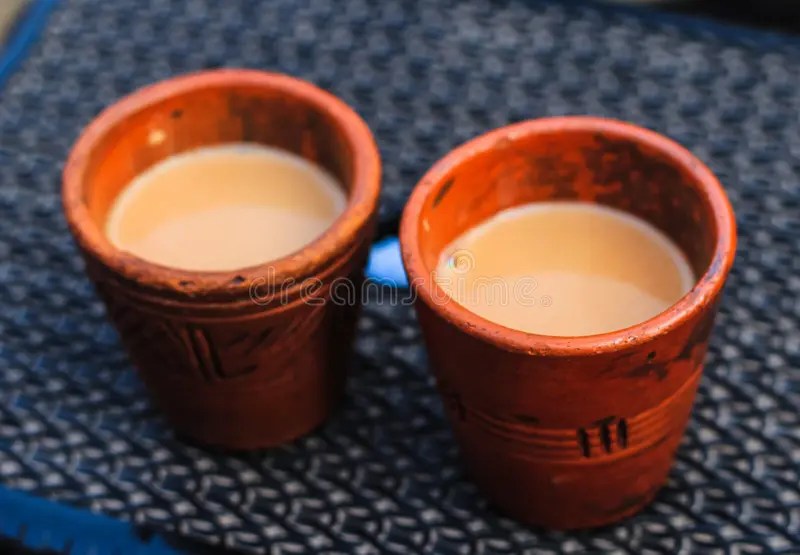
That evening, as the rain pattered against the windows of Aditi’s guesthouse, she invited Nikhil to stay. They stayed up late, revisiting their favourite poems, watching an old Satyajit Ray film, and arguing over the best way to make masala chai.

When it was finally time to sleep, Aditi offered him the bed while she took the couch.

“You really think I’d let you sleep on that lumpy thing?” Nikhil protested.

And so, they lay on the bed, side by side, staring at the ceiling. There was no awkwardness, no hesitation—just a profound comfort that only decades of understanding could bring.

The World’s Misconception

Over the weeks that followed, their rekindled friendship became the subject of speculation. Friends and acquaintances, seeing their easy camaraderie, whispered about a love that had rekindled after years apart.

“Making up for lost time, aren’t they?” someone remarked at a dinner party.

Aditi and Nikhil exchanged a knowing glance.

“They’ll never understand,” she murmured later, as they walked back to her car.

“Maybe they don’t have to,” Nikhil replied, his voice warm.

…and in the end 

One evening, as they walked along the shore, the waves licking at their feet, Aditi paused.

“Do you think… if we’d told people back then, if we’d admitted what we were, it would’ve been different?”

Nikhil considered her question. “Maybe. But then, we wouldn’t have what we have now.”

She smiled. “This—whatever it is—feels better, doesn’t it? Pure, unburdened.”

“Completely,” he agreed.

As they stood there, watching the sun dip into the horizon, there was no longing, no what-if. Only gratitude for a connection that had survived the test of time.

And perhaps that was the most romantic thing of all—a love so complete, it didn’t need to be anything more.

Copyright (c) Pratik Majumdar, 2025. Any article, story, write-up cannot be reproduced in its entirety or in part, without permission. URL links can be used
The Party

Kiya Hai Jisey Humne Zindagi Ki Tarah

Wohh Aashna Bhi Mila Humse Ajnabi Ki Tarah

Jagjit Singh, Kiya Hai Pyar Jisey

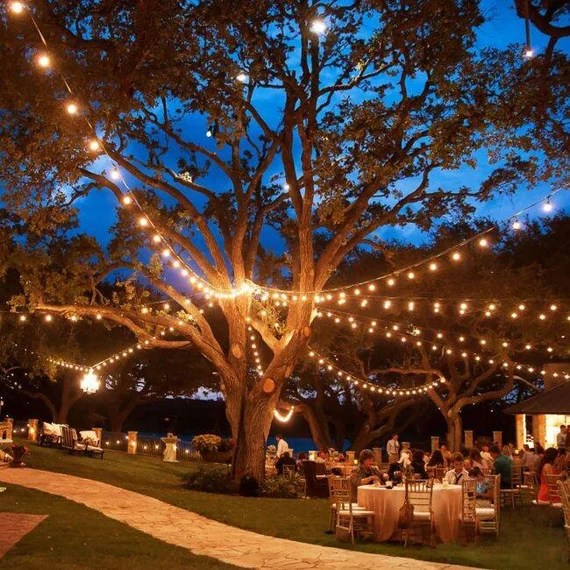
The night sky shimmered with stars as Arjun pulled into the driveway of the farmhouse. Fairy lights adorned the trees, their soft glow illuminating the gathering. Somewhere in the distance, laughter mixed with the crackle of a bonfire. He sighed, already regretting his decision to come. Sundays were meant to be spent alone, nursing tea and ignoring the world—not attending a party organized by a friend’s friend.

Ever since his breakup, crowds made him uneasy. Families and couples basking in happiness were unbearable reminders of what he had lost. Yet, here he was, navigating the kind of evening he had promised himself he’d avoid.

Keeping to the edges of the crowd, Arjun sipped on a cup of chai, avoiding conversation. He had just about decided to slip away when a voice cut through the noise.

“Ladies and gentlemen,” a man announced, “please welcome our performer for the evening, the incredible Kavya Shah!”

Arjun froze. The name hit him like a tidal wave. He turned, and there she was—Kavya, standing under the canopy of fairy lights, a microphone in her hand. Her soft pink kurta shimmered faintly, her dupatta draped elegantly over her shoulder. Her hair, loose and flowing, framed her face the way he remembered all too well.

His chest tightened as she smiled at the crowd and adjusted the mic. “Thank you. Tonight, I’d like to share some songs close to my heart.”

The first strum of the guitar sent a shiver down his spine. It was their song, the ghazal she used to hum when they were together. As she sang Kiya Hai Pyar Jisey Humne Zindagi Ki Tarah, each word, each melody, pulled him back into a whirlwind of memories—quiet evenings on her balcony, her laughter as she teased him, and the way her voice used to fill the silences between them.

He stayed rooted to the spot, captivated as she moved through the setlist. Every song she chose seemed deliberate, as if she was weaving the story of their love, their heartbreak, and everything in between. Khaali Haath Shaam Aayee Hai, Do Naina Aur Ek Kahani, Jhuki Jhuki Si Nazar, Jaane Kya Baat Hai, Shaam Se Aankh Mein…the songs enveloped him in a maze of memory and nostalgia. 

During the break, she stepped off the stage and headed toward a small table near the garden. Arjun followed her, his feet moving before his mind could catch up.

“Kavya,” he said softly, his voice barely audible over the hum of the crowd.

She turned, her eyes widening in surprise. “Arjun,” she said, a slow smile spreading across her face. “I can’t believe you’re here.”

“Neither can I,” he admitted. “But maybe I was supposed to be.”

She chuckled, the sound like a balm to his heart. “You, at a Sunday gathering? That’s… surprising.”

“Maybe I’m changing,” he said with a faint smile. “Or maybe it was fate.”

She walked towards him and hugged him. He felt a warmth he hadn’t experienced in ages. 

They talked, the conversation flowing effortlessly. They laughed about old memories—his terrible cooking experiments, her obsession with vintage Bollywood songs, their trips to Lonavala. He told her about work, about how he’d been keeping to himself. She spoke of her music and how it had become her solace after their breakup.

For a fleeting moment, it felt as if time had rewound, as if they were back to being Arjun and Kavya, the couple that everyone envied. The idea that this night could lead to something more made his heart race.

As they reminisced, oblivious to the party that was ongoing, a car horn sounded in the driveway. Kavya glanced over her shoulder, her expression changing subtly. Arjun followed her gaze as a tall man in a crisp white shirt stepped out of a sedan and approached them.

“Ready to leave?” the man asked, his voice warm and familiar. He leaned down to kiss her cheek, a gesture that made Arjun’s stomach churn.

“Arjun,” Kavya said, her tone gentle, “this is Manav, my husband.”

The words landed like a blow. For a moment, Arjun couldn’t move, couldn’t breathe. He forced a polite smile, though his insides felt like they were crumbling.

Manav extended a hand. “Hi, nice to meet you. Kavya’s told me a lot about her old friends.”

Arjun shook his hand, his grip firm despite the chaos in his chest. “Nice to meet you too.”

Kavya looked at him with an expression he couldn’t quite place—soft, understanding, and tinged with something unspoken. “It was really good to see you again, Arjun,” she said sincerely.

“You too,” he replied, stepping back as Manav guided her toward the car.

The sedan’s taillights disappeared down the winding road, leaving Arjun alone under the canopy of lights. The bonfire crackled in the background, but its warmth couldn’t reach him.

He stared at the flames, his mind replaying the evening. Somewhere amidst the ache, a strange sense of closure began to settle. Maybe tonight wasn’t about rekindling what was lost, but about learning to let go.

Copyright (c) Pratik Majumdar, 2025. Any article, story, write-up cannot be reproduced in its entirety or i

Crazy

I’m crazy, crazy for feeling so blue 

Crazy, I’m crazy for feeling so lonely 

I know you loved me as long as you wanted 

And then some day you’d leave me 

For somebody new 

Crazy, Jess Sharon 

The song drifted through the air, the haunting melody wrapping around her like an unwelcome embrace. Jess Sharon’s Crazy seemed to mock her, its aching notes syncing all too well with the ache in her chest. She traced the rim of her glass with her finger, eyes staring blankly at the whiskey’s amber depths as if it held the answers she so desperately sought.

It was then that she saw him. At first, it was just the curve of his shoulder, the tilt of his head—the posture unmistakable even after all this time. Her breath caught in her throat as he turned slightly, his face lit up with a smile she once knew better than her own.

And then her heart clenched as her gaze shifted to the woman sitting across from him.

She was beautiful, effortlessly so, with long, dark hair that cascaded like black velvet across her shoulders. Her laughter was soft, lilting, as she leaned in closer to him. Their hands intertwined across the table, fingers brushing in a way that spoke of a love so easy, so natural, it left no room for doubt. They were in their own world, oblivious to the quiet agony unravelling just a few tables away.

She swallowed hard, the sting in her eyes a warning she refused to heed. The whiskey burned her throat as she took a large sip, but it couldn’t dull the sharper burn of memory.

They had once been like that.

She closed her eyes, and the bar disappeared, replaced by the warmth of a summer evening. She could still see him, younger, happier, leaning against his beat-up old car with that boyish grin that made her heart race. “Come on,” he’d said, his voice teasing. “Let’s get lost tonight.”

And they had. They’d driven for hours down roads that seemed to stretch into forever, the wind tangling her hair as they laughed and sang off-key to songs that belonged to no one but them. He’d held her hand as though letting go would mean losing her to the stars above.

But somewhere along the way, the laughter had faded. The songs grew quieter. The roads they travelled became ones of silence and misunderstandings. She couldn’t pinpoint the moment it all began to crumble—the first time his smile felt forced or her words seemed to fall into an unbridgeable void. Maybe it was when their dreams started pulling them in opposite directions, his toward a city skyline and hers toward a simpler, steadier life.

“We’ll figure it out,” he’d said one night, his voice heavy with the weight of promises he couldn’t keep. She had nodded, pretending to believe him. But deep down, she knew. They were running on borrowed time.

Her eyes flickered open, pulling her back to the present. Across the bar, he leaned in to tuck a strand of hair behind his new love’s ear, the gesture so intimate it felt like a knife twisting in her chest. She looked away, unable to bear the sight of something so familiar now belonging to someone else.

She clenched her fists, trying to suppress the flood of emotion threatening to consume her. Anger at herself for still feeling this way. Sadness for what they’d lost. And an aching loneliness that seemed to stretch out endlessly, echoing the song still playing in the background.

And then she thought of the last time they’d seen each other. He’d stood in her doorway, a suitcase in hand, his eyes full of a sorrow she couldn’t erase. “I love you,” he’d whispered, the words trembling with all the things they couldn’t fix. She had wanted to tell him to stay, to fight for what they had. But instead, she’d stepped back, letting him walk out of her life.

Was it pride? Was it fear? Or was it just inevitable?

Tears threatened to spill as she stared at the couple again. But this time, she didn’t look away. Instead, she let herself feel it all—the heartbreak, the longing, the bittersweet beauty of what once was. Because no matter how much it hurt, those memories were hers. He had been hers, if only for a moment in time.

The song changed, its final note lingering in the air like a ghost. She finished her drink, the warmth spreading through her chest, dulling the edges of her pain. With a deep breath, she stood, smoothing her coat as she prepared to leave.

As she walked past their table, he looked up. Their eyes met, and for a fleeting second, it was just them. No new love. No past regrets. Just two people who had once shared everything. He gave her a small, almost imperceptible nod—a silent acknowledgment of what they’d had, what they’d lost.

She nodded back, her lips curving into the faintest of smiles. And then she walked out into the winter night, the cold air biting at her cheeks as tears finally spilled over.

But with each step she took, the ache in her chest began to ease. She realized that letting go didn’t mean forgetting. It didn’t mean erasing the love they’d shared or denying the pain of its loss. It simply meant making peace with the fact that some people are meant to stay, while others are meant to teach you how to move on.

And as she disappeared into the snowy streets, she felt something she hadn’t in a long time: hope.

Copyright (c) Pratik Majumdar, 2025. Any article, story, write-up cannot be reproduced in its entirety or in part, without permission. URL links can be used

Jasmine

The cafe buzzed with its weekend vibe. The clink of cups against saucers and the soft hum of conversation filled the air. The smell of freshly ground coffee mingled with the aroma of jasmine that clung to her scarf.  A candle flickered between them, its small flame steady, casting warm light over the polished wood of their table. Outside, the rain fell gently, faint streaks catching the city lights as they blurred into hazy colours.

He sat across from her, fingers curled around a mug of green tea, its steam curling lazily in the air. She had her usual espresso, sipping it slowly, the faintest smile playing on her lips.

“Do you always have to drink that hot water?” she teased, her tone light.

“You mean something healthy and calming?” he quipped. “Absolutely. And do you always have to order something that makes you jittery for hours?”

“Don’t mock the espresso,” she said with mock indignation. “It’s the drink of champions.”

He chuckled, shaking his head. It was a moment so ordinary and familiar, yet it seemed wrapped in cotton wool. Their rhythm was effortless, like a melody played countless times, always in sync, never tiring.

“I was thinking about that time we went to the coast,” he said suddenly, his smile softening into something more thoughtful.

She grinned, her eyes lighting up. “The cabin with the broken heater?”

“Exactly. You were convinced we’d freeze to death.”

“Well, I wasn’t wrong. You remember how we layered every single blanket we could find? I looked like a burrito.”

“A very dramatic burrito,” he corrected, smirking. “But you still made me go outside at midnight to look at the stars. You said it would be ‘worth it,’ even though it was freezing.”

Her grin faltered slightly, a flicker of something wistful crossing her face. “It was worth it,” she said softly. “That sky… I don’t think I’ve ever seen anything like it since.”

He leaned back, his gaze lingering on her as she absently stirred her espresso, though it needed no stirring. “You always had this way of finding the magic in things,” he said.

“And you had this way of making me believe it was real,” she replied, her voice barely above a whisper.

Their conversation flowed easily, the moments and memories tumbling out like old treasures uncovered by accident. They laughed about the time they got lost on a hike and ended up at a farmer’s market instead. They spoke of summers spent chasing sunsets and winter evenings spent indoors, arguing over movies neither of them really liked or wanted to watch. 

“Do you ever miss it?” she asked suddenly, catching him off guard.

“Miss what?”

“All of it. The… simplicity of it.”

He looked at her for a moment, as if trying to read something in her expression. “Sometimes,” he admitted. “Don’t you?”

She hesitated, her gaze dropping to her cup. “Sometimes,” she echoed, her voice carrying the fragrance of something unspoken.

A comfortable silence settled between them, the kind where words seemed unnecessary. Outside, the rain had slowed to a gentle drizzle, the world beyond the glass pane, soft and blurred.

Her phone buzzed on the table, breaking their silence. She glanced at it, her expression shifting, albeit subtly. A small crease appeared between her brows, and she tucked a loose strand of hair behind her ear.

“It’s my husband,” she said, her tone casual but carefully controlled. “He’s waiting for me at the theatre. We’re seeing that new movie—he’s been excited about it for days now.”

The words floated in the air, and for a moment, the candlelight between them seemed to flicker.

He nodded slowly, his expression unreadable. “You should go,” he said, his voice steady. “Don’t want to keep him waiting.”

She stood, draping her scarf over her shoulders, her movements deliberate. “It was really nice catching up, bumping into you here out of the blue,” she said, her gaze lingering on him for just a moment too long.

“It was,” he replied, managing a small smile.

As she walked to the door, he watched her go, the faint sound of the bell above the entrance announcing her exit. She disappeared into the glow of the streetlights and the drizzle, leaving behind only the faint scent of jasmine in the air.

He stayed for a while longer, staring at the half-finished mug of green tea before him. The warmth of the cafe now felt distant, and yet he couldn’t bring himself to leave.

Outside, the rain continued to fall, soft and steady, blurring the edges of the world. Just like the memories of a love he had once thought would last forever.

Copyright (c) Pratik Majumdar, 2025. Any article, story, write-up cannot be reproduced in its entirety or in part, without permission. URL links can be used
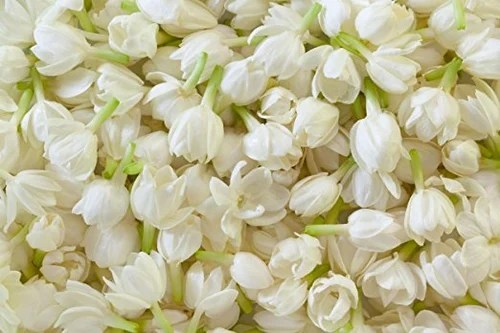
Threads

Amrita and Kabir had once been everything to each other. They met in college, their connection immediate and effortless, built on shared laughter, whispered dreams, and stolen moments beneath the stars. Their love had been fierce and boundless, a constant they thought would never change. But life has a way of pulling even the closest of people apart.

When Kabir’s father fell ill, he had to move to Delhi to take care of him. Long-distance love fought valiantly, but the pressure of time schedules, missed calls, and unanswered texts eventually pulled them apart. Amrita, nursing her own wounds of a struggling family business in Mumbai, drifted into a new life.

Years passed. Amrita married Raghav, a kind man whose steady nature felt like a balm to her restless heart. Kabir found love with Meera, a woman whose laughter reminded him that joy still existed in life. Both found happiness in their own ways, yet something unspoken lingered—a quiet echo of a love once shared. 

For Amrita, the reminders came in unexpected places. The smell of freshly brewed filter coffee in the morning brought her back to the tiny café where she and Kabir used to share their espresso and their dreams of travelling the world. Once, she stumbled upon Alain de Botton’s Essays in Love  at a roadside bookstall —the same one Kabir had read aloud to her during a rainy afternoon when the monsoon kept them indoors. She ran her fingers over its worn out spine, smiling wistfully, and carried it home, though she knew she would never read it.

Kabir, too, couldn’t escape the shadow of Amrita in his life. Meera loved music, but ever so often, a song would play—especially Tu Tu Hai Wahi, an old Hindi song that had been “their song.” It stopped him in his tracks. One evening, while helping Meera pick out sweets for a family gathering, he saw a bar of dark chocolate—Amrita’s favourite, the one she’d always call “the best in the world.” He bought a piece for himself, telling Meera it was a childhood favourite.

They lived their lives, tending to careers, children, and the predictable rhythms of adulthood, yet the universe seemed to conspire to keep their memories alive. Amrita once overheard a couple laughing about getting lost in a hill station, and she couldn’t help but think of the time she and Kabir had spent hours searching for the trail after a spontaneous hike in Munnar, collapsing in laughter when they finally found it.

For Kabir, it was a stranger’s remark about the constellations during a camping trip with his family. He looked up at the stars and remembered Amrita’s fascination with naming them, how she’d always been better at spotting the Pole Star than he had.

Their lives never crossed again, not even in passing. Neither reached out; neither dared. They had made their choices, and those choices deserved respect. Yet, in their quiet moments, they would find themselves smiling at a memory that surfaced, unwanted and unexpected but welcome.

Amrita would sip her coffee and glance at the book on her shelf, her heart-warming at the thought of Kabir reading to her in his calm, soothing voice. Kabir would hum along to their song when it played, a bittersweet ache tugging at his chest.

They weren’t unhappy—far from it. They loved their families, found joy in their children’s laughter, and cherished the lives they had built. But there was a small corner of their hearts reserved for a love that had once been everything.

And in that space, they lived together still—in the taste of a chocolate, the notes of a song, the pages of a book. A reminder that some loves don’t fade; they simply transform into threads woven quietly into the fabric of who we are.

Copyright (c) Pratik Majumdar, 2025. Any article, story, write-up cannot be reproduced in its entirety or in part, without permission. URL links can be used