In the heart of an unknown state, nestled between ancient banyan trees and fields of mustard that turned gold each winter, lay the sleepy town of Haridham—a place where time clung to the walls like the soot from incense, and gossip travelled faster than the morning Azaan. It was the kind of place where everyone knew everyone, and no one forgot anything.
Eshan lived in the narrowest lane of Haridham, in a crumbling haveli that smelled of old paper and sandalwood. He was a quiet boy, soft-spoken to the point of invisibility. The town’s boys called him “pagla shaayar”—mad poet—and the elders shook their heads when he walked by with his tattered diary and rusted harmonica. But what they never saw was the fierce, burning love in his chest for Radhika—the daughter of the local schoolmaster, with kohl-lined eyes and a laugh that cut through his loneliness like the first wind of Baisakhi.
Eshan wrote poems for her. Not the kind that lived on Instagram or love letters scribbled on cheap paper, but the kind that ached and breathed, stitched together in meters older than the Mughal tombs that dotted the outskirts of town. He played his harmonica only for her under the peepal tree near the temple, where she’d sometimes come, her anklets chiming like tiny bells of hope.
It was during the Haridham Mahotsav, a gaudy, chaotic festival of local drama, jalebis, and clashing dhols, that Eshan decided to declare his love—naively, foolishly, in the open. Wearing a threadbare kurta, harmonica in hand, he took the stage near the panchayat office, where strings of marigold wilted under the sun and the loudspeaker spat static.
He began to play.
The notes were raw, yearning, and deeply out of place amidst the fairground clamour. He read a poem next—about unrequited love, about Radhika’s bangles, and the ache of waiting. But before he could finish, someone in the crowd hooted, “Abey bas kar, Mirza Ghalib!” Laughter followed like a slap. Another shouted, “Shaadi kar le harmonium se!” Someone threw a pakora at him.
Eshan’s voice broke mid-line. He ran.
He ran past the school, past the old post office, through the mustard fields now turning copper in the dusk, and arrived breathless outside Radhika’s house. But just as he turned the corner of her courtyard, the earth beneath him cracked open.
There she was. In the arms of Vijay, heir to the sugar mill fortune. Tall, handsome, cruel—everything Eshan was not. Their silhouettes fused under the neem tree, her dupatta fluttering like a white flag of surrender.
“I only talked to him because it was funny,” Radhika said, laughing, her voice soft but clear in the quiet of approaching night. “He actually wrote me poems. Can you believe it?”
Eshan didn’t move. Didn’t breathe. Something in him—some fragile bone of hope—snapped.
And then, just like that, he disappeared.
No one saw him after that night. His haveli was found unlocked, his diary open to an unfinished poem. The town moved on, mostly. Some said he ran off to Delhi. Some claimed he’d drowned himself in the Yamuna. But within a month, Haridham changed.
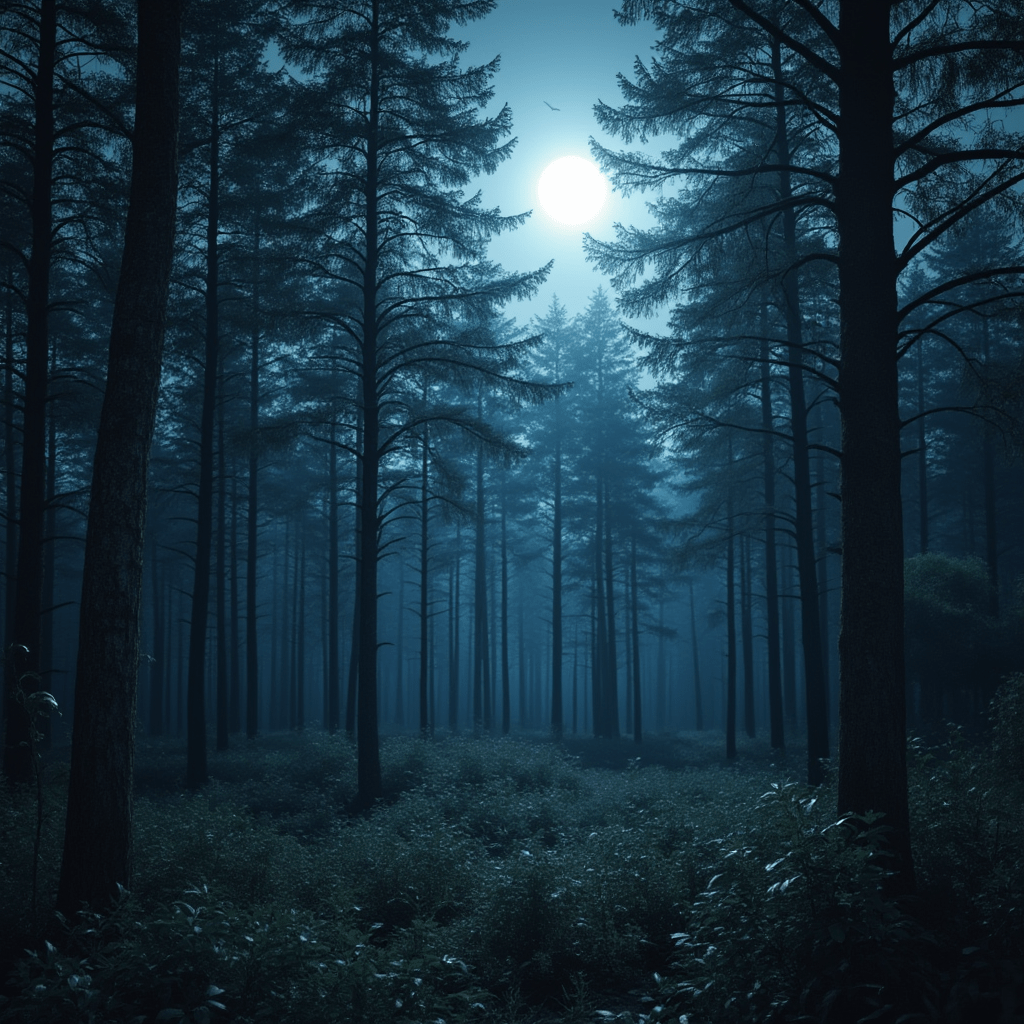
On the night of the next full moon, an eerie, soul-twisting harmonica tune was heard coming from the goolar forest that bordered the village. It was soft, almost mournful. But beneath it was something else—something cold, inhuman.
The next morning, a candle was found burning outside the house of Meera—the girl who had laughed loudest during Eshan’s performance. She vanished that night.
At first, people thought it was a coincidence. But then came another full moon. Another note in the wind. Another candle. Another girl gone.
The notes were always accompanied by chits tucked into cracks in the temple walls, school benches, or the folds of old peepal trees. The messages were always short: “She mocked pain.” “He played god.”“Justice wears no face.”
Haridham changed. Doors were locked by sundown. Mothers prayed obsessively. The police came, installed cameras, patrolled with rifles. But no footage ever showed who placed the candles or when. Only the harmonica remained—haunting, untouchable.
Over time, even Vijay, whose father once scoffed at ghost stories, left for Lucknow.
And then, on the twelfth moon, Radhika woke in the middle of the night. Her breath caught. There, at the edge of her lawn, stood a single, white candle. Its flame stood perfectly still, despite the wind.
The harmonica’s tune floated toward her from the forest, carrying no anger, only something worse—stillness. Finality.
She knew. The boy who had once worshipped her from afar, the poet with calloused fingers and trembling verses, had returned—not as a man, but as something time had sculpted from love, betrayal, and the silence that follows ridicule.
The flame flickered.
The notes played on.
And Haridham held its breath.
Copyright (c) Pratik Majumdar, 2025. Any article, story, write-up cannot be reproduced in its entirety or in part, without permission. URL links can be used
 Words are flowing out...
whoa…this is kick-ass!
LikeLiked by 1 person
Thank you Prabodh 🙂
LikeLike